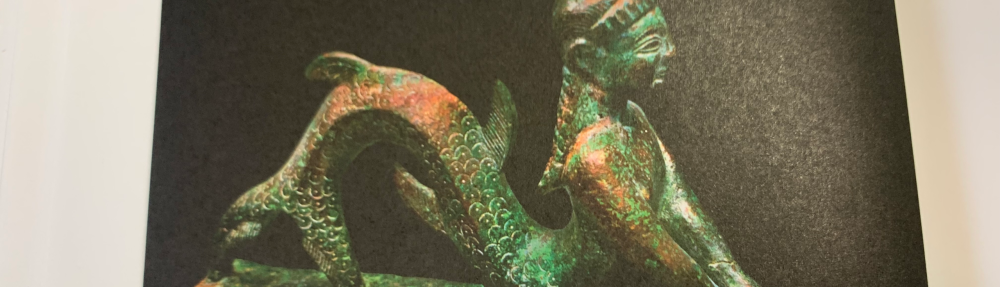
The central tension in The Romance of the Faery Melusine lies between the delicate balance of secrecy and trust. In the story, the titular character Melusine offers Raymondin her love on the condition that he never sees her on Saturdays. With this oath, it symbolizes the boundary between her faery identity and her human marriage. As long as the oath is honored, their holy union should flourish. However, this fragile boundary was shattered when Raymondin’s suspicion drives him to break his oath to Melusine, revealing the narrative on how love collapses once trust is replaced by doubt.
Raymondin, consumed with paranoia due to rumors, spies on Melusine and bears witness to her serpent form, “Transported beyond himself, his brother’s brutal words came back to him, driving him to clamber up.” This act is portrayed as one of intrusion and potential violence, with the text exemplifying how secrecy breeds suspicion and leading the husband to imagine Melusine’s hidden life as that of a threat. Melusine herself is described using imagery that highlights her liminality, “…more pale than usual, pearled almost to transparency.” Here she is alluring yet uncanny, embodying a dual identity between that of the supernatural and human. In this moment, Raymondin’s failure in his ability to trust reveals the cultural fear of the feminine as both desirable and uncontrollable.
In this, by breaking his oath Raymondin not only loses his beloved wife, but also destroys the delicate harmony between the human and supernatural realms. Melusine’s sorrowful departure, “fate decrees it, since there is no other”, demonstrates how inevitable betrayal is once suspicion and doubt overcome faith. Where love cannot survive where one’s desire for control overcomes trust, where secrecy, when violated, turns intimacy into exile.
Great point about the ramifications of Raymondin’s choice: “In this, by breaking his oath Raymondin not only loses his beloved wife, but also destroys the delicate harmony between the human and supernatural realms.” This could be the thesis for an essay about how this story is an allegory or explanation of the relationship between literature in the environment– it teaches us about the ramifications of our choices.