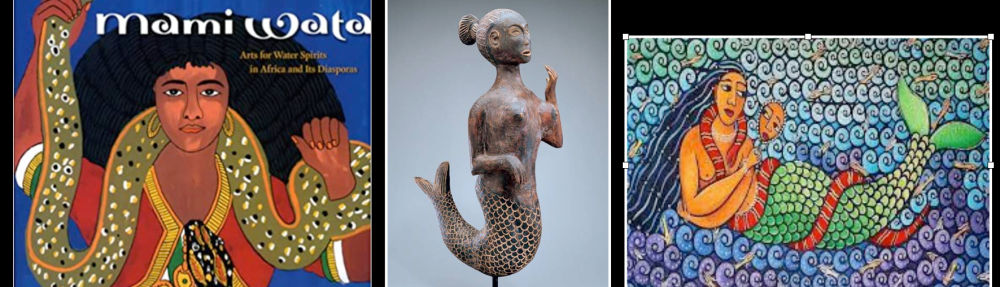
The introduction of Merpeople: A Human History made me think about many ideas, especially how it connects the question of human nature with the figure of the mermaid. I have usually thought of mermaids as half human and half fish, but I had never tried to study humanity itself through this image. While reading this part, I began to think again about the process of human evolution. We usually explain human history as starting from ape-like ancestors. But if we go further back and imagine the very first ancestors of humans, can we really say that humans and animals are completely different? Today, science has developed so much that we can compare humans and animals in many ways. In the past, however, when science was not developed, the meaning of mermaids may have been much more serious.
In societies where religion had strong power, people probably emphasized the special value of humans by saying that they were created by God. If humans were seen as the chosen beings of God, then the idea of mermaids, creatures that were half human and half animal, would have caused fear. Why did people imagine them as part fish? I think it was because the ocean was considered the most unknown and mysterious place, and fish were the main living creatures there. To people in the past, mermaids could represent the fear of the deep sea. Religion and society may have used this fear as a tool to teach lessons and control people’s actions.
As time passed and science grew, belief in the real existence of mermaids became weaker. But in the modern world, the meaning of the mermaid changed from something scary to something attractive. I think this shows a movement from fear to desire. This reminds me of Cohen’s Monster Theory, which I studied recently. One of his ideas is that monsters can represent attraction and desire. In this way, the use of mermaids today in advertising, branding, or company logos seems to come from this change. What was once a frightening monster has now become a symbol of beauty and charm. Therefore, the mermaid reflects how human imagination turns fear into fascination.