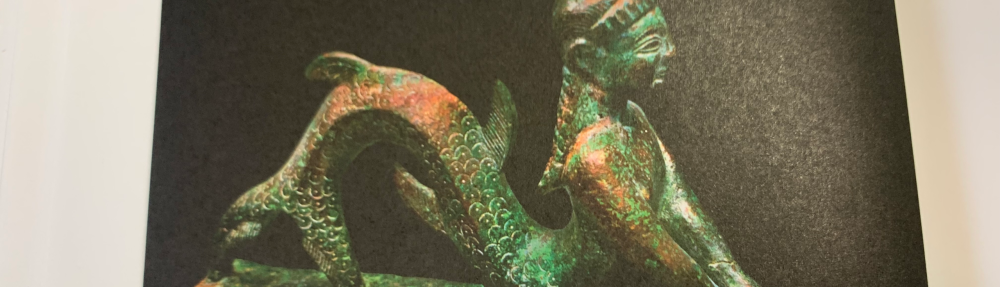
In The Penguin Book of Mermaids, Cristina Bacchilega and Marie Alohalani Brown, emphasize that “The cross-cultural dynamics of water-spirits stories can help loosen the hold of the all-too-popular reading of the siren or mermaid across time as a symbol of dangerous femininity (xv).” Reading diverse myths of water spirits, not only broadens the scope of hybridity, but teaches us about that culture’s values, ways of life, and beliefs, offering a different way of being and existing than the cannon of western (european) mythology, religion, and literature (and its views on gender) has restricted us to.
In the polynesian story of “the Tuna(eel) of lake Vaihiria” the princess, daughter of the Sun and Moon, is promised to marry, and discovers her husband is a giant eel. In the first North American tale, “The Horned Serpent Runs away with a girl who is rescued by the Thunderer” the serpent is a shape shifter, who lures away a young woman with the promise of marriage, but is discovered to be serpent who traps her in his lair. In the next, Passamaquoddy tale, a woman is secretly in love with a great serpent who she visits nightly, and transfuses his poison to her ill-fated husbands.
These stories were interesting because of the way they subverted my own notions of water spirits as a female temptress, and discussed how women might be seduced by men. This lesson discussed by polynesian and north american cultures, were important in identifying the options and agency that women had in different cultures. The differences in running away from the serpent suitor and defying one’s parents (polynesian) communicates the importance in a woman asserting her independence, whereas running away with the snake/man hybrid in defiance of one’s parent (North American) both end in being rescued by a warrior and settling down with the chosen man, or hero. What interested me while I read through the ancient myths of the mermaid, was that they discussed the expectations of marriage, relationships between men and women, and deception. The water serpent, a common figure amongst cultures around the world, has phallic connotations, and flips the modern script that female water beings were strictly presented as seductive temptresses of human men.
Wonderful blog post, as you are grounding your insights and interests in particular aspects of the texts at hand. Glad to see you noticing how these ancient stories offer very human lessons through their monsters. Eager to hear more from you on this in class!
I found it very interesting that they never explained how the origins of the snake I think that the stories were also shortened and didnt explain alot of the lore of the stories and had expected you to know some of the older stories.
Hi Angelina, I thought your blog post was very interesting because you made a lot of great connections to women’s roles in society as told through the myths of monsters. For example, the contrast between the stories of woman escaping a suitor versus being kidnapped and then rescued.