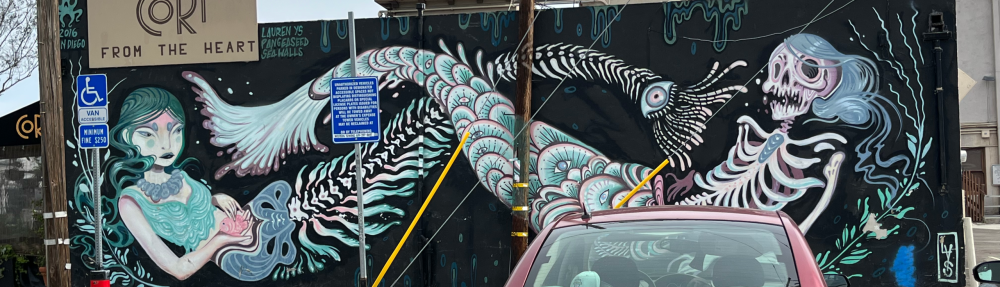
In The Little Mermaid by Hans Christian Andersen, the Sea-Witch is used to illustrate human attitudes toward the environment. When the little mermaid travels to the sea-witch’s home. “Built of bones of shipwrecked human beings, and within the sea-witch, feeding a toad from her mouth, just as people amongst us give us a little canary-bird a lump of sugar to eat” (The Little Mermaid, 121). This depiction of the sea-witch as the ‘other’ to the little mermaid suggests that the witch may have some human tendencies that demonstrate the human relationship to the natural world.
To start the description of the witches’ home, the little mermaid describes, “Built of bones of shipwrecked human beings,” which creates a grotesque image, a home made out of death. This environment is built on man-made ships and their destruction. The use of the word ‘bones’ suggests the sea-witch power is rooted in their demise. She then describes the swea-witch “feeding a toad from her mouth” is a gesture of nurture in its own grotesque way. Toads are seen as ‘ugly’, ‘poisonous’ creatures, but provide life to the sea-witches’ minions. Hans compares this action of feeding “just as people amongst us give a little canary-ird a lump of sugar to eat” demonstrating the juxtaposition of the grotesque of the toad with the delicate and sweet a canary. This mirrors human affection, where the witch mimics human kindness, but with something repulsive, making that act familiar and disturbing. In her own unique way demonstrates her capability of tenderness in a corrupted form. The sea-witch is another example of the dangerous ‘other’, residing in a world made of death, and her ‘twisted’ way of performing human behaviors.
Anderson Sea-witch acts as a mirror to human behavior towards the environment, highlighting their destruction and twisted relationship with the ocean. The sea-witches’ home, being “built of bones of shipwrecked human beings,” demonstrates how our ecosystems are increasingly built upon the consequences of human activity. Nature has to adapt to our damage and carries its evidence within it. The sea-witch is haunting because, like nature, it displays the impact humans have had due to their destruction. The revulsion toward the sea-witch’s twisted nurturing behavior reveals how humans only value beauty. When nature can poison or harm humans, they tend to ignore or downplay its role in our ecosystem. This reflects how humans try to control and manipulate the natural world to suit their comfort.
These are interesting ideas, but I don’t see how the sea witch is/represents the human– or why does she have to be human? Why can’t she just be an outcast or a witch or a marginal person that is somehow been punished and degraded? In other words, I think you’re jumping to conclusions that you haven’t yet proven, and I’d like to see you spend the time fleshing out the connections between your ideas.