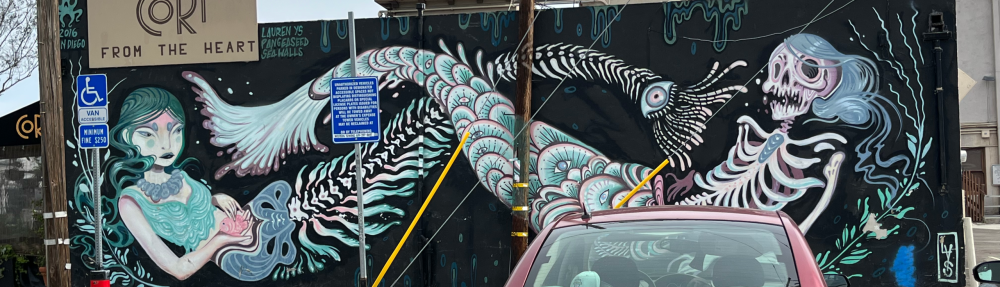
The question about what distinguishes us as humans has puzzled many scholars throughout the history of mankind. When talking about the history of merpeople, the question of what is a human and what is an animal is often worried about. In addition, mermaids and mermen are hybrids that stand between animal and human. More than even hybrid mermaids, they stand between what is normal compared to what is monstrous. This idea of human is an important matter in what we classify hybrid studies and in monster theory- human, they reveal how we define ourselves by facing the new.
The idea of what it is to be human is a question that has also been discussed throughout the ages. In the Introduction chapter of Merpeople: A Human History, author Vaughn Scribner references a historian Erica Fudge who says the following: “Reading about animals is always reading through humans … paradoxically, humans need animals in order to be human.” Scribner writes about another historian, Harriet Ritvo, who made a statement about how when establishing the definition of humanity, the individuals who make the determination matter more than the subject, based on who or what carries out the assessment. When we view the perspective of those who inhabit the combination of having human-like and inherent sea and water qualities, we are better able to understand that the myths, stories, and divisions that have been built around this group to represent deeper human concerns and issues.
Monstrous entities within Western culture such as merpeople have challenged the way human-animal boundary is perceived. While merpeople are partly human, do they contain all the essential qualities that make humans who they are? These include, reason, dignity, and even spirituality. Or, were their animal traits socially lower on the “natural order,” and due to this their human superiority is reinforced? All these questions have made people reconsider what it truly means to be a human, and the way natural order actually is supposed to work.
The study of merpeople shows how the dividing lines of what dictates humanity are continually uncertain. Our sense of human identity purely relies on what we define as human, nonhuman, civilized, or wild, and that the human domination of nature is not absolute.