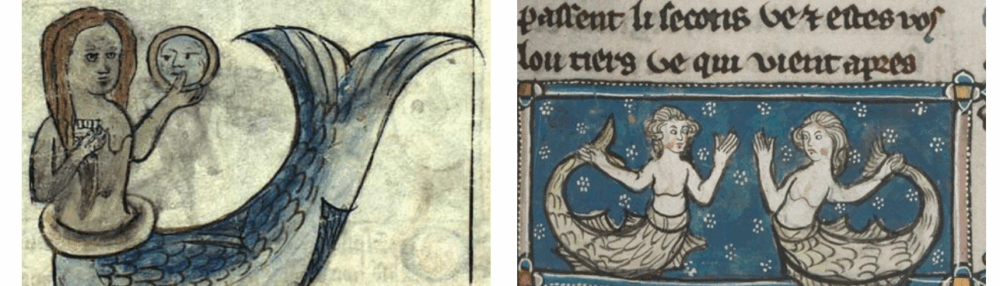
As I read the Odysseus I found it interesting as how the text was written first and foremost as most of the literature we read was told as stories and this one was written as a song.I can visually see this story being told in a tavern in which one had come home from a long day and needed something to keep their mind distracted or entertained.I saw this in the first stanza in the story in which they say “o friends o ever partners of my woes” it seems to get the people to feel invested in this story as its sung.I was also wondering as to why they were using quotations within stanza 2,3,4,5,6 but I found it very interesting that they wouldnt close the quotation until stanza 6.I was thinking when they wouldnt finish a quotation in which i can see it as a pause in which the speaker catches their breath and tries to rile their audience and try to get banter from them.Stanza six could be seen as a way for the speaker to finish the story by getting the audience to finish the story as if they expect the audience to already know of the story.within the text I found evidence in which they would use exclamation points every so often in order to emphasize a revelation or a action.while the story itself I didnt feel was impactful it was the use of their description and world building that had me going through the story in which “flowery meads the sportive sirens play” not only did I find this as the only description I needed of the mermaids of the story It had me thinking how they defined the feminity of mermaids indirectly in which they described the mermaids to be laying in a beautiful field of flowers.
Tag Archives: week4
The Poetics of Planetary Water: Blue Humanities, Poetics, and Striving for Change
In Steve Mentz’s work, “A poetics of planetary water: The blue humanities after John Gillis”, Mentz writes, “A poetics of planetary water aims to clarify the relationships between humans and water in all its forms and phases” (Mentz 139). He also adds, “The intimacy between humans and water, an element that surrounds our planet and permeates our bodies, provides a rich reservoir for ideas about change, resilience and the possibilities for new ways of thinking an living” (Mentz 152).
These statements are important because they encapsulate the chief intellectual and philosophical purpose of the article: Blue humanities consider the ocean not as one big abstract space but water in all forms-liquid, ice, vapor-than can associate closely and materially with human bodies, cultures, and histories. Through the various states of planetary water, the article argues that literary, cultural, and poetic approaches shed light on how water’s presence in collective imagination and lived experience allows the accommodation of present environmental catastrophes and ongoing climate change.
Poetics of planetary water are of essence because they imply accepting the interdependent relation between human beings and the more-than-human environment. Where scientific discourse measures, records, and explains, the poetic framework places feelings, ambiguity, and multiplicity upfront. This proves especially important in environmental crises that happen to be rapid in transition, not clearly defined, and that require resiliences and adapting instead of trying to maintain everything. The article argues rightly that such a framework could cut disciplinary boundaries and scales-from global systems down to the personal and sensory encounters at the shore, according to Mentz’s findings in Whitman and Dickinson’s works (Mentz 138).
Moreover, poetics allow blue humanities scholars to gather together representation, materiality, and imaginative possibility, as they stress dynamics and transition on the three water phases. It is more than simply theoretical; it is a call to accept that our ways of thinking, writing, or living must mirror the very substance that defines and sustains life. These are powerful and timely ideas when seas rise, ice melts, and atmospheres become unstable.