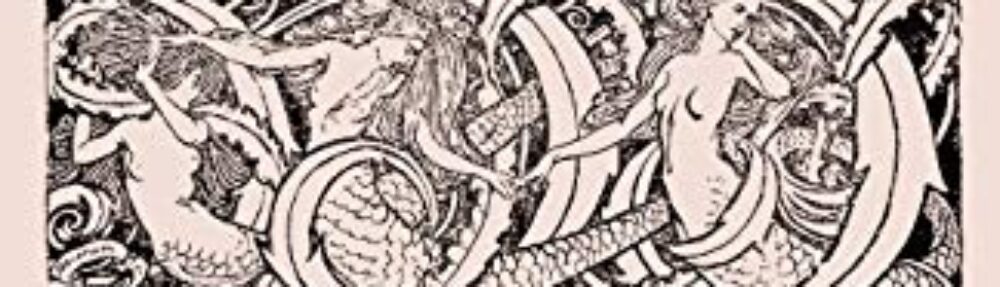
What I found most interesting from Chapter 1 of Merpeople: A Human History by Vaughn Scribner was how the author focuses on gender to showcase how mermaids can reveal the sentiment and values of a certain time period. While people may not think twice about gender when it comes to mermaids, the text highlights that mermaids being female was a deliberate design by the Christian Church in the medieval era to keep women inferior to men. With her alluring nature and provocative form, the mermaid was essentially propaganda to illuminate the dangers of femininity and to “[decenter] the feminine” (Scribner 39-40). If women were allowed to be seen as equal to men, then the foundation of the patriarchy would no longer be stable – which is why the Christian Church formed the “dangerous” mermaid to warn society of the risk femininity posed to the community. By creating a feminine creature who represents a plethora of sins and vices, the church has a reason to keep women out of positions in power and to lower their position in society. In turn, current readers can see that the medieval period champions the masculine but despises the feminine through their portrayal of mermaids as sinful and dangerous creatures who lure men into sin and death. The mermaid becomes a figure which each era in time can put their fears or values upon and allow future generations to understand the issues of the period. During an era in which women were seen as inferior and given few rights, mermaids confirmed the medieval fear that femininity could be the downfall of a patriarchal society. Despite many of us growing up on classic mermaid work such as Disney’s The Little Mermaid, looking at the origins of mermaids allows us to think deeper about the relationship between society and how its depiction of mermaids can speak to a generation’s perspective. The history of mermaids and humans become intertwined as they hold up a mirror to society – beckoning us to understand our fears and desires as humans. As humanity evolves and grows, so do the interpretations of mermaids and what they represent.
Femininity and Mermaids
1