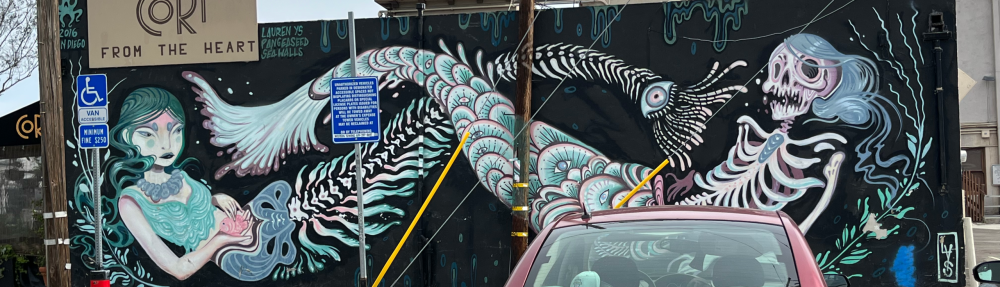
Melusine’s story of her fall at her own hands of destruction really drew my attention, because it reminded me of such a common sociological theory: symbolic interactionism. In her story, her devious behaviors against the king force her mother to punish her to become half serpent every Saturday, in her mind, effectively cursing her from any man ever wanting her. Once she gets married, she shuns him every Saturday, with this consequence that she would isolate him should he ever approach her.
In symbolic interactionism, the idea of labeling develops an association within people’s minds about how these labels hold weight. When juveniles are labelled as criminal from a young age, they internalize this mentality and shift their thinking to continue to act out because they have been deemed by society as these deviant beings, and recognize this as their only possibility for life. Melusina does the same, acting in an attempt to get revenge and even the score, but becomes branded as this evildoer by the curse set. Her inability to drop this act, to admit to her husband the reality of her behavior and her situation seems to reflect how this societal reaction theory acts within her.
His reaction, even when their kids are born as mutants, proves how her mentality surrounding it is an entirely internal thing: “still Raymond’s love for the beauty that ravished both heart and eyes remained unshaken” (Penguin, 86). His love for her in every sense transcended the reality he discovered until it presented real life effects, and one son was burned by the other. It’s then that he lashes out, and insults her the way everyone else had, and the story confirms its impact on her: “Melusina’s anxiety was now verified” (86). This confirmation from the one they love, in spite of the obvious nature to the audience that their avoidance caused it, feeds into this narrative of theirs and their destruction of this facade that they care not about perception of them, that they solely care for manipulation and power.
Her exit with him, her sincerity in grief of having to part with him actualizes that she did feel deeply for him and all of her behavior spiraled from this moment of childhood irrationality. It reflects how deeply our nature as human beings is to protect ourselves, and how our actions truly are all reactions to the perceptions in life, which stem from labels. The labels placed on mermaids as trivial childhood beauties or creatures of deception intended to destroy mankind’s sanctity, the labels we place on individuals as inherently kind or inescapably criminal, even the labels used commercially to lure us in regardless of how harmful, indicate how little we truly recognize how the ever-changing and important nature of everything within society. Our inability to decipher reality from what’s being presented lies at the heart of the tale, as a moral warning utilizing a monster and its nature to prove how our interpretations cannot always be correct.