Week 13: Mother Nature and Mother Water

In the penguin reading for this week, “African Mermaids and Other Water Spirits”, I was very intrigued with the description of the female water spirit, Yemoja—the mother of the river spirits and thunder gods. But her role is much larger, spanning the world beyond Africa, as her legend and story spread during the transatlantic slave trade. She is referred to as “Mother of Fish” and “Mother Water” and is often “associated with family, women, motherhood, and the arts.”

This made me think about something we talked about earlier this semester in my Gender, Science, and Technology class. When we gender natural forces or just the natural world, such as calling nature female, then we can view the feminine as nurturing, but also as violent or irrational. The term “Mother Nature” is often endearing and allows us to frame the globe we live on as a gentle provider, fertile and forgiving. The same can be said for the idea of a water goddess, or “Mother Water.” A deity of great power, beauty, and fluidity. Eventually, she was used as a symbol of hope and comfort to victims of an international slave trade. A God to worship on water when the sea becomes like a battlefield.

However, it is also common for Mother Nature/Water to be seen as violent and brutal. Exploding into storms and not holding back. I guess that a God remains a God whether they are worshiped or feared. It seems that the word “mother” brings both comfort and distress. No matter what, the power of the word “mother” is very telling to the way in which we interpret motherhood and the lifeforce that women hold.

Discovery #2

strop on these goggles, I’ll guide you there myself.
It’s all subtle and submarine,
through colonnades of coral,

past the gothic windows of sea-fans
to where the crusty grouper, onyx-eyed,
blinks, weighted by its jewels, like a bald queen;

and these groined caves with barnacles
pitted like stone
are our cathedrals,

and the furnace before the hurricanes:
Gomorrah. Bones ground by windmills
into marl and cornmeal,

and that was Lamentations—
that was just Lamentations,
it was not History;

For this close reading, I aim to take a deeper look at Derek Walcott’s poem, “The Sea Is History”, particularly these five stanzas. In this passage from the poem, Walcott beautifully frames the ocean floor as its own cathedral or church of sorts. Throughout the poem, he uses the Old Testament and biblical references to equate the history of the slave trade with written religious History. At the poem’s climax, he finally confronts the irony and reshapes the Ocean into its own sacred place. Fusing the “natural” world with our perception of a divine and holy place. This passage exposes how Western historical education ignores the submerged history of the slave trade, placing written biblical tales on a higher plane than a physical archive of history, such as the ocean.  

In the very first line, Walcott writes, “Strop on these googles,” calling on his readers to look underwater and be witnesses to the concrete history hidden beneath the surface. This reminded me of a quote from David Helvarg we read earlier this semester, “More is known about the dark side of the moon than is known about the depths of the oceans.” Eurocentric education could utilize technology to uncover more about the slave trade, but it seems that when history reveals human flaws, it is often left buried, or rather, submerged. When Walcott uses phrases like “colonnades of coral” and “gothic windows of sea fans”, the imagery invokes us as readers to blend our religious practices, monuments, and architecture with the natural environment of the sea. Where our churches, propped up by columns and decorated with stained-glass windows, are our archive of time past and people lost. The sea is the same for the history of the Caribbean

slave trade. “Crusty grouper, onyx-eyed, blinks, weighted by its jewels, like a bald queen.” Perhaps this fish is a perfect metaphor for a decorated pope or priest. An integral part of this sacred submerged place. “And these groined caves with barnacles pitted like stone are our cathedrals.” The beauty of the sea and all it can create can be just as impressive and awe-inspiring as a human feat, such as the Notre Dame Cathedral. We count the days it took Michelangelo to paint the ceiling of the Sistine Chapel, but we do not tally how long it took for the caves to become “groined,” just like the ceiling of a church. And when we do discover information about the archaeological wonders that are sea caves, it is not added to our curriculum and spoon-fed to us. Just as the human church holds loss, suffering, and destruction within its history, so does the “sea church”. The sea also holds places like “Gomorrah”, a city of death and despair, destroyed for its sins. “Bones ground by windmills into marl and cornmeal.” The seafloor is a graveyard for more than just fish; the ocean acts as a cemetery for bodies, stores, and memories. There are bodies and items submerged that may never be discovered, but the story of brutality and cover-ups remains the same. Saltwater may erase physical evidence, but humans are the ones who tried to erase history first. When the education system fails to provide the proper setting and context for history, we are left with no concept of our impact off the land. The Middle Passage is taught as a transportation from one landmark to another, but what happened in between foreshadows all that follows on land. We can dig into the sparse historical accounts of the brutal, long journey, but we know that the voices drowned and all the stories silenced by pure fear are lost to history. If we can see the ocean as a physical archive of history, we could unravel the secrets hidden beneath layers of Eurocentric perspectives and written historical education.

As much as Walcott is calling on us to reframe our perspective of the ocean as a museum, literally, he is also calling us to dive into history itself. To determine the truth that lies beyond the surface of the written page. After all, there is heaps more history beyond the Bible and the moral lessons it holds. “And that was JUST Lamentations, it was not History.” This line packs the punch in this passage and really calls us to question everything we think we understand about history. In this line, we are reminded that just because something is written or material does not make it fact. With 8 years of catholic schooling under my belt, I’m no stranger to biblical texts being used as a tool for justification, as if it were almost scientific. I was taught about the stories of the Bible in a linear timeline that felt like a history class. And even in my history classes, the history of land and more importantly, “holy land” was presented as the cornerstone of my catholic education. I know that there is truth to these biblical stories just as much as I know they are riddled with myth, as I do with the environmental literature we have discussed in this class. I do believe that stories of sea creatures may be just as accurate as stories about turning water into wine. In reading this poem, I began to see the ancient stories of mermaids, sirens, and other hybrid seafolk as a kind of bible. A way to frame oceanic history through human writing. A more accessible or comprehensible way of understanding the environment that takes up over 70% of our globe. If we read these stories as cautionary tales, as we see in the Old Testament, they can also serve as a tool for teaching history. Noticing the myths and natural environment as historical truths or sites is of utmost importance.  

Overall, this group of stanzas from Derek Walcott’s Poem, “The Sea is History,” urges us to view history as more than what is written. To see the sea as a literal and metaphorical holder of earasaised histories. By illustrating the ocean as both sacred and dismal, he challenges harmful Western narratives that silence a time and place in history. This passage illuminates the fact that cherry-picked colonial historiography dictates U.S. education, ignores essential stories, and promotes a false collective memory of the slave trade.

Week 12: The Sea is history

This week’s poem, The Sea is History by Derek Walcott, was incredibly thought-provoking for me. I really loved how much it related to last week’s film, The Water Will Carry Us Home. Specifically, this stanza,

the plangent harps of the Babylonian bondage,
as the white cowries clustered like manacles
on the drowned women

I really appreciate the comparison used here. equating the sorrow of the Jews who were exiled in Babylonia to the cries of the slaves being transported to the Americas. Using the Old Testament and ancient religious history to make the history of the sea (a setting for slavery) more comprehensible or digestible. The use of “plangent” tells us that the cries of the enslaved people were incredibly loud and mournful and will forever echo in the sea. The shells of the sea (cowries), compared to shackles, highlight just how awful the deaths of these drowned women really were. Even in their death, they were still slaves, but now bound to a different kind of brutality. Although they have passed, they are still shackled to the horrific circumstances that brought them to their watery graves.

This relates to The Water Will Carry Us Home in the sense that these women’s souls still linger in the ocean. The sea holds history in the form of the lives that it has taken and the bodies it holds. After all, the sea may have filled their lungs with water and may hold thousands of slaves, but it was humans who cast those bodies out and disregarded them. It is not humans that remember those horrible acts or hold the evidence, but rather the ocean itself.

Week 11: The Water will Carry Us Home

In this short film, directed by Gabriella Tesfaye, she illustrates a terrifying truth about the ocean’s history, yet still manages to tell a beautiful, almost comforting story. We all learned about the Middle Passage in high school or middle school history classes, but I fear we were shielded from the gruesome details and horrifying tactics used to transport the victims. I never before thought of the Middle Passage as “Ocean History” necessarily. I saw it as a history of how slaves were transported from one land mass to another. This stop motion film illuminated the fact that the Ocean itself can very much be a holder of history.

These poor pregnant women depicted in the film were thrown overboard and drowned in the sea. That is just one of those truly heartbreaking truths. They now rest (hopefully peacefully) on the ocean floor. They had to endure a horrible, watery death that could never be justified. Tesfaye’s film tells an alternative death story for these women, honoring the Water Spirit, “Omambala”. The ocean has inspired religious practices and gods/goddesses since the beginning of time. Ancient peoples knew the water to have much more history than modern people may ever be able to comprehend. The telling of this story from the perspective of the sea, the true historical setting of the Middle Passage, may be exactly how we need to view it. How many slave bodies does the sea floor hold? Do their souls still reside there? Just how much History was thrown overboard to be forgotten forever? The sea holds secrets that humans wish to rid their minds of, a dumping place of sorts, where all can be cast away, and essentially washed away from reality. When you think of the Ocean as a graveyard, you think of every story, every mishap, or murder that led those bodies there. If the ocean could talk, if it had a civilization to write the stories and illustrate the tragedies, would we have more respect for it? I think it would allow us to know the human race in a whole new light.

Week 10: The History of the Ocean

In reading “The Blue Humanities”, I was very intrigued by the discussion of the unfolding history of the ocean, a place becoming more and more widely studied.

 “More is known about the dark side of the moon than is known about the depths of the oceans,” writes the sea explorer David Helvarg. Yet large numbers of people know the sea in other ways, through the arts and literature. From the beginning of the nineteenth century, fiction has been imagining undersea worlds that explorers were unable to reach.

This short passage from the preface to the text stood out to me in particular. We have been studying pieces of literature all year that have unraveled the history of how the ocean has been viewed for centuries. For a long time, fiction was all we had to tie ourselves back to the ocean from which we evolved at the beginning of time. Time after time, our fiction has been proven to be accurate in many ways. We discussed in class how Hans Christian Andersen’s description of a living sea floor was outlandish at the time, but almost completely accurate from a modern, scientific perspective. Now that we can reach these depths and have the technology to truly understand the sea and all that has transpired there, who knows what new fiction will be stirred up? I don’t believe that the scientific exploration of the seas and discovering the “true” history of the oceans will stop mankind from thinking up oceanic stories to enchant generations. Sure, we may know more about the moon than our oceans, but that hasn’t stopped the continuous flow of “moon media”. After all, even when we have explanations for, or seem to be able to grasp a concept or space (practically a non-human one), we still find ways to pull art and literature from them.

A Shift in Perspetive: Why did the word “Wilderness” change?

The Trouble With Wilderness, as a whole, prompts us, as readers, to reconsider our perspective on what we understand to be “wild” or “the wilderness.” What really intrigued me was how the language we have used to describe a place without civilization has changed so dramatically.

“As late as the eighteenth century, the most common usage of the word “wilderness” in the English language referred to landscapes that generally carried adjectives
far different from the ones they attractoday. To be a wilderness then was to be “deserted,” “savage,” “desolate,” “barren”-in short, a “waste,” the word’s nearest synonym. Its connotations were anything but positive, and the emotion one was most
likely to feel in its presence was “bewilderment” or terror.'” (Cronon 8)

Land without human touch was once seen as no more than land waiting to be demarcated and domesticated. This was the case even when that “barren” or “savage” land was populated by its native peoples. If in the eighteenth century, we were so uninterested in going to these supposedly terrifying and pointless places, why are we continually more interested in going to them and away from our modern world? If in the past they felt more comfortable in towns or villages, and if they believed the land was just waiting to be built upon, then what happened? Perhaps we aren’t a very communal species anymore. The bustling towns and communities we made could have made us claustrophobic. Maybe we had to change the wording around “wildereness” to have a justifiable escape. Now, instead of feeling “terror” in the woods, we feel it at our office desks, drinking $7 coffees and reading spine-chilling news headlines. Nature and wilderness are now seen as tranquil and solitary, and FREE. Although my dad always used to say “nothing’s free”, he may have a point. I personally have been given the means and privilege to travel to places I really do consider “wild,” but sometimes just getting to the “wild” is expensive.

Under the Wilderness Act of 1964, “true wilderness” is defined as an area “where the earth and its community of life are untrammeled by man, where man himself is a visitor who does not remain.” Although we have changed our vocabulary around the “great”, “vast”, and “beautiful”, wilderness. We still know one thing to be certain, and it is that we cannot remain. The very thing about nature is that it is without us. We have built that construct, and we cannot escape it. We have, in many ways, evolved. We can no longer survive in what is true wilderness. Many men have attempted it for sure, my favorite is Christopher McCandless, whose story I read in Into the Wild, he truly did it right, seeking out the original “deserted, savage, (and) desolate” wilderness.

Discovery #1- the Voice of a Mermaid

 In Monsters, an anthology book compiled by Andrew Hoffman, I found a piece, “Mermaids’ Attributes, Behavior, and Environs,” written by Skye Alexander. In this passage, Alexander highlights the common themes that have been central to merpeople since their ancient beginnings, and why these traits make them so intriguing.

 Alexander offers insights that would definitely enhance our understanding of merpeople and literature in the environment. She explains how certain merpeople traits, that we have learned about from age-old stories, make them more violent and dangerous than we have previously discussed. The narrative around Mermaids, in particular, is heavily based on their “enchanting voices, their sensuality, and their destructive behavior” (Alexander 1). We have spoken extensively in our discussions about these details and the physical traits of mermaids. We have discussed how their destructiveness had reason and rhyme, but at the end of the day, they were written to be lesson-bearing monsters. Although I do believe “monster” to be a somewhat neutral term in this class, as I am not afraid of mermaids or many other methodical creatures, nor do I think they are inherently “bad” or “evil”. Nonetheless, they do fit the part. This text has led me to the conclusion that the voice, song, or sound of mermaids is their truly “monstrous” trait, rather than their physical hybridity. As the only predominantly female monsters in our world, mermaids’ ability to kill with their voices speaks volumes about women and the way in which they are portrayed.   

 The fear associated with mermaids, more often than not, relates to their alluring songs and siren-like voices. Although their shape and animalistic features are mentioned and enchanting for sure, the most deadly aspect they possess is their sound. Unlike other monstrous creators whose large, hairy bodies or sharp teeth make them dangerous, mermaids don’t breathe fire or suck blood; they kill with their songs. Their enticing voices leave sailors, pirates, and all other seamen doomed. “Medolious but melievant temptatress – no man could resist their tantalizing singing” (Alexander 2). In many examples, the true fear of mermaids stems from their communication and the imminent drowning that it would cause. The Greek Sirens were dark and spiteful creatures with wicked intent to kill, possessing the superpower of sound. Although mermaids’ beauty and nudity may have caught the eyes of men, their ears were the weakness that these creatures preyed upon. In general, the deaths that mermaids caused were not necessarily brutal or graphic; instead, they lured men into a space they simply could not survive. They didn’t rip sailors’ hearts out or sink fangs into flesh. When necessary, their violence was channeled through the medium of aggressive waters. They have been credited with controlling the ocean in some way or another. “Many legends link mermaids with storms and even blame them for whipping up tempests at sea in order to sink ships” (Alexander 3). Their tunes or, in some cases, shrieks, like those of the ancient Irish banshees, are their weapon of choice.  

  While mermaids use their voices to take lives, their lack of voice and communication in stories like Hans Christian Andersen’s has also proven to work against them. He claims the songs of mermaids are to calm the sailors already bound for death. The Little Mermaid dealt away her tongue in pursuit of human legs and love, and it inevitably led to her death as she could no longer tell the prince she saved him or bring herself to kill him either. Here, her voice, or lack thereof, is not a weapon or tool of destruction but a sacrifice or form of payment. She was willing to be silenced forever, even if her voice was her greatest or most powerful quality, all to be human and escape the water.

  This trope of voice and noise is particularly interesting when you factor in gender. Mermen have historically been rarely associated with singing. “Folklore remains pretty quiet on the subject of mermen’s singing ability” (Alexander 2). How come this singing motif is reserved only for mermaids? Their femaleness and their way of communicating (or killing) are directly linked. These early mermaid tales are from a time period where women were practically voiceless, politically, but also in the home. In a world run by men, women were meant to be fragile. They would not hit or scratch or be “unruly”. The second their words cut too deeply or were used too much and with too much volume, they were “hysterical.” In a world where you cannot legally own anything, including yourself, all you really have is your voice. It is so interesting to me, the dynamic of making a voice a weapon. “Psychologically, mermaids have been said to present the complexity of women’s emotions, ranging from playful to stormy” (Alexander 4). I consider it empowering to be acquainted with mermaids; they are beautifully powerful creatures free from the clutches of worldly patriarchy. This pride, however, is fogged by the seemly constant sexualization and demonization of these beings. Do women, and specifically young maids, lead to the downfall of men? Are we nothing more than long hair, breasts, mirrors, and combs? Are our voices shrill and headache-inducing? Mermaids, unlike other mythical monstrous, are driven by emotion and desire for connection; in a way, that’s what makes them so dangerous. So, as a woman with two legs and my feet on the ground, I can’t help but wonder if that same emotion also makes us dangerous to or different from men. 

 If song, sound, or speech is a mermaid’s sword and the very thing that makes her a monster, then ultimately, mermaids expose the societal fear of female power or expression. Cultural narratives have used monstrous mermaids as a tool to warn men of “crazy” women and keep us quiet. Luckily, in contrast, these stories have pulled a 180 in contemporary times. Serving as loveable monsters who have gone on to empower women and teach us a lesson or two about men. I, too, will make like a mermaid and use my voice as a tool.  

Works cited:

Alexander, Skye. “Mermaids’ Attributes, Behavior, and Environs.” Monsters, 1st edition, edited by Andrew J. Hoffman, Bedford-St. Martin’s, 2025, pp. 232-237. A Bedford Spotlight Reader.
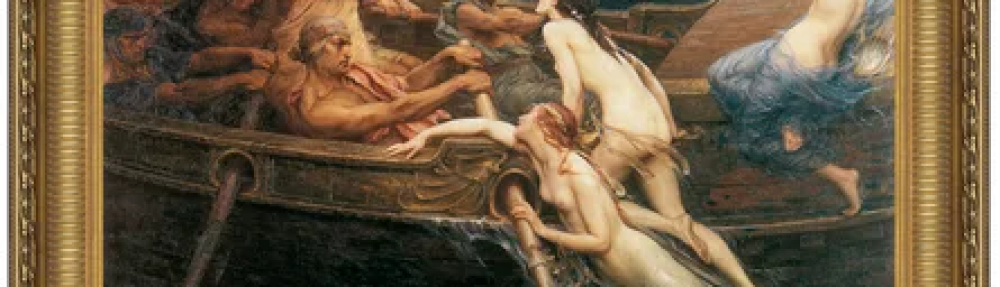
Christianity: An Apparent Constant for all Earthly Creators

Hans Christian Andersen’s The Little Mermaid depicts the lives, but more importantly, the inner thoughts and perspectives of Merpeople. Andersen wrote about what he can only imagine it would be like to look into our world from such an unimaginable viewpoint. Somehow, he still managed to integrate Western Christianity into a fairy tale about a young woman who lived separate from all things “worldly”. This proves that, as much as we try to understand the incomprehensible, and walk in the shoes of or (swim in the tails) of others, our own learned perspectives will often prevail.

On page 108, he writes, “It was the little birds that her grandmother called fishes, or else her young listeners would not have understood her, for they had never seen birds”. According to this logic, the young mermaids had no concept of the world on land whatsoever, yet in basically the same breath, he mentions how enticing the church bells are to the girls. On page 109, he mentioned the church three times, and yes, mostly intended as an example of the sounds of humans, heard from afar, but nonetheless, it was mentioned. Andersen takes the time to point out that they don’t know what dogs are, yet skims past the fact that they’d never been inside a church and still had a full understanding of what they were. If these young girls could understand the reason for church bells, and not birds singing, then well, they were clearly written to be religious mermaids.

This may seem to be very insignificant, but I felt I needed to point out such a minute detail because it really does play a larger role in this story. If this young mermaid knew the significance of the church or religion, or in some ways, morality, then she would, in turn, also know shame. Organized religion has been a tool in inducing shame for centuries, and it was especially potent at the time of this telling. Although shame is a less intense theme in this story than it is in other merpeople tales, its presence is more interesting when it relates to a LITTLE mermaid. A 15-year-old child feels shame for wanting love, for wanting beauty, and for wanting human connection.

I do not think this distinction was necessarily purposeful or intended to be significant, but I do think it points to writing about unknown beings in general. That is my point, I suppose. Andersen was submerging himself in this perspective, over-explaining the way things look to someone who had no concept of them, down to little details. Yet he subconsciously or consciously decided that, of course, mermaids would inherently have a concept of religion, the church, or God.

Week 7- Merpeople From the Perspective of Western Capitalism

After reading the excerpt, “Freakshows and Fantasies” from Merpeople: a Human History, I began to see how to concept or “promise” of merpeople in the 19th century was often used for capitalist gains. “In the keenest examples, the mermaid specimen of American sea captain Samuel Barrett Eades and the American showman P. T. Barnum’s ‘Feejee Mermaid’ both created cultural frenzies that attracted droves of paying onlookers (Scribner 125).” As sightings of mermaids and tritons became prevalent in the press, more and more people were increasingly intrigued and attracted to the idea of catching a glimpse themselves. So much so that they were willing to pay to see these creatures as if they were circus acts. As these stories of ancient Asian legends were being misinterpreted and fetishized in the West, they were also apparently aiding in business opportunities. It also did not come to a halt with the newfound perspectives of scientists. “Public exhibits and ‘freak shows’ continued to entertain clamouring audiences across both countries (Scibner 125).” No matter what, entrepreneurs (of sorts) would continue to promote and sell the chance to witness a “freakshow,” and onlookers with money to spend were all the more willing to experience something magical.

These customers may not have been aware, but if they had ever heard the ancient tales and myths of these hybrid creatures, they would be aware that they were a force to be reckoned with and maybe not seek them out. The moral of many of these Japanese stories that took the Western world into a frenzy was to steer clear of merpeople and certainly not to get too close. Yet with all of that being said, people had money to spend and a thrill to chase.

Humans have a long history of spending money on anything and everything, especially in the West, but also in such daredevil ways. People pay money to jump out of airplanes or get chased at a haunted house. These 19th-century merpeople enthusiasts don’t seem all that crazy when you think about what people will spend money on now, but they do prove to be part of a history of American Capitalism. They took part in the exploitation of not only a mythical creature, but a culture. The men who orchestrated these sideshows manipulated the public and their need for entertainment. They also dismissed the cultural and religious aspects that accompanied what they “promised,” and they made money doing so. Unfortunately, they would not be the last of their kind.

The seas and horizons are one in the same, forever forcing us to question our known world.

In Steve Mentz’s passage, “Deterritorializing Preface,” he introduces his audience to a new vocabulary, not only to acquaint his readers with the language of the ocean, but to integrate it into the “land language” (of sorts) that we use every day.

What caught my attention the most out of these seven vocabulary words was Horizon. Every other word introduced had been changed. Water from ground, flow from progress, seascape from landscape, except for horizon “(formerly horizon).”

We have always associated the word horizon with the unknown, and in the case of humans, the unknown has always been and still is the ocean. For much of human history, all we had to tell us of where we were and where we were going were our senses, most importantly, vision. The horizon is the farthest distance our eyes can behold, and we have constantly chased that place. The horizon calls to us even more because it is often associated with the ocean. That stark flat line of blue waters that merges with the sky is enticing because it seems to span forever, and we are just as curious as to what lies beyond it as we are to what lies beneath it. We use phrases like “broaden our horizons” when we refer to bettering ourselves or gaining knowledge, because when we chase horizons, we leave behind the world we know in the hope of discovery. Mentz states, “Can horizon be a metaphor for futurity that spans green pastures and blue seas? I imagine horizons as sites of transition…” (Deterritorializing Preface XVI) Of course, there is no true “place” where the sky meets the sea, but it is attainable through progress, or as Mentz would call it, flow. This transitional space, upon which we chase the sun to the edge of the water, is where we expand our comprehension of the planet we call home.

We look to horizons also for markers or points of new beginnings or of memories. “Early modern
European sailors heading into the Atlantic spent days looking out for the unmistakable silhouette of Tenerife’s volcano, which signaled impending arrival at the Canary Islands” (Deterritorializing Preface XVI.) The landmarks that jet out in contrast to the vast sea are signs of hope and life. On a canvas of mysterious waters that make up most of this earth, land on the horizon not only gives us bearing, but the promise of a habitable place.