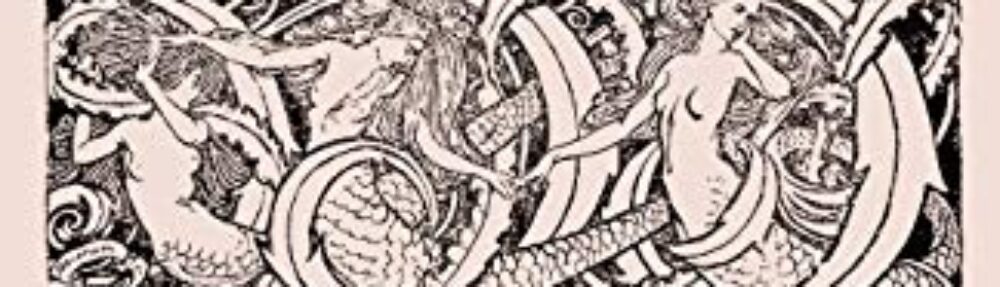
Elemental Spirits

In Undine (penguin), one of the passages that stood out to me was when Undine explains the existence of other elemental beings. The text says “There are beings in the elements which almost appear like mortals, and which rarely allow themselves to become visible to your race. Wonderful salamanders glitter and sport in the flames; lean and malicious gnomes dwell deep under the earth; spirits, belonging to the air, wander through the forests; and a vast family of water spirits live in the lakes and streams and brooks.” I think this description is important because it shows how magical the natural world is and it also makes me think about how humans create the boundary between themselves and nature. 

One thing that stood out to me in this quote is how much imagery it provides. Each spirit is tied to an element, fire, earth, air, water and each one carries a different personality. Salamanders are “wonderful” and full of light, gnomes are “lean and malicious”, air spirits are wanders, and water spirits are shown as a “vast family”. By giving each element a personality it shows that the natural world is alive and has hidden powers that are beyond human control. At the same time, the story makes it clear that these spirits “rarely allow themselves to become visible” which suggests secrecy and distance meaning the separation from the natural world. They exist alongside humans but stay hidden.I like the wording of this quote because it’s super detailed but at the same time it also organizes nature into different categories. Some spirits sound enchanting while others feel dangerous but they all align to “your race” meaning human beings. This separation creates the idea that these creatures are like humans but not quite, which makes them fascinating but also threatening.  

Another thing I found interesting was the way Undine delivers her speech because it connects to her own identity. Undine is a water spirit who gained a soul through marriage, she belongs to the world of elemental beings but she’s also separated from it. Undine is both an insider and an outsider to human life. She knows their world, but she is now speaking to humans and describing them as different. By saying “your race” she shows that she is in between the two categories, human and nonhuman. 

This part of the story shows how the line between nature and humanity is blurred and it connects to Undine’s in between identity. The descriptions of the elements bring out both the beauty and the fear people attach to nature and the way the spirits are kept separate from humans makes me think of the bigger question of how to define what belongs to the human world and what exists outside of it.   

The Power of the Leap

In chapter 22 of “The Romance of the Faery Melusine”, Melusine leaps from a window showing how betrayal destroyed her relationship with Raymondin and she is now forced to choose between two worlds. After begging Raymondin for forgiveness and him refusing she knows she has to make a super tough decision and choose between her two worlds. The text says “Meluine looked out over the green meadows, and added in a voice so sad that everyone renewed their tears: Sweet and beautiful county, I must now leave you as well! I hope however to live until my end in loving you and admiring you, and being loved and admired by all myself …and she wept again at these last words. Farewell, farewell, each and everyone of you…Then tearing herself away, scratched and grazed by the frightful  violence that she did to herself, she threw herself straight out of the window in the form of a winged serpent, about 15 feet long” (144). This specific scene shows that exact moment where love and identity collide. 

In this story, the window represents so much more than just a part of a house. It represents the line between Melusine’s human life with her marriage, family and children and the supernatural world she comes from. When Melusine chooses to jump she crosses that line forever. The “green meadows” show a life of stability that she’s leaving behind while her serpent form shows the side of herself she doesn’t have to hide anymore. The window acts as a symbol of choice and once she goes through it, there’s no going back. 

When Melusine decides to take the leap this brings up the power of  identity.  Melusine has been torn between living a normal life as a wife and hiding her true self from the people she loves. By taking the jump, Melusine accepts her true serpent self even though it means losing the life she currently has. The sadness in her words shows us that this isn’t what she wants but at the same time it’s freeing because she no longer has to live in disguise. This proves to us how acts of betrayal can sometimes be irreversible. Raymondin was unable to forgive Melusine and so she was forced to make a decision. Her choice to jump means that she is choosing herself over anything else and it’s a way to take control back over her life  

Overall, I think the leap can be seen as both tragic and powerful. At this moment Melusine’s two worlds are split apart for good and everything she’s ever known has been torn away. The idea of her disappearing into the air as a serpent really sticks with me because it shows that love will never survive without trust and hiding who you truly are will always come with a cost. 

Fear and Wonder in the Forest 

In chapter one, “ The Great Old Hunter”, the forest isn’t just seen as a setting or a scenery in the background. To me it feels more alive, sort of like a character in the story. The way it’s described shows how medieval people saw the natural world as both familiar and terrifying and also as something that could provide for them but also threaten them. On page 11 the text says, “The forest stretched beyond, menacing and dangerous, full of the unknown, concealing the surprising and the supernatural” this shows how the forest symbolized mystery and fear all at once. 

The people in this story lived right next to the forest so danger was always nearby. Wolves and foxes could sneak into villages and even sometimes drag children away. The text makes a point to say that the weapons were useless against the wild creatures which shows how powerless the people often felt. Even being inside their villages they could never fully escape the dangers of the wild. What really stood out to me was how the forest isn’t just described in physical terms but also in a spiritual way. Villagers often hear clawed feet on the stones and smell sulphur and smoke and this made them think of the devil. This sort of blurs the line between natural threats and supernatural evil. The forest becomes a place where our physical world and the spiritual world overlap. 

At the same time, the forest is also shown as an enchanting place. Lynxes were described as watching with “burning eyes” and bees drop golden honey from the treetops. I’ve always found the forest to be a beautiful place so this mix of beauty and danger is interesting because it truly shows how unpredictable the forest is and that it’s a place where anything could happen. I think that the forest represents both fear and fascination. The forest is a place that humans can’t fully control, where survival is uncertain and where they believed supernatural forces lurked but it’s also a place where they imagined wonder and magic. By making the forest appear so threatening yet mysterious at the same time, the story shows how medieval people lived right on the edge of the wild even though they were never completely safe and the unknown was just a few steps away.