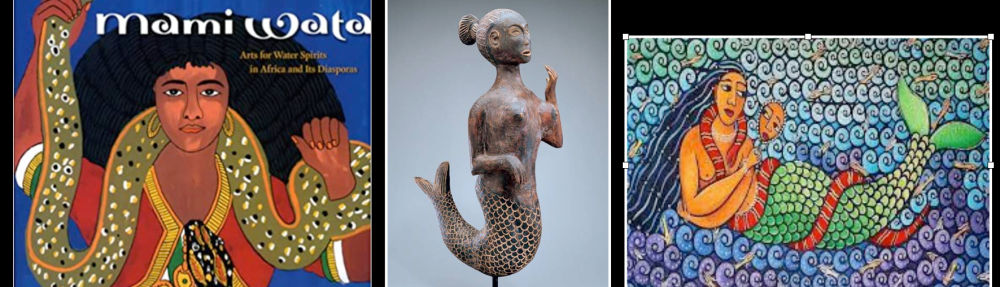
In Merepeople: A Human History, Vaughn Scribner says that mermaids act as a means for symbolism for the shift in humanity and their conceptions of myth, religion, science, and capitalism (27). Mermaids perfectly reflect that change in humanity from believing in something mythical to exorting it. Mermaids were viewed as grotesque to some, simply because they’re half-human and half-animal. Whereas some mythological creatures like angels, for example, are very much also hybrid beings–half bird and half human–are symbolic in a different way; a way that is full of purity and transcendence. Mermaids were vilified while angels were, quite literally, angelic and uplifting. The stark contrast between those two hybrid beings shows how gendered interpretations chose whether a hybrid was to be celebrated or condemned.
I feel like the human half of the mermaid should’ve invited sympathy, which could’ve been symbolic in a way that allows people to connect their own experiences to life, not just on the surface, but as Princess Ariel’s good friend, Sebastian, once said, also under the sea. But instead, the difference between merepeople and humans was just too vast, and humans couldn’t relate to them, and that’s what began painting them as monstrous. Early portrayals of merepeople started with mermen, and they were associated with being strong and as a force in nature. But as religious and artistic traditions changed, women were physically and figuratively becoming the face of the merepeople. Triton’s wife, Amphitrite, and other mermaids were sexualized and defined with less autonomy and more by how they reflected a man’s anxieties and desires as time progressed.
It’s also very important to note that Christianity very much weaponized this villainization of mermaids. Christians used mermaids as symbols of sin and as a warning against feminine temptation, “A scriptural passage from the Wisdom of Sirach simply stated, ‘better the wickedness of a man than a woman doing good’. Women, for early Christian leaders, represented lust, weakness and man’s fall from grace” (37). When mermaids started to be transformed into sirens and their “siren song” epitomized the danger of a woman’s voice. Instead of letting mermaids be protectors of the ocean, they became basically a scapegoat for male weakness…I totally feel like the chance to see mermaids as a protector or guardian of the sea, and it’s marine life, was overshadowed by how they were portrayed to be dangerous seductresses. By turning mermaids into monsters, humans have definitely taken away a potential voice for the environment and the natural world.
Ultimately, mermaids show how femininity, but when connected to power or danger, their feminity has been weaponized against women themselves. I wonder if the silence of the mermaids can be changed if we tried to reimagine them as protectors of the ocean rather than something that kept people out.