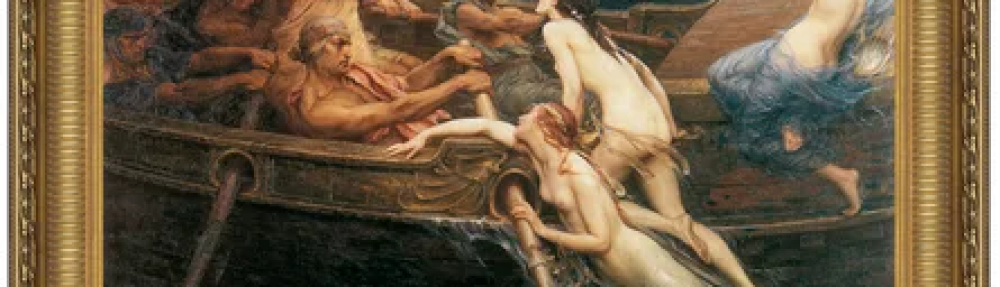
On André LeBey

My mom studies traditional folk ballads. She is part of a global community continuing the oral tradition of English/Irish and American music1. The songs she sings have kept certain stories alive for centuries and across continents. Thanks to recorded history we have hundreds of versions of these songs now, and we can see how much they change regionally and over time. While the stories overall reflect the ethos of the cultures they were performed in, the individual tellings always reflect the philosophy of the singer. I see this in real time, as my mom tends to cherry pick for versions or specific verses that empower women and uplift humanity. That’s not an erasure of history– that’s how oral tradition works, and we are seeing it this week in André LeBey’s retelling of Melusine.2 In this short collection of quotes I am not investigating how the story of Melusine reflects the culture it came from, but how this retelling of that story reflects the man who wrote it.

From two chapters of Melusine, I have developed the distinct impression that LeBey loves women. As some of you have been pointing out3, it’s a kind of love that is very hard to extricate from control, possession, domination. The story of Melusine, as Penguin pointed out, hinges on Raymondin’s utter infatuation, to the point of blind trust; I’d argue that this kind of “love” is more universally human- and more beautiful- than a strictly patriarchal reading will reveal.
To LeBey, women are a source of comfort; “townsmen huddled for comfort against their wives,” (11). He presents human men, men capable of fear, men capable of drawing emotional support from companionship.
I appreciated, also, the treatment of legendary female figures. Hildegarde, (12) is described as a “warrior”, saving the life of a man, equal to him, at least in that moment, in dignity, agency, and power. Queen Dido (13) is… mentioned.
LeBey’s description of the female practice of falconry (13) was ennobling as well; although he provides a very clear binary of the sexes (men as ‘big, strong, and majestic’, and women as ‘small, capricious, and fantastic’) he dignifies women as renowned birders. After all, the “simple daughter of a tradesman” could train and tame a famously well-disposed hawk. This also presents a less damning interpretation of the sirens’ songs; to LeBey, women, with their gentle voices and golden brown transfixing eyes are tamers in their own right; it is as respectable for a man to be tamed by a woman as it is for a bird to be tamed by a man.
Another line that struck me as almost worshipful of the institution of womanhood; “Women… told stories… like threads of gold spun from their distaffs… sparkling through the fatigue of their work,” (23)– a refreshing alternative to the demonization of womens’ stories in the promises of Odysseus’s Sirens.

By the time Melusine appears, I am not surprised to see her feelings treated with equal respect to Raymondin’s. On page 25, “it [gives] her pleasure to repeat his name”. And Raymondin’s love is complex. Yes, he above all wanted to possess her (27). But “it was always she, indeed, who led” (29) and he followed her- “he listened to her as if to a living poem”(28).

This collection of lines is only one half of a thesis on LeBey’s Melusine; I would love to explore first his attitude towards women, and then his complex entanglement of love and possession.

To come full circle– from personal, to academic, to personal– I was deeply moved by this text. I believe that the human desire to change that which we love exists outside of patriarchal control of women; I believe it can be seen in the domestication of plants and animals, in the production of art, in the eighteen years we spend raising our children in this country, in the “I can fix him” meme. This is a delicate subject to unravel; I don’t mean to endorse the impulse to control or possess, I think it’s led humanity in dark directions. But I also think that it’s deeply human, and LeBey’s writing– his palpable love for the world– is untangling the edges of this paradox.

  1. She mostly performs unrecorded for other ballad-singers, but she is on Spotify ↩︎
  2. Inspired by our discussion with Steve Mentz and some of my classmates’ posts to bring the personal into the academic 🙂 ↩︎
  3. Adrian on Mermaids and Love ↩︎

The Fury of Female Knowledge

Man’s dominion. A desire that has not been fully capitalized in this story of Melusine written by Andre Labey. Men did not yet rule the earth as they think they do now, no, “They lived close to nature in those days.” Close to a forest characterized as “menacing and dangerous, full of the unknown, concealing the surprising and the supernatural.” Common men cowered to the beasts who raided their town, “huddled for comfort against their wives… as they heard the scampering of clawed feet on paving stones.” This diabolical depiction of nature leads to a dichotomy of good vs evil. The God-fearing men pitted against vicious, depraved beings of the forest. This is the rhetoric of imperialists. The ideology of justification for tying the earth with fences. Nature is not the only thing that has yet to be seized by men’s dominion. It is women too that are still presented with a layer of autonomy or capability. They are depicted as hunters, as contenders of falconry, and knowledgeable, as we see in Melusine. What is notable about Melusine’s knowledge is that it is not yet feared. Raymondin is not deterred by Melusine’s divine knowledge, but mesmerized by it. For “it was always she, indeed, who led.” Melusine divulged information that had yet to be known, alongside promises of wealth and honour. Raymondin ceased mourning after one look at her. Is this a case of desire presiding over faith? But Melusine is as Christian as Raymondin. What it all keeps coming back to is women beholding knowledge. Divine knowledge. Desire coupled with divine knowledge that continuously leads to undesirable circumstances. There is the root of our sinful sirens. Man’s dominion over knowledge. Because knowledge in the hands of women is knowledge in the hands of beauty. And what man could compete against beauty and brains:

“What minstrel can describe the irresistible power of feminine beauty when it gets under a man’s skin? None can, and that is no doubt how things will remain till the end of the world.”

“Yet all through the land, evil reigned only if heroes failed to confront its dangers. It seemed that the one existed to give rise to the other, for humans do not show their mettle if left to themselves.”

These quotes are the source of female anguish. Evil reigns if heroes fail to confront its dangers. The irresistible power of feminine beauty combined with divine knowledge is more detrimental to the conquests of men than the diabolical packs of wolves scavenging the paving stones.

The Power of Fate and Human Agency in The Romance of the Faery Melusine

After reading The Romance of the Faery Melusine, one statement that the author wrote that stood out to me was this: “But fate, for all that, is Fate. We can only control a part of it by our actions or the consequences that come from them. We have to take what is offered when it is to our advantage” (Lebey 25).

This statement is important, because it expresses the conflict of fate vs. free will that haunts all the critical moments of this story. It appears in the middle of a significant exchange when Melusine, a faery who exists in the dual world of the supernatural and the deeply human (material), informs Raymondin that even though she knows his secrets, and could, in some sense, guide him and make him “free,” the possibilities open to the characters are ultimately controlled by fate. The idea that human beings “can only control a part” of fate immediately contradicts the typical heroic expectation of total control of one’s fate. This is both a personal tragedy for Raymondin and Melusine but also a common human dilemma reflected in myths, romances, and real life.

The structure and the pacing of the story are dependent on this outlook: Choices and vows made by Raymondin, Melusine’s supernatural contracts and penalties, and even the rise and fall of their heirs, works beyond our full understanding or control. The romance returns again and again to various moments in which characters are granted opportunities such as blessings, interventions, and magical objects– but they must inevitably face the limitations of their agency. Nonetheless, Raymondin’s vow, and his violation of it, instigates events that are irreversible, demonstrating the limitations of human agency. Those limitations are not exact: There is agency, there is an action, there is taking “what is offered”. Still, the chance of true happiness, restoration, or forgiveness is restricted by fate’s “laws and the perils that threatened him, of which the least were exile and death” (Lebey 26).

The statement ultimately matters because it addresses the existential drama around which the narrative revolves–a drama familiar in human experience across time and within varied cultural constructs. The narrative’s continual return to fate and limited agency is relatable to its central characters and amplifies the pain they are experiencing. Although the medieval romance combines aspects of Christian theology, local mythology, and psychological nuance, the idea that “we have only control over a part” of fate resonates. Human ambition is both lifted and reduced by this notion, urging individuals to accept what one can change and what cannot be changed. Thus, Melusine’s ultimate transformation into her supernatrual form and banishment, and Raymondin’s despair, are not only punishments, but instead symbolize the larger tragedy of existence: the conflict of wishing for perfect happiness alongside reality and the limitations it brings.

Thus, this principle forms the backbone not only of the dramatic arc but of the text’s philosophical legacy. It is a reminder to “take what is offered when it is due to our advantage,” to act where we can, and to accept our fate when we need to. It is a message to aspire to abandon oneself to fate in either timely ways in life or literature.

Sociologically Swimming

Melusine’s story of her fall at her own hands of destruction really drew my attention, because it reminded me of such a common sociological theory: symbolic interactionism. In her story, her devious behaviors against the king force her mother to punish her to become half serpent every Saturday, in her mind, effectively cursing her from any man ever wanting her. Once she gets married, she shuns him every Saturday, with this consequence that she would isolate him should he ever approach her.

In symbolic interactionism, the idea of labeling develops an association within people’s minds about how these labels hold weight. When juveniles are labelled as criminal from a young age, they internalize this mentality and shift their thinking to continue to act out because they have been deemed by society as these deviant beings, and recognize this as their only possibility for life. Melusina does the same, acting in an attempt to get revenge and even the score, but becomes branded as this evildoer by the curse set. Her inability to drop this act, to admit to her husband the reality of her behavior and her situation seems to reflect how this societal reaction theory acts within her.

His reaction, even when their kids are born as mutants, proves how her mentality surrounding it is an entirely internal thing: “still Raymond’s love for the beauty that ravished both heart and eyes remained unshaken” (Penguin, 86). His love for her in every sense transcended the reality he discovered until it presented real life effects, and one son was burned by the other. It’s then that he lashes out, and insults her the way everyone else had, and the story confirms its impact on her: “Melusina’s anxiety was now verified” (86). This confirmation from the one they love, in spite of the obvious nature to the audience that their avoidance caused it, feeds into this narrative of theirs and their destruction of this facade that they care not about perception of them, that they solely care for manipulation and power.

Her exit with him, her sincerity in grief of having to part with him actualizes that she did feel deeply for him and all of her behavior spiraled from this moment of childhood irrationality. It reflects how deeply our nature as human beings is to protect ourselves, and how our actions truly are all reactions to the perceptions in life, which stem from labels. The labels placed on mermaids as trivial childhood beauties or creatures of deception intended to destroy mankind’s sanctity, the labels we place on individuals as inherently kind or inescapably criminal, even the labels used commercially to lure us in regardless of how harmful, indicate how little we truly recognize how the ever-changing and important nature of everything within society. Our inability to decipher reality from what’s being presented lies at the heart of the tale, as a moral warning utilizing a monster and its nature to prove how our interpretations cannot always be correct.

Week 2: Mermaids, Illuminated

Every other page of these first two chapters of Scribner, I found something I HAD to make a post about. My mind is going off in twenty directions already. See at end of post1 a list of things I had to leave behind, but would love for someone else to pick up, if you didn’t have any particularly juicy catches of your own.

I’m deciding to focus on all the art we saw in this chapter: the early illustrations of mermaids from illuminated manuscripts. What strikes me is actually how consistent mermaids have remained; my idea of them today is not so different from the earliest depictions.
I have always loved drawing mermaids and I know I’m not alone. Possessing a long and sinuous tail, as well as often long hair unbound by gravity, and an often nude torso, makes them a really appealing subject for an artist. There are so many opportunities for creative, fluid compositions, there is the human torso for the anatomists among us to dig into, there is the deep symbolism surrounding them as closely as water surrounds them. Now, my mermaid art has been further informed by the aesthetics of illuminated manuscripts, by the Green Men, motifs which occur ubiquitously (like mermaids) and have murky origins– but unlike mermaids, do not continue to capture modern consciousness.

My pursuits, academic, creative, spiritual, professional, exist not in a single field but in an infinitely dense lattice of braided rivers and streams, and I feel that now, in my life, the undercurrent of Mermaids– a spring which arose early in my personal history– the undercurrent of Mermaids is now spreading, slowing, flowing under everything I do, informing other rivulets.

  1. – Thank you Hahnnah for bringing up music: Where are the English and Irish Ballads about Mermaids? Surface level searching returned only Child 289 , “The Mermaid”. I liked this version on spotify.
    – p8 It not a coincidence that medieval bestiaries represented real animals as “hybrid monsters”– they were drawn based on descriptions, and those descriptions could only function by referencing things people already knew (elephants having a snake on their face, rhinocerouses plated with armor, platypus with ducks bills and beavers’ tails). It’s not possible for us to comprehend anything without points of reference, things to connect them to
    – Amphitrite- I checked etymonline, and was surprised to find that they don’t attribute “-trite” to simply “triton”. Amphitrite was a bridge, in between, double-aspect (like amphibian or amphoteric or ambivalent or ambidextrous) of Triton. Being female… gave her the power… to leave the sea??
    – p 27 “To be human is to be hybrid”. Nuff said.
    – p 32-33 Note the sculpture of jonah being swallowed by the whale– the whale itself is a hybrid!
    – Scribner kind of dangerously oversimplifies the origins of Anglo Christianity in Ireland. I recommend further reading.
    – Excellent line from Thomas Cobham quoted on p 43 “Lord created different creatures… not only for sustenance… but for instruction” <- represents two crucial elements of the human relationship to the natural world in one sentence!
    – Melusine was the first transforming mermaid? Perhaps the mermaid canon I grew up with does not have origins as recent as I thought. (See also: The Orford Merman, p 55, on mermaids in captivity)
    – A line from a short story I recently read- Mkondo by Anthony Doerr- describing a fossil of an early proto-bird, which I think reflects the narrator’s unnatural dichotomous worldviews: “What a thing, half bird, half lizard, part one thing, part another, trapped forever between more perfect states”. ↩︎