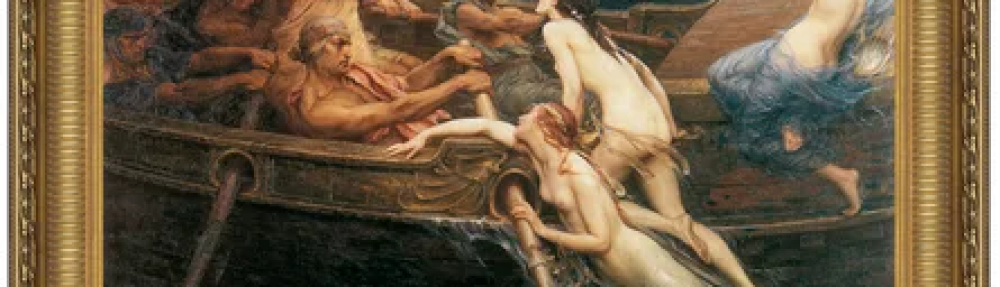
In even the most seemingly innocent tales of love the soul’s entrance to heaven is held above all other conceivable morals in “The Little Mermaid”. The little mermaid wants to enter the human world to be with her prince, but more than that, she would give up everything for one human day “to have the hope of sharing in the joys of the heavenly world.” Andersen escalates the message we learn from Undine by reiterating the ascent to heaven: “a soul… that rises up through the clear pure air to the bright stars above! Like as we rise out of the water to look at the haunts of men, so do they rise to the unknown and favoured regions” (118). Notice the language, the “clear pure air”. Air being clear and pure and, in that sense, better than the ocean where the sea-folk dwell. The deep is also categorized as clear, “clear as the purest crystal” in fact, but it is not pure within itself, it is not untainted by immorality as the air is. Andersen goes on to explain the ascent is into a “favoured region”. No matter how beautifully the ocean is presented, it is not the favored region, not compared to what is above it, and what is above that. Why is upwards always better? Because the higher you go the closer you are to heaven; and the lower, to hell. And who lives in the lowest region of all? It is not unlike the portrayal of maps. Pre-dominantly white nations/continents laid above. The favored regions, the above, have the right to conquer what is below, whether it be land or sea. It is not just the moral of the little mermaid that perpetuates the need for heaven, or the above over below, it is language as well. In fact, I did it in my very first sentence: “heaven is ‘held above’ all other potential morals”. Circling back, Steve Mentz has a compelling point for the need in the shift of language.
For just one human day
4