Project Proposal

For my final project, I want to expand on my post about Derek Walcott’s poem about the sea’s history, and how much hold water has on human history. The original focus of my post was how it pushes the human need to utilize violence and imperialism as a land marker for human record. The sea’s ability to act as a mass that holds memory is expanded on within his poem, as well as many other works throughout our readings.

I want to expand on how the sea keeping so many of humanity’s secrets makes it something so integral to society; nature surrounds us and keep track of everything we do and do not see. Without it, we have no complete and unbiased book on what truly occurred to us, so it requires recognition, and thereby protection, from us to keep its stability possible. By tying in some of the themes of Sirenomelia and The Deep as other credited resources, it proves how versatile the message remains through the same story, told in different ways.

Final Essay Proposal

Essay Proposal: After taking the feedback from peer review into consideration, for my final essay, I plan to close read “The Great Old Hunter” from Melusine and the poem “The Sea is History” by Derek Walcott. I’m going to borrow points from my second close reading of Melusine, where I explained that the chapter presents the forest as an evil entity within the community that then leads to the creation of heroes to protect the villagers. As a result, it highlights that humans exist within conditions of their environment that require them to overcome and adapt, which creates the heroic persona. I’m going to tie this into the poem “The Sea is History” since Walcott also weaves humans and nature together through the idea that the sea is a place of historical information about Caribbean history. This situates nature as a place where human identity can be formed and harbored because the sea holds narratives that help the people of the Caribbean understand histories that are often erased. I will also be bringing in the texts “The Trouble with Wilderness: Or, Getting Back to the Wrong Nature” by William Cronon and “Blue Humanities” by John Gillies as my scholarly sources. I think that both texts help strengthen the idea that humans are not separated from the environment around them but that it influences human identity by moulding their lives. These academic texts blur the boundaries by showcasing how the environment is not independent from humans and that they coexist together, which will hopefully help aid me in my close reading of the two creative texts.

Working Thesis: Within the chapter titled “The Great Old Hunter” from The Romance of the Faery Melusine by Andre Lebey, he interlaces humans and nature by depicting the forest as a place of danger that allows for the emergence of human bravery to arise. Similarly, “The Sea is History” by Derek Walcott continues this weaving of humans and the environment by characterizing the sea as a record of the history of Caribbean peoples. In both texts, the intertwining of humans and the natural environment positions nature as an entity that shapes human identity to then help move away from the belief that humans are independent from the environment.
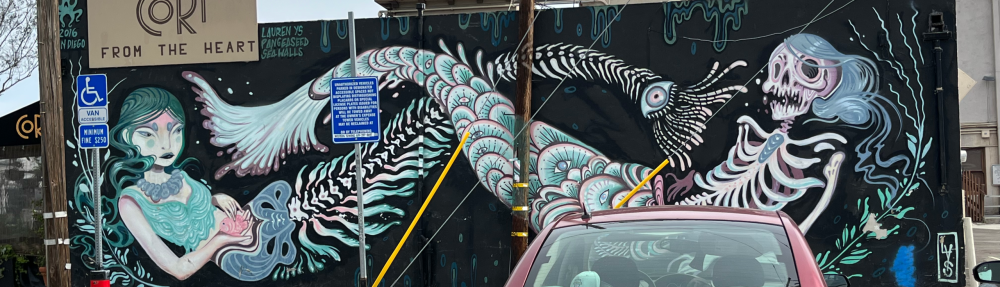
Final Essay Proposal

I plan to focus on the reading, “The Day After the Wedding” from Undine by Friedrich de la Motte Fouque, examining how he uses Huldbrand’s nightmare of women transforming into monsters not only as a foreshadowing but as a symbolic dramatization of the emotional strain already present between Undine and her husband. By clarifying how the supernatural reflects the couple’s unspoken fears–specifically Huldbrand’s anxieties about female power, intimacy, and the instability of his new marriage–I argue that the nightmare becomes a way for the text to surface the tensions neither character can articulate. Because Fouque blurs the line that is between dream and waking reality through Romantic imagery–“pale and cold” moonlight, shifting feminine specters, and Huldbrand’s momentary fear of Undine–the story ultimately suggests that love becomes most unstable when desire clashes with suppressed emotional fears. In this way, the story uses the supernatural not simply for atmosphere, but to highlight the emotional vulnerability at the core of relationships in the Romantic era.

I will be honing in on how the nightmare functions not just as a foreshadowing but as a window into Huldbrand’s suppressed fears about women and marriage, showing how Romantic literature uses the supernatural to expose emotional tensions that characters cannot openly express.