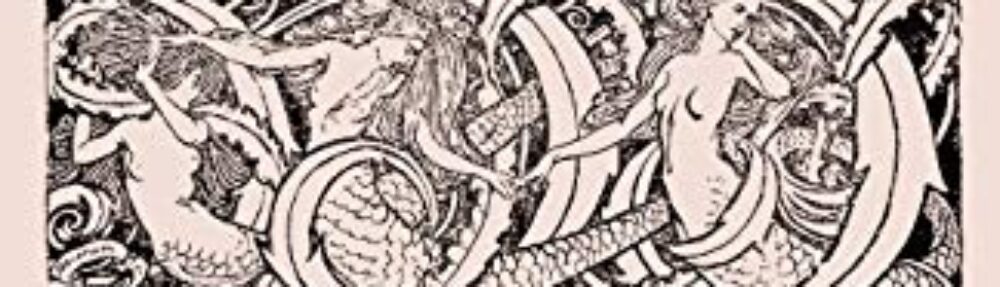
In an introduction to The Penguin Book of Mermaids Christina Bacchilega and Marie Alohalani Brown define monsters etymologically as “That which reveals, that which warns”. Going on to say that “Biform are signs, then, that often serve as admonition for humans not to cross borders and incitement to do so.” (xii) This definition reveals our classroom perception of mermaids represented on maps. Easy to perceive as a place to stay away from, or a place to colonize, to humanize.
In their collection of mermaid mythology our authors notice that duplicity and demonization are most prevalent in European societies and reflect an anthropocentric worldview. Furthermore, these tales exhibit a society’s relationship with water.
As it does between nations, races, and religions, always being depicted as the other, as the permeating being, inherently demonizes. Concealing a merperson’s environment strips the capability of sympathy and relatability of their circumstance, “the experience is conveyed as a disappearance form the human world—the only proper social world—into an abyss that is not described. This silence in the narrative furthers the perception of the captivating mermaid as monstrous.” (xix) Not only are these European tales monsterizing the mermaids but they are monstering the ocean itself.
In contrast, Hawaiian myths of the mo’o “renowned for their loveliness” offer a reflection of a society with an animistic world view. “there are no tales of men who try to tame their mo’o partners, because the mo’o, like the features of water they embody, cannot be contained or domesticated.” (xx) Hawaiian water deities display a respect for the ocean and for “nonhuman life”.
A European, monstrously depicted mermaid reveals a fear of the other as well as a fear of the ocean. And what lies beneath the ocean, a fear of the unknown. On the other hand, a respect towards water deities, like mo’o, embodies respect towards the ocean and therefore respect for life itself, no matter the form.