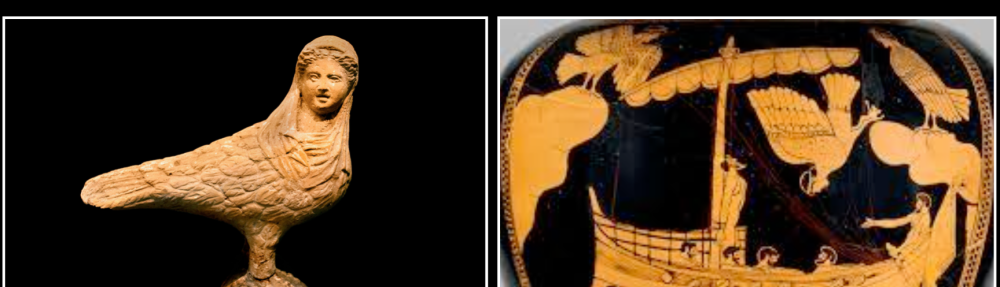
Mermaids and Borders: The Ocean is a Place Beyond Control

Preface

In this class, we have always joked about the “Science with a capital S,” or the “History with a capital H,” and, funnily enough, Eric Paul Roorda’s “Ocean with a capital O.” Throughout this essay, I decided to take a queue from Roorda and Steve Mentz by deterritorializating my language and stepping away from the terracentric, and thus, “Ocean” is capitalized as Roorda does in his writings. Ironically enough, Google said that the word was grammatically incorrect. But what does Google know, for it has yet to interact with the environment in the same way that humans do.

Introduction

Humans have long tried to dominate and police the land, and all that dwells on it: this includes people, animals, and even going so far as to draw imaginary lines that create “borders.” These so-called “borders” prohibit people from entering territories, goods from being exchanged, and even languages from being spoken. However, there is one thing that humans will never be able to control: the ocean. The Ocean has prevailed boundaries in a physical and metaphorical sense for generations. You can’t draw lines on constantly moving water, and no matter how hard one might try, there will always be resistance from the ocean. Humans tend to see themselves as separate from nature, even above nature. But the truth is, humans are hybrid beings themselves, just like mermaids. They are neither nature nor non-nature. They are a culmination of all things that nature provided and humans innovated. Eric Paul Roorda’s “Introduction” to The Ocean Reader: Theory, Culture, Politics highlights the concept of terracentrism and the Ocean’s overlooked history; meanwhile, Emilija Škarnulytė’s short film Sirenomelia visually explores the relationship and faded boundaries between human and nature. Human attempts to control and define the Ocean reveal a persistent terracentrism that denies its history and autonomy, as Roorda argues in The Ocean Reader and Škarnulytė illustrates in Sirenomelia. Together, these works suggest that the Ocean—and, by extension, nature—ultimately transcends human boundaries and categorizations, challenging us to reconsider where we draw the line between human and nonhuman worlds and to recognize our limited authority over environments we cannot fully control. 

Terracentrism and the Ocean’s Resistance

Roorda’s introduction to The Ocean Reader critiques terracentrism, the human tendency to privilege land over the sea, despite its equal place in our environment. The central idea behind The Ocean Reader is to claim a spot for the Ocean in the “vast realm of World History” (Roorda 3), as humans have pushed it to be a footnote in the historical record kept by humans. Perhaps it is the fact that the Ocean is so vast that humans cannot conquer it, which makes the Ocean so “undesirable” in the eyes of humans. For generations, humans have refused to see the Ocean as a place, seeing it as a void lacking a history, as Roorda writes in his introduction (1). Additionally, he says, “Because the Ocean can’t be plowed, paved, or shaped in ways the eye is able to discern, [the Ocean] has seemed to be a constant, while the land has changed drastically over the centuries” (1). This points to the disproportionate relationship that modern humans have developed with the land. The language that Roorda uses to describe this relationship is interesting, as well. His choice of words to describe the relationship: plowed, paved, or shaped, is innately industrial. They are things that humans do to the land, but in this case, it just can’t be applied to the Ocean as it is an unchanging, unwavering force. While humans take and colonize and poison it, the land ultimately suffers and receives nothing good in return. However, where the land and sea share similarities in context with the way humans interact with them is greed. The rise of industrialism and capitalism has tainted the land and Ocean with greed, as Roorda writes, “Humans interact with that system in many ways […] They study it, find inspiration in it, play on it, and fight over it” (3). What fuels the human desire to conquer is the same for the land as it is for the Ocean: greed. But, as mentioned before, the Ocean is an unchanging and unwavering force. Its borders against the coastline are politicized because humans cannot govern and colonize the waters as they do with land. Therefore, the Ocean resists human categorization and control, undermining terracentric assumptions.  Roorda’s insistence on recognizing the Ocean as a place with history also challenges the way humans construct narratives of progress. Land-based history often emphasizes conquest, settlement, and industrial development, but the Ocean resists these frameworks. Because it cannot be permanently altered in the same visible ways as land, the Ocean becomes a site of continuity rather than rupture. This continuity is unsettling for the human-centered historical accounts, which rely on evidence of change and domination to mark significance. By positioning the Ocean as a historical actor, Roorda forces readers to reconsider what counts as history and whose stories are included in it. Roorda’s framing of the Ocean as both a site of greed and inspiration highlights its paradoxical role in human life. On one hand, the Ocean is exploited for resources, trade, and power; on the other, it inspires art, exploration, and wonder. This duality reflects the broader tension between human desire to control and the Ocean’s refusal to be controlled. By acknowledging this tension, Roorda invites readers to see the Ocean not as a void but as a dynamic force that shapes human history even as it resists human categorization.

Nature’s Autonomy in Sirenomelia

Mermaid wearing scuba mask in Sirenomelia, Emilija Škarnulytė

In a similar way that details the relationship between humans and nature, Škarnulytė’s short film Sirenomelia visually demonstrates nature’s independence from human intervention through the use of sound, visuals, and the complete lack of human interaction throughout the entire 6-minute film. In her film, viewers are introduced to a lone mermaid venturing through an abandoned submarine base. The film is eerily silent, with only the electronic, artificial “bloops” coming from the submarine. In this post-human world, there is only this singular mermaid, who is, interestingly, wearing a scuba mask: something that one might presume mermaids don’t need to have. This then begs the question: is she not fully mermaid? Was she human before, and did she become something else after years of war and desecration of the land and Oceans? This mermaid is already a hybrid being, but she also represents a blending of two realms: the “human” realm and the “nature” realm. So, beyond being a hybrid being of fish and human, she then represents a further enmeshment of humans being a part of nature. In the post-human realm of Sirenomelia, it is clear that humans no longer have a place in the environment; they came and went, leaving nature to prevail. This mermaid now represents something that came from human intervention, due to the human-like mask she uses instead of purely being a marine creature. Instead of communicating that humans and nature are completely separate entities, Škarnulytė uses her mermaid to communicate that humans were never meant to be separate from nature; they were always a part of it. But, because they were consumed by greed as discussed in the Ocean’s neglect in the historical record and focus on terracentrism, they eventually ceased to exist. Now, hybrid beings like the mermaid govern the Ocean that humans once tried to take control of. What makes this imagery so compelling is the way Škarnulytė positions the mermaid as both a survivor and a product of human failure. The scuba mask becomes a symbol of adaptation, a reminder that even in a post-human world, traces of human technology remain embedded in nature. Yet, rather than signifying dominance, the mask signifies dependence: the mermaid’s survival is tied to a human artifact, but she uses it in a way that transcends its original purpose. This inversion of meaning highlights how human creations, once designed for control, can be reabsorbed into nature’s systems and repurposed for survival. The silence of the film also plays a crucial role in reinforcing the Ocean’s autonomy. By stripping away human voices, dialogue, or even recognizable human sounds, Škarnulytė creates a soundscape that feels alien yet natural. The electronic “bloops” of the submarine are artificial, but they fade into the background, becoming part of the Ocean’s rhythm rather than dominating it. This auditory choice underscores the futility of human attempts to impose order on the Ocean: even the remnants of technology are swallowed by its vastness, transformed into echoes rather than commands. The post-human setting of Sirenomelia dramatizes what happens when greed and terracentrism sever that entanglement: humans disappear, leaving behind hybrid beings who embody the interconnectedness that humans once denied. In this way, Škarnulytė’s film not only critiques human exploitation of the Ocean but also imagines a future where nature reclaims authority, and where survival depends on embracing hybridity rather than resisting it.

Hybridity and Transformation as Challenges to Human Categories

Mermaid swimming to sonor sounds, Sirenomelia, Emilija Škarnulytė

The figure of the mermaid swimming peacefully throughout the submarine base in Sirenomelia embodies hybridity, complicating human attempts to categorize nature, thus reinforcing Roorda’s claim that the ocean resists fixed definitions. The mermaid’s hybrid body in Sirenomelia blurs boundaries between species and environments. Not only is she a half-human, half-fish being, but she is also a blend between the land and ocean that has become overused and exploited by humans. Her purely “nature” body meshed with the pairing of a distinctly human scuba-diving mask communicates the human penetration of the land and environment. Humans are innately nature, but their destruction and greed have left a permanent mark on the land, not now, it has bled onto the hybrid bodies of the mermaids in the post-human environment of Sirenomelia. Her mask presents an image of mutation, which suggests ongoing transformation beyond human control. This shows the futility of humans trying to govern and control the environment—no matter what we do, there are ways nature will prevail. One day, humans will cease to exist, and they will no longer do harm to the environment. Just as Roorda argues that the Ocean cannot be “plowed, paved, or shaped” (1) into human categories, Škarnulytė’s mermaid resists classification as either human or nature; this hybridity destabilizes terracentric assumptions and highlights the Ocean as a space of fluid identities and histories. By foregrounding transformation and hybridity, both texts emphasize that the Ocean is not just a static backdrop before the dynamic force of human authority, but it demands new ways of thinking about boundaries. This hybridity also forces us to confront the uncomfortable truth that humans themselves are hybrid beings. Just like the mermaid, humans are neither fully separate from nature nor entirely outside of it. They are a culmination of what nature provides—air, water, food, ecosystems—and what human innovation creates—technology, infrastructure, and culture. The mermaid’s mask becomes a metaphor for this entanglement: a human artifact fused with a natural body, symbolizing how human existence is always dependent on and intertwined with the environment. In this way, Sirenomelia does not simply depict a fantastical creature, but rather holds up a mirror to humanity, reminding us that our identities are inseparable from the natural world we often claim to dominate. Furthermore, the mermaid’s hybridity destabilizes the very categories humans rely on to assert authority. If she is both human and nature, then the boundary between the two collapses, exposing the artificiality of terracentric assumptions. This collapse demands a new way of thinking about boundaries—one that acknowledges fluidity, transformation, and interconnectedness rather than rigid separation. By presenting hybridity as both a survival strategy and a critique of human greed, Škarnulytė and Roorda together argue that the Ocean is not a passive backdrop but an active force that reshapes human history and identity.

Rethinking Boundaries Between Human and Nature

Together, Roorda and Škarnulytė challenge us to reconsider how we define and separate humans from nature. Humans have a natural tendency to place themselves in a separate category from nature, even going so far as viewing themselves above nature. They position themselves in a way that strips care and respect from the environment in the name of  humans being the “superior species.” But, as Roorda and Škarnulytė point out in their works, humans are just as much nature as they are non-nature. They are hybrid beings, despite their attempts to distance themselves from the environment. As Roorda points out, the ocean is a historical place beyond human shaping, and he decides to deviate from the conventional approach of lowercasing “ocean” to capitalizing “Ocean,” as I have done throughout this essay as well. He writes, “To capitalize Ocean is to challenge the conventional wisdom that the seas can be taken for granted. They cannot” (3–4). By adhering to this approach, humans can attempt to lean back on their vision as “superior” beings and instead lean towards a more ocean-centric approach that invites their hybrid state. Additionally, Škarnulytė’s mermaid complicates definitions of “nature” and “human,” as she is both and takes up space in both environments. Both works highlight the complexities and futility of rigid boundaries, urging recognition of interconnectivity and humility in the face of environments that we cannot dominate. This recognition of hybridity is crucial because it forces us to confront the false binary humans have created between themselves and the environment. By insisting on separation, humans have justified exploitation, pollution, and domination of the natural world. Yet Roorda’s capitalization of “Ocean” and Škarnulytė’s depiction of the mermaid both remind us that humans are not outside of nature but deeply entangled within it. The Ocean, with its vast history and resistance to human shaping, becomes a symbol of continuity that humans cannot erase. The mermaid, with her hybrid body and human-like mask, becomes a symbol of transformation that humans cannot fully define. Both figures destabilize the illusion of superiority and instead invite us to see ourselves as part of a larger, interconnected system.  The act of capitalizing “Ocean” is more than a stylistic choice—it is a political and ethical statement. It demands that readers treat the Ocean as a proper noun, a subject with agency, history, and significance equal to land. In doing so, Roorda challenges terracentric assumptions and insists that the Ocean deserves recognition in the same way humans recognize nations, cities, or landmarks. This shift in language mirrors Škarnulytė’s artistic shift in representation: by centering a mermaid in a post-human world, she forces viewers to acknowledge that categories like “human” and “nature” are porous and unstable. Both choices—capitalization and hybridity—work to dismantle the hierarchies humans have built to elevate themselves above the environment. If humans are hybrid beings, then their survival depends on embracing that hybridity rather than denying it. The Ocean cannot be conquered, and nature cannot be endlessly exploited without consequence. By foregrounding hybridity, Roorda and Škarnulytė remind us that the boundaries we cling to are illusions, and that our future depends on recognizing interconnectivity. In this sense, both works are not only critiques of human arrogance but also invitations to imagine a more sustainable and respectful way of living—one that honors the Ocean as a historical force and embraces hybridity as the truth of human existence.

Conclusion: “We’re all mermaids already…”

Philosopher Timothy Morton once said, “We’re all mermaids already, we just don’t know it yet.” What Morton might be pointing to is the hybrid nature humans have within the environment—they are simultaneously a part of nature, and their own entity as well. They have separated themselves from nature and, by extension, the Ocean by policing the lands and (attempting to) politicize the borders and coastlines of the Ocean, but it resists human control, both conceptually and visually, as shown in Roorda’s theory and Škarnulytė’s artistic short film. These works remind us that human authority is, ultimately, limited, and that by acknowledging the ocean’s autonomy, we may reshape our relationship with nature and the environment. By confronting our attraction towards terracentrism and embracing the ocean’s independence, we open ourselves to the more ethical, sustainable ways of engaging with the world. We may also recognize that we are mermaids—neither wholly separate from nor above nature, but a culmination of what nature provides and what human innovation creates. Recognizing this hybridity forces us to confront our limited authority over environments we cannot fully control and to reimagine our place within the natural world.

Sirenomelia: Nature Always Prevails

Humans have a long-standing desire to conquer—this includes lands, oceans, and even people. But what would a world look like with the absence of humans? Emilija Škarnulytė’s short film Sirenomelia attempts to answer this question, as it portrays a mermaid swimming through an abandoned arctic submarine base in silence, with no human interaction. In Sirenomelia, Škarnulytė uses the haunting image of the mermaid gliding through an abandoned submarine base to deafening silence to suggest that while human presence is fleeting, nature endures. By staging this encounter in a space once designed for human dominance, the film underscores the futility of humanity’s attempts to conquer the ocean and reminds us that the environment will ultimately prevail.

Mermaid wearing scuba mask in Sirenomelia, Emilija Škarnulytė

The film blurs the boundary between human and natural worlds, questioning where one ends and the other begins. The presence of the mermaid complicates this relationship—her hybrid form could indicate that she could lean either human or fish (nature). Interestingly, the mermaid sports a scuba mask (Škarnulytė 4:13), which would mean she could potentially lean more “human.” However, her unnatural abilities—swimming through water for long periods of time and her fish-like tail— would separate her from the humans we know of today. So, her appearance and capabilities raise the question: are humans a part of nature or are they separate from it? Perhaps Škarnulytė suggests that attempting to separate ourselves from nature is artificial and unstable, just like the creations we brought to this world, which are now left behind in a world devoid of humans. The hybridity of the mermaid seems to represent that humans have a place within nature; however, in the grand scheme of things, they will eventually die out and leave behind a world tainted by their presence.

Humans have always tried to conquer, but in Škarnulytė’s film, it seems that they have failed to do so. Thus, the abandoned submarine base represents humanity’s failed attempt to dominate the oceans. Humans have been trying for generations to conquer lands and draw borders, even in the water. Not only does the base represent their failed attempt at conquering the oceans, but it also represents failed ambitions and the humiliation that came with their failure. The film has multiple shots of empty corridors filled only with water, with no sign of human life. What once was likely a bustling and deadly submarine base catering to the human desire to conquer is now the playground for a mermaid who might not have ever interacted with a human. In essence, the base becomes a relic of human ambition, which is now reclaimed by nature. With no humans to operate it, her world lacks conflict and danger. The absence of humans highlights the temporality of human structures compared to the endurance of the environment.

Mermaid swimming to sonor sounds, Sirenomelia, Emilija Škarnulytė

Of course, the absence of human life has a significant impact on the messaging within the film, but the soundscape also reinforces the counteracting balance between humans and nature. The closing scene shows the mermaid swimming from a birds-eye point of view, looking down on her in the vast expanse of the ocean (Škarnulytė 5:15). In the background is the unsettling sound of what might be a sonar system. As the mermaid swims past, she leaves behind a trail of “waves,” in both the literal sense and a symbolic sense. As her tail flaps against the water, it creates waves both physically through the water and sonically through the soundwaves, almost like she is sending a message. She is the siren alerting humans of her presence, if there are any remaining. This strange and interesting combination of human devoidness but also human influence hints that even if this post-human landscape sees no humans, it still has that touch of human influence.

Although humans may strive to conquer nature by any means possible, whether that means policing borders or drawing lines non the oceans, nature will ultimately prevail. Humans are at an interesting cross-section between nature and something separate from nature. Though they have a place within nature, their ambition will ultimately be their demise. They will one day cease to exist, and all that will remain are the oceans and the lands surrounding them, and perhaps a post-human mermaid wearing a scuba mask. By showing us nature’s quiet endurance, Škarnulytė invites us to reconsider our place within—not above—the natural world.

Works Cited

Škarnulytė, Emilija. Sirenomelia. Nowness Video Art Visions, 2017. https://www.youtube.com/watch?v=foH0QGuC3kY

Week 12: The Water Will Carry Us Home—The Ocean as a Preservation of History

Gabrielle Tesfaye’s short film “The Water Will Carry Us Home” establishes that this is not the white-washed, Christian version of history that we are told in high school about the transatlantic slave trade. Tesfaye doesn’t set out to give us a realistic explanation; however, she sets out to tell a story, which is neglected by the education system as a whole. We are told that the transatlantic slave trade was tragic, but that’s about all we learn. We learn nothing of what happened to these lost souls who died during the journey from the continent of Africa to the “New World.” We don’t even know the stories of those enslaved people before they became enslaved people. What Tesfaye sets out to do is offer a story for these souls, almost as if she were granting them a final resting wish to tell their stories.

The transitions between watching real-life Tesfaye holding a ritual to the painted stop motion illustrating the slave trade back to real-life Tesfaye demonstrate not just the past and present day, but also represent what stories can be told. Tesfaye, in the “real world,” is able to tell her story because she can create something that communicates her story. She creates this art that punctuates her existence to the world. But for the lost souls of the slave trade, they cannot. What Tesfaye does is create a story for them so that they may not be forgotten. Tesfaye offers them a story that does not lead to a watery, unmarked death. Instead, she offers them new life in the underwater, being reborn and returned to the water—the water from which we all came.

When we go back to real-life Tesfaye, we see her plugging her headphones into the sand. Yes, she physically connects herself to the land, but she also listens to the voices of the ancestors whose lives were lost. She honors them by hearing them, then creating something to tell their story. The land and the ocean both act as an archive in these instances, preserving the history that has been lost to, ironically, an ocean. Their souls might have been lost to the ocean, but the ocean gave them a home. It gave them a second life, as Tesfaye aims to communicate in her film.

Week 11: Sironomelia; Nature Prevails Human Beings

Watching the first few minutes of Sironomelia was rather confusing to me, as we only got small glimpses of what was labeled to be an Arctic Nato submarine base with some underwater shots. But as the video progressed, we see a mermaid figure swimming around the waters of the base, completely alone.

I think back to the lessons we have discussed in class before, specifically on the relationships humans have with the ocean. Humans have historically neglected the ocean’s past, treating it as a history-less abyss devoid of life. However, that is far from the truth. Not only is it a historical wonder that holds all the secrets to life from millions of years ago, it is also full of life. However, if there is one thing about humans, they will do anything to conquer and politicize land that isn’t theirs to begin with. We talked about borders with coastlines in Eric Paul Roorda’s The Ocean Reader and in Helen Rodzwadoski’s “Introduction: in Vast Expanses: A History of the Oceans. Both of these readings emphasize the relationships humans have cultivated with the oceans. Dismissive, but also aggressive. What I notice in Sironomelia is the absence of humans—and with it, the absence of destruction and greed. We see a mermaid traversing this abandoned base, and I speculate that the intention of the film was that it takes place in the near future, devoid of humans.

Sironomelia tells the story of what kind of life prevails: humans are but a speck in comparison to the geological history of the Earth. But what does prevail is nature. What will prevail is the oceans. The mermaid we see is at peace because she doesn’t have to worry about the destruction that humans once brought to her world.

Towards the Sun: Reframing the Little Mermaid’s Sacrifice as Feminist Resistance

Whether you think of the curious, red-headed mermaid Ariel, or the nameless, innocent mermaid when you hear the story of “The Little Mermaid,” most people think of a weak little girl who only did things in the name of love, never for herself. However, that is not the case for either of their stories. Both mermaids are, despite what the majority think, strong-headed women who desire one thing: to walk on land and experience the world above them. This infatuation with the land above them didn’t start when they met a prince; it started far before that. In the Little Mermaid’s case (from hereon out, references to the “Little Mermaid” will refer to the mermaid in Anderson’s story, not Ariel from Disney), it started when her grandmother told her about how on her fifteenth birthday, she would be allowed to journey up to the surface and experience it for herself. And when every single one of her sisters journeyed to the surface, the Little Mermaid longed deeper and deeper to journey to the surface. Throughout her whole story, I am intrigued by the presence of one specific element described in her longing to go to the surface: the sun. It is described as being the central focus of the garden that she crafts, as each one of the sisters has their own personal garden. Some sisters craft it into the shape of a whale, others into another mermaid. But the Little Mermaid crafts hers to reflect the sun. In “The Little Mermaid,” Andersen uses the mermaid’s fixation on the sun—from her garden’s design to her final gaze as she dissolves into sea foam—as a symbol of her longing for transcendence beyond the physical world. This recurring solar imagery reframes her sacrifice not as a loss for love but as a spiritual awakening, revealing the story’s deeper reflection on identity, immortality, and the soul’s yearning for something greater.

The repeated representation of the sun in “The Little Mermaid” reflects a deeper desire for transcendence and self-actualization. From the start of the story, we are introduced to the Little Mermaid’s infatuation with the land above the sea, specifically the sun. Anderson writes, “[B]ut the youngest planted hers in a circle to imitate the sun, and chose flowers as red as the sun appeared to her” (Anderson, “The Little Mermaid”). Not only does this introduction represent her earlier infatuation with the land before she meets the prince, but it also represents her final gaze towards the sun before she commits the ultimate sacrifice and dissolves into sea foam. The sun itself in this scene also represents a yearning desire for something unreachable, yet radiant—it represents power, freedom, and identity. These are all things that are just barely within the reach of the Little Mermaid, and they are all something she desires deep down, without Anderson having to explicitly state it. In a world that constantly denies female agency, the sun represents it. It is something just barely unattainable, but in certain circumstances, such as when you fight for it, it becomes attainable.

Many believe the Little Mermaid’s sacrifice to be submission to romantic ideals; however, it is completely plausible that her sacrifice was a radical act of self-liberation. In “The Little Mermaid,” we are told that mermaids do not have a soul. Instead, they live for much longer than humans, and when they eventually die, they will become sea foam. However, there is one way to gain a soul—to have a human fall in love with you. This is what sets the Little Mermaid off on her quest to find love. Yet, it is important to note that the primary reason for going above land is not just to attain a soul, it is merely to experience life above the waters. This is represented by her infatuation and obsession with the sun. When the Little Mermaid ventures onto land, she must give up her tongue (and, in turn, her voice) for legs. Still bound by limitation, the Little Mermaid must overcome the burdens placed upon her by the circumstances she was given: first, she must cross the border between sea onto land. Then, she must navigate the trials of making the prince fall in love with her without the use of her voice. Finally, she must decide between sacrificing her prince or sacrificing herself. And in the end, she chooses to sacrifice herself. Her voicelessness and bodily loss in her death deeply contrast with her final spiritual gain when she ascends to the air, joining the daughters of the air. Through her ending, Anderson critiques the cost of conforming to patriarchal ideals, such as giving up voice, autonomy, and identity. In her final gaze towards the sun, the Little Mermaid is a reclamation of agency, as she chooses spiritual immortality with the daughters of the air rather than romantic fulfillment with the prince.

In her final moments alive, the Little Mermaid’s gaze towards the sun marks a shift from romantic longing to spiritual autonomy. Anderson writes, “The sun now rose out of the sea; its beams threw a kindly warmth upon the cold foam, and the little mermaid did not experience the pangs of death. She saw the bright sun, and above were floating hundreds of transparent, beautiful creatures; she could still catch a glimpse of the ship’s white sails, and of the red clouds in the sky, across the swarms of these lovely beings” (Anderson). In her final, dying moments, the one thing that inspired her to venture up onto land, the sun, watches over her as she lies dying in the sea foam. It is beautifully symbolic that the sun watches over her passing into the sea, and soon, into the air, as she then becomes an air spirit—a daughter of the air. Even more, the daughters of the air not only live up to around 300 years, but they also gain an immortal soul after that period of time. It is almost like the Little Mermaid gains the two things she was caught between: living for 300 years and attaining an immortal soul. The way Anderson depicts the death of the Little Mermaid is almost comforting. Particularly, the sun is characterized as warm amongst the cold foam of the sea. The stark contrast represents her relationships with the two different environments at play: the sun and its warmth representing her fondness for land, while the cold waters represent her dissatisfaction with her life in the sea. Additionally, her death is not succumbing to an eternal fate of despair; instead, it is a transformation. The Little Mermaid does not become erased; she is instead reborn, which is much more radical than submitting to the expectations placed upon her.

Works Cited

Andersen, Hans Christian. “The Little Mermaid.” The Penguin Book of Mermaids, edited by Cristina Bacchilega and Marie Alohalani Brown, Penguin Books, 2019. EPUB edition. https://reader.z-lib.fm/read/1a79973ce195b4c2f56cd9e8c208861a317cff610e2868dc8fd38d5107f82fbe/29732523/b88b30/the-penguin-book-of-mermaids.html.

Week 4: Deterritorializing is the Key to Harmony

All humans are separated by land: continents, countries, and regions. We came up with this idea of imaginary lines that separate us from wars fought long before many of us can remember. For example, California declared independence from Mexico in 1846, then later became a U.S. State after signing the Treaty of Guadalupe Hidalgo in 1948. All of this to say, land separates us, but the oceans connect us. We are so focused on our disconnection from each other because of imaginary lines that we forget that this planet is 70% ocean, with scientists sometimes calling it the interconnected global ocean. Interconnected. And maybe, as Steve Mentz suggests in his “Deterritorializing Preface,” if we deterritorialize ourselves with terrestrial language, we can become interconnected as well, just like the oceans.

Mentz offers the readers seven different terrestrial words with seven different oceanic replacements: field becomes current, ground becomes water, progress becomes flow, state becomes ship, landscape becomes seascape, clarity becomes distortion, and horizon becomes horizon (Mentz xv-xvii). These are just a few examples in which we can detach ourselves from land-bound vocabulary, but I wonder if taking this a step further (or, as Mentz might suggest, deeper) could help humans stop having such polarizing views ion each other. If humans were to deterritorialize themselves, not just through a means of language, but as a means of differentiation across peoples, could we be one step closer to harmony?

Mentz concludes with this bit of wisdom: “The blue humanities name an ocean-infused way to reframe our shared cultural history. Breaking up the Anthropocene means reimagining the anthropogenic signatures of today’s climactic disasters as a dynamic openings as well as catastrophic ruptures” (xviii). I note how Mentz writes, “shared cultural history,” as if every person on this earth shares cultural history with each other. Which, he’s not wrong—there is one thing that connects us all, no matter what imaginary lines we draw: the ocean. So perhaps, if we take a cue from Mentz, we might finally begin to find a sense of harmony between each other.

Week 3: Hybrid Uncanney Valley

It is almost like Cristina Bacchilega and Maria Alohalani Brown read my mind from last week. In their Introduction chapter of The Penguin Book of Mermaids, Bacchilega and Alohalani Brown write, “There is something deeply unsettling about a being whose form merges with the non-human. Whether they dwell in fresh or salt water, aquatic humanoids raise questions about what it is to be human and what lies beyond a human-centered world. Physically, they are both like and unlike us” (xi). This is something I touched on last week in my blog post, focusing on how Scribner observes the human interest in hybridity. Here, in Bacchilega and Alohalani Brown’s introduction, they agree with Scribner’s astute observation on hybridity, putting more of an emphasis on how, not only are we interested in the mermaid’s hybridity, but we are astonished, and, in a deeper sense, somewhat unsettled because of this merging with the familiar and unfamiliar.

Bacchilega and Alohalani Brown go on to say, “We humans do not deal well with betwixt and between—liminality makes us anxious. We prefer our world organized into well-ordered and sharply defined categories, and we prefer to be in charge of it. Nonetheless, we are strangely drawn to the other, who is in part a mirror image of us and appears within reach, even if mentally ungraspable” (xi). While, yes, the hybridity of the mermaid—and other mythological creatures, for that matter—does make us uneasy most of the time, it is the peculiarity and similarity that draw us to the mermaid.

Humans have, and likely always will be, drawn to mermaids. Whether it is their similarity or difference to us, there is something so alluring about their mix with something we know of (separately, a human and a fish). But together, we still get this uncanney-valley-like feeling when we think about mermaids. They are like us from the waist-up, but from the waist-down, they are something completely different. We like to be in control, according to Bacchilega and Alohalani Brown, but also, we are “drawn to the other” (xi). This fascination will never die, as long as we crave something otherworldly and unlike our natural world.

Week 2: Merpeople and the Human Obsession of Hybridity

From the very start of the introduction, Scribner draws his readers in with quite an unorthodox observation: “Merpeople are everywhere” (Scribner 7). Typically, you don’t think merpeople are “everywhere,” after all, we are land-dwelling creatures, which would deprive a mermaid of living ability. And yet, Scribner notes various forms in which mermaids are seen daily: the mascot of a coffee chain, TV shows, and even “Mermaid University” programs.

This interest in mermaids isn’t new, Scribner notes, saying that this interest has always been present in humans. I find it interesting that Scribner goes on to say that “[T]hese hybrid creatures represented danger as much as hope, wonder as much as horror” (8), which makes me wonder—what is it about hybridity that humans tend to obsess over? What is it about the blending of two things we are so obsessed with? Perhaps I have a different perspective on this because I grew up in a mixed-race household—my mom being Filipino and my dad being Italian-American—but I can’t count the number of times I’ve received strange comments about my lineage: “So, what are you?” “Wow, so exotic!” “That’s so interesting.” I don’t exactly take offense to it, but there is a little bit of a sting when people (usually from older generations) have this sort of intrigued yet fascinated look when I tell them I am mixed. But the human interest in mixed things doesn’t stop at these mixed children like myself; we see it in cultural/regional fusion dishes, domesticated dog breeds (most dogs nowadays are hardly ever pure-bred), even academic disciplines (Interdisciplinary Studies?), and many more I can’t think of off the top of my head. I think humans are naturally drawn to this mashing up of two different things because we crave uniqueness and originality, with the mermaid and other hybrid mythical creatures satisfying this craving thousands of years ago to today. Scribner goes on to solidify this, writing, “Monster theory and hybrid studies are imperative for Merpeople: A Human History, especially in their ability to reveal the humanity in such seemingly foreign, incongruous manifestations of the natural world” (8).

The last thing I noted while reading this introduction was Scribner’s observations that “[W]hile mermen found their origins in a Greek God, mermaids largely originated from hideous beasts who only intended to bring man to destruction through his own lust for sex and power” (11). I find it quite interesting that this evolution—man from God, woman from beast—is likely from patriarchal structures that prevail throughout time and is reflected in our own society today. Women being placed below men on the pedestal because “Eve committed original sin.” Women being told they are too emotional to lead. Women are being told they are weaker and, thus, inferior. I don’t think these examples hailed from the mermaid coming from hideous beasts, but it is definitely related. It is yet another example of women getting the short end of the stick and often being the “root cause” of men’s problems (e.g., being the reason they get led to their doom, even though they craved sex and power). This Introduction sets up a brilliant framework for how mermaids have shaped modern society today.

Hi there, I’m Annie!

Hello everyone! My name is Annie, and it is so nice to meet you all! I am in my last year of college (sobs) and I’ll be graduating in the upcoming spring semester. I am majoring in both English and Journalism, with an emphasis in Public Relations, with an Honors minor in Interdisciplinary Studies. I am also, as Professor Pressman knows quite well by now, the president of SDSU’s Color Guard & Aztec Winter Guard! It is my third season spinning with them, and my seventh year partaking in this wonderful, crazy sport that I love so much.

2024 program, “Becoming You”
2025 program, “Unholy Unchained”
My first year on the Fall Guard! Leading the first Warrior Walk with our Fall Guard manager, AJ.

In my last class with Professor Pressman, I was able to combine my passion for color guard with the foundational knowledge we gained in the Digital Humanities class she taught last spring. Never did I think I would combine color guard and academia, but I had so much fun with it! Color guard, as a performing art, is a storytelling method in its own right. The performers can tell the story of going through life and coming into your own person to covered piano music of One Direction’s “Story of My Life” (like our 2024 program, Becoming You), or tell the story of survivors in a post-apocalyptic world devoid of society escaping from captors to music from Sam Smith’s “Unholy” and 2WEI’S “Survivor” (from our 2025 program, Unholy Unchained).

Though our competitive winter season has yet to start, I am so excited to see what our coaches have in store for us, yet saddened for my last season of winter guard as I will age out this year. I can only hope that my last season with the AWG will bring us to the finals round at the University of Dayton Arena (my biggest dream ever!!).

I’m not really sure how to end this post, so I guess I’ll end it off with my favorite English/Literature interests—I love fantasy (yes, especially mermaid fantasy), and I also love dystopian or apocalyptic fiction. My favorite mermaid novel I’ve read is Deep Blue by Jennifer Donnelly, and, taking a cue from Gale’s post, my mermaid tail would be a silvery-blue color! I look forward to further meeting and interacting with you all, and I’m excited to see what we’ll learn in this class!