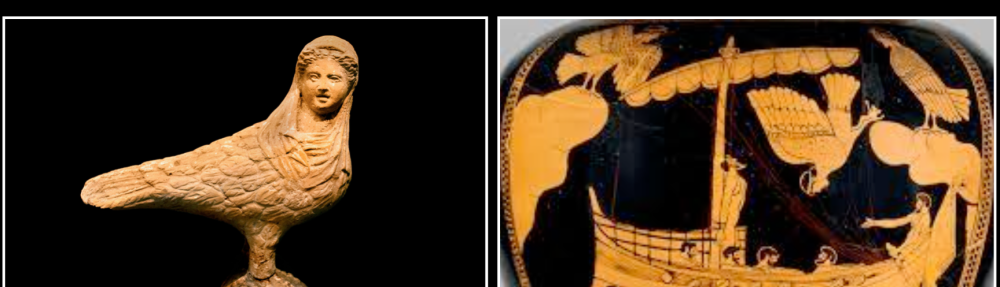
Gothic Liminality and Marriage in Undine: Final Essay

In Friedrich de la Motte Fouqué’s gothic fairy-tale novella, Undine, the supernatural in this story isn’t just for decoration, nor does it function as a simple allegory or moral instruction. Instead, it operates as a Gothic aesthetic in which instability, fear, and liminality become visible. Nowhere is this more apparent than in “The Day After the Wedding,” from Undine, a chapter within The Penguin Book of Mermaids, that unsettles the apparent harmony of marriage through nightmares, silence, repetition, and a delayed revelation. While the chapter gestures toward future tragedy, its main function is not straightforward foreshadowing. Rather, it actually exposes the Gothic anxiety produced by proximity to a being who exists between two worlds–human and nonhuman, a familiar and unknowable. This anxiety is seen almost immediately in the chapter’s atmosphere of “wonderful and horrible dreams” (102) and the uneasy quiet that follows the wedding night.

Fouqué’s “The Day After the Wedding” uses the Gothic aesthetics of dream imagery, temporal disruption, monstrous transformation, liminal space, and supernatural knowledge in order to externalize anxieties that can’t be articulated within the rational discourse of marriage or of humanoids as paradigmatic liminal beings. The chapter can be placed within a broader Romantic Gothic tradition. In his text, the supernatural doesn’t explain emotion or stabilize this romantic union, but instead dramatizes the instability that comes with being human and attempting to contain what resists fixed boundaries. This function of the supernatural aligns with what Gothic theorist, Catherine Spooner, identifies as the genre’s defining impulse in “Unsettling Feminism: The Savagery of Gothic,” she explains how Gothic “acts as an unsettling force,” not to resolve contradiction, but to expose the fractures and aporias behind these systems that claim coherence (129).

One of the most striking Gothic strategies in “The Day After the Wedding” is Fouqué’s manipulation of time. The title itself shows that there is a disruption instead of a resolution after this holy unity. Marriage, conventionally imagined to be a moment of culmination and stability, is displaced by what comes after. The phrase “the day after” suggests a belated reckoning, a temporal lag in which consequences emerge indirectly rather than being resolved at the moment of ritual completion. Gothic anxiety is thus located not in the wedding night but in what lingers beyond it. Huldbrand’s terror unfolds in the liminal hours between night and morning. The “fresh light of morning” (102) awakens the newly married couple, yet daylight does not banish his fear. Instead, it reveals what is left of the darkness. Huldbrand’s dreams stay vivid, the images clinging to him as his consciousness returns. The Gothic that is seen here is how it refuses the restorative promise of daylight; fear persists even as the night recedes. This temporal overlap collapses the boundary that is between the unconscious fantasy and waking life, suggesting that the anxieties staged by the dream are not confined to sleep but embedded in the reality that the marriage between Undine and Huldbrand has produced. The displacement aligns with Gothic conventions that put horror not at the moments of climax but in the aftermath. Marriage should prove Undine’s status as a wife and human being, yet the morning after intensifies ambiguity. Stability becomes an illusion when it should have been secure. The Gothic, therefore, comes not as an interruption but as an afterimage, revealing the insufficiency of social rituals to resolve that ontological uncertainty. To be clear, the Gothic is not defined by terror alone, but by its capacity to expose the instability of categories–human and nonhuman, reason and emotion, order and excess–that the social rituals like marriage attempt to secure.

Gothic literature locates its deepest anxieties in liminal bodies, and in Undine, this anxiety is clear about the impossibility of fully domesticating a being that exists between human and elemental worlds. As Cristina Bacchilega observes in The Penguin Book of Mermaids, “we humans do not deal well with betwixt and between–liminality makes us anxious” (xi), and Merepeople: A Human History by Vaughn Scribner also enhances that same argument by saying “hybrid creatures represented danger as much as hope, wonder as much as horror” (8). This insight gives a lens for understanding Undine, whose existence undermines the stability that marriage is meant to guarantee. Undine’s marriage to Huldbrand represents her attempt to resolve her liminality through Christian ritual and being recognized by society. The elemental spirit she is is transformed into a wife, seemingly now as a part of society. Yet Gothic logic resists such containment. The day after their union doesn’t confirm harmony; instead, it introduces disturbance. Huldbrand awakens from his “wonderful and horrible dreams,” haunted by spectres who disguise themselves as beautiful women before suddenly assuming the face and bodies of dragons (102). The nightmare stages this anxiety visually, allowing Huldbrand to project what he cannot consciously acknowledge, since Gothic convention enables the rational subject to cast off its “horrifying and fascinating others in monstrous form” (Spooner 130). Beauty now collapses into monstrosity, exposing the fragility of appearances and the instability behind these social forms. The dream aestheticizes liminality itself. This fear of collapse aligns with Scribner’s observation in Merpeople: A Human History that such hybrid beings were understood as “they were unnatural manifestations of a realm that humans did not fully understand,” capable of drawing humanity into “a strange, disorderly world of confusion and destruction” (8). The supernatural has not been domesticated; it continues to exert pressure upon the social order. Undine’s body, her origin, and relation to humanity remain a mystery, and Huldbrand’s nightmare gives way to this instability to flourish into its grotesque visual form. Marriage attempts to render Undine legible within social order, yet her presence resists such containment, for Gothic hybrids are “disturbing” precisely because their incoherent bodies “resist attempts to include them in any systematic structuration” (Spooner 136).

Dreams occupy a privileged position in Gothic and Romantic literature because they make way for forbidden or unacknowledged fears to surface. In “The Day After the Wedding,” Huldbrand’s nightmare functions as a Gothic disclosure, translating unspoken anxiety into a spectacle. The spectres that haunt him do not appear as overtly supernatural beings, but instead they “grin at him by stealth,” masquerading as beautiful women before revealing their monstrous faces (102). There is this oscillation that is seen between beauty and horror that mirrors Undine’s liminal status and destabilizes the reliability of perception itself in Huldbrand’s view. The dreams that he has, the most disturbing feature isn’t the violence of it all, but it’s the structure of the transformation from a beautiful being to a monster. The spectres are not immediately monstrous; their monstrosity emerges through sudden collapse. The women’s faces become dragons without transition, evoking medieval Christian iconography in which dragons signify deception and spiritual danger. In mermaid traditions, hybridity itself is frequently aligned with the demonic–not because the creature is morally corrupt, but because it resists the fixity required by Christian moral systems. Huldbrand’s dream draws upon this symbolic logic, staging the terror of an unfamiliar being rather than betrayal. Most importantly, the dream does not end upon waking. Pale moonlight floods the room, collapsing the boundary between dream and reality. Huldbrand looks at his wife, Undine, who still lies “in unaltered beauty and grace,” yet terror persists (102). Nothing about her has changed; what has changed is his perception of her. The dream has attached the possibility of monstrosity to Undine’s presence, showing the Gothic fear that beauty conceals monstrosities. 

The transformation of women into monsters within Huldbrand’s dream aligns with a long Gothic tradition in which femininity becomes something of a site for projected anxieties. It is not male bodies that mutate but female ones, reflecting cultural fears surrounding female otherness and autonomy. As Cristina Bacchilega notes, such narratives oftentimes reveal “the discrepancy between men’s longing for a woman unfettered by social mores and their attempt to control her by domesticating her” (xviii). Undine embodies this contradiction. Her difference makes her desirable, yet once bound within marriage, that same difference becomes threatening. Huldbrand’s attempt to master his fear–reproaching himself for doubt and pressing a kiss upon her lips–exposes the tension between rational self-discipline and irrational anxiety. The Gothic does not resolve this tension; it sustains it, revealing the limits of reason in the face of liminality. Undine’s response intensifies uncertainty. She sighs deeply and remains silent, offering no verbal reassurance. In Gothic literature, silence marks the presence of what cannot yet be safely articulated. Her quietness reflects not innocence but opacity, reinforcing the sense that she cannot be fully known or contained. 

Undine’s silence following Huldbrand’s apology is one of the chapter’s most theologically charged moments. She communicates forgiveness through gesture rather than speech, holding out her hand and offering a look of “exquisite fervour” (102). In Gothic terms, silence marks the presence of knowledge that goes beyond what can be fulfilled by a spoken language. The scenes that follow Huldbrand’s apology attempt to reassert social and spiritual order: within himself and his wife. The priest prays inwardly, the foster parents observe Undine attentively, and the household waits for confirmation that the supernatural has been successfully domesticated. Undine appears to fulfill this hope. She performs idealized domestic virtues, becoming “quiet, kind, and attentive, at once a little matron and a tender bashful girl,” yet this very perfection still comes with unease. Those who have known her longest expect at any moment to see some “whimsical vagary” to burst (103). Stability feels unnatural, sustained only through vigilance and restraint. Gothic tension operates here through anticipation rather than action. Domestic order is revealed as performative rather than natural, a fragile illusion rather than a secure resolution.

Gothic anxiety is further reinforced through the repetition and return within the chapter. Huldbrand repeatedly awakens from terror, reassures himself, and falls asleep again, only to be disrupted by new visions. This cyclical pattern undermines the idea that rational correction can dispel fear. Anxiety does not disappear when confronted; it only recurs in an altered form. Spatial repetition mirrors this psychological pattern. When Undine asks Huldbrand to carry her to the island, he recalls that this is the same island from which he first carried her to the fisherman’s cottage. Progress is revealed as circular rather than linear. Marriage does not inaugurate a new beginning but reactivates unresolved tensions rooted in liminal spaces. The island now functions as a Gothic threshold, a place of judgment rather than safety. Undine insists Huldbrand sit opposite her and read his answer in her eyes before his lips speak. Her insistence reflects a Gothic epistemology in which “vision precedes language,” marking a knowledge that cannot yet be safely articulated within humans (Spooner 135). This insistence reflects mermaid past that an interaction with them tests men; in this case, it isn’t through vow but through recognition and whether he can truly see Undine for who she is–a hybrid of both land and sea.

Water imagery saturates “The Day After the Wedding,” functioning as a central metaphor for Gothic instability. The forest stream, once wild and swollen, now flows gently, appearing temporarily subdued. Yet this calmness is explicitly framed as transient. By morning, Undine notes, the stream will be dry, enabling Huldbrand’s departure. Stability is provisional, dependent on fluctuating natural environmental forces. Undine’s ability to glide effortlessly through water contrasts with Huldbrand’s need to carry her, highlighting their ontological difference. Though he carries her body, he cannot contain her essence. Like the transformations of the nightmare, water refuses fixity. It shifts from obstacle to passage, restraint to release. The Gothic emerges not through overt threat but through the constant motion that undermines permanence, revealing marriage itself as a provisional structure rather than a stable resolution of liminality. This instability reflects a broader Gothic tradition in which, as Scribner suggests, “humankind has always grappled, humanity maintains a tenuous balance between wonder and order, civilization and savagery” (9).

Undine’s revelation of her elemental nature shifts the Gothic from implication to articulation. She situates herself within a parallel cosmology of salamanders, gnomes, spirits of air, and water beings, decentering human existence entirely. This knowledge destabilizes Enlightenment assumptions of mastery and hierarchy. Her explanation of soullessness intensifies this disruption that is seen. Elemental beings, she explains, vanish entirely at death, lacking immortal souls. The acquisition of a soul–often treated as a triumph–is framed instead as a burden that brings suffering, fear, and vulnerability. Gothic inversion is at work here because spiritual elevation gives exposure rather than transcendence. Huldbrand’s “strange shudder” and inability to speak register the epistemological shock of this revelation (105). He is confronted not with a monster but with a being whose suffering now depends upon his fidelity. Gothic anxiety arises not from threat but from responsibility.

Although the episode concludes with Huldbrand’s vow never to forsake his wife, Undine, this declaration offers emotional reassurance rather than ontological certainty. The anxieties revealed by the nightmare–fear of transformation, instability, and loss of control–remain unresolved. Fouqué is not merely depicting a husband’s fear of his wife. Rather, he uses Gothic aesthetics to interrogate the limits of social institutions themselves. Marriage, religion, and reason attempt to impose order, yet the supernatural exposes the fragility of that order by embodying what exceeds it. 

“The Day After the Wedding” from Undine uses the Gothic aesthetics of dream imagery, temporal disruption, monstrous transformation, silence, repetition, water imagery, and supernatural revelations to dramatize the instability inherent in attempts to contain liminality within human social structures. Huldbrand’s nightmare is not simple foreshadowing but an aesthetic event that externalizes anxieties surrounding categorization, control, and transformation. When the chapter is read alongside mermaid scholarships, The Penguin Book of Mermaids by Cristina Bacchilega and Marie Alohalani Brown, and Merpeople: A Human History by Vaughn Scribner, the chapter reveals how supernatural female figures function within Gothic literature as sites of cultural and psychological projection. Fouqué’s supernatural does not resolve conflict or explain emotion; it illuminates uncertainty. In doing so, Undine demonstrates the power of the Gothic not to soothe Romantic-era anxieties, but to render them visible and inescapable. In this way, Undine reveals that Gothic literature does not merely reflect anxiety but produces it deliberately, forcing readers to confront the limits of social, religious, and epistemological systems meant to protect them from uncertainty.

Works Cited

Bacchilega, Cristina, and Marie Alohalani Brown. “The Day After the Wedding from Undine.” The Penguin Book of Mermaids. New York, New York, Penguin Books, 2019, pp. 101-106.

Bacchilega, Cristina, and Marie Alohalani Brown. “Their Bodies, Our Anxieties.” The Penguin Book of Mermaids. New York, New York, Penguin Books, 2019, pp. xi-xiv.

Bacchilega, Cristina, and Marie Alohalani Brown. “Plots, Gender, and Human-Nonhuman Relations.” The Penguin Book of Mermaids. New York, New York, Penguin Books, 2019, pp. xvii-xx.

Spooner, Catherine. “Unsettling Feminism: The Savagery of Gothic.” The Gothic and Theory: An Edinburgh Companion, edited by Jerrold E. Hogle and Robert Miles, Edinburgh University Press, 2019, pp. 129–46. JSTOR, www.jstor.org/stable/10.3366/j.ctvggx38r.10.

Scribner, Vaughn, and Reaktion Books. Merpeople: A Human History. London, Reaktion Books, 2020.

What makes a good parent in a Broken world?

“Her amaba didn’t want to believe that things Yetu spoke about were true. If they were, what would it say about her as a parent to have consented to her becoming a vessel of such ugliness?” (Solomon 99-100).

I chose to close read this line from The Deep by River Solomon, this line not only reveals the emotional distance between Yetu and her amaba but also the way denial is used as a protective force within communities that have been shaped by trauma. The phrasing, “didn’t want to believe,” suggests that disbelief is not rooted in evidence but in a psychological necessity. Solomon uses the refusal less as ignorance and more as a coping mechanism–one that lets her maintain faith in cultural traditions that demand individual sacrifice.

The metaphor “a vessel of such ugliness” encapsulates the heart of the conflict. “Vessel” implies containment, something hollowed out so it can carry something else..For Yetu, becoming the Historian means being emptied of her own interiority so that she can house ancestral memories. But the keyword is “ugliness.” Unlike other descriptions of History–which can feel sacred, monumental, or heavy–“ugliness” frames the stored memories as morally contaminating. This isn’t simply a burden; it is defilement. The pain of the past becomes something grotesque, so disturbing that even hearing about it threatens those who remain unexposed.

This reframes her amaba’s denial as a form of self-preservation. To acknowledge the truth of Yetu’s suffering would mean acknowledging her own complicity in handing Yetu over to a role that causes psychological and physical turmoil. The rhetorical question–“what would it say about her as a parent”–reveals that the fear is not of Yetu’s pain, but of the mirror it holds up. The mother’s identity as a good parent depends on maintaining the belief that the system is just, that sacrifice is noble, that the Historian’s role holds dignity rather than destruction.

Solomon complicates this idea of communal survival by suggesting that protecting the collective often requires emotional abandonment of the individual (Yetu). Yetu’s mother is not a villain; she is a product of a culture where survival depends on selective seeing. In this moment, the novel confronts the reader with this painful truth that love can coexist with complicity–and that sometimes, the deepest wounds come from those who believe they are doing what’s best..

Final Essay Proposal

I plan to focus on the reading, “The Day After the Wedding” from Undine by Friedrich de la Motte Fouque, examining how he uses Huldbrand’s nightmare of women transforming into monsters not only as a foreshadowing but as a symbolic dramatization of the emotional strain already present between Undine and her husband. By clarifying how the supernatural reflects the couple’s unspoken fears–specifically Huldbrand’s anxieties about female power, intimacy, and the instability of his new marriage–I argue that the nightmare becomes a way for the text to surface the tensions neither character can articulate. Because Fouque blurs the line that is between dream and waking reality through Romantic imagery–“pale and cold” moonlight, shifting feminine specters, and Huldbrand’s momentary fear of Undine–the story ultimately suggests that love becomes most unstable when desire clashes with suppressed emotional fears. In this way, the story uses the supernatural not simply for atmosphere, but to highlight the emotional vulnerability at the core of relationships in the Romantic era.

I will be honing in on how the nightmare functions not just as a foreshadowing but as a window into Huldbrand’s suppressed fears about women and marriage, showing how Romantic literature uses the supernatural to expose emotional tensions that characters cannot openly express.

Sacred Texts, Silenced Histories in “The Sea is History”

Derek Walcott’s “The Sea is History” uses biblical structure not simply as a stylistic choice but as a critical framework for analyzing how Western powers recorded, interpreted, and ultimately controlled history in the Caribbean. Walcott’s references to Genesis, Exodus, the Ark of the Covenant, and Lamentations reconstruct a familiar Christian chronology. However, he fills each biblical moment with the events of colonialism, slavery, and cultural destruction. By structuring the poem as a distorted biblical timeline–moving from Genesis and Lamentations–Walcott critiques how colonial and Christian narratives have overwritten indigenous and African histories. Walcott’s poem, therefore, functions as an intervention by exposing how written, Christian-based historical frameworks directly displace Indigenous and African histories, and it offers a counter-history rooted in the physical realities of the Middle Passage and its aftermath. 

Walcott begins with a direct challenge to Western conceptions of historical legitimacy. The opening question–“Where are your monuments, your battles, martyrs? / Where is your tribal memory?” (lines 1-2)–is phrased like an interrogation from a European authority. It represents the Western assumption that history must be preserved through monuments, documentation, and written evidence. This logic mirrors the structure of the Bible, which Western culture often treats as the ultimate historical archive because of it being a chronologically ordered, text-bound account that certifies a people’s origins. This implied standard resembles the injunction in Deuteronomy to “remember the days of old; consider the generations long past. Ask your father and he will tell you, your elders, and they will explain to you” (32:7), a command tied to written and genealogical record-keeping. The speaker’s answer, “The sea. The sea has locked them up. The sea is History” (lines 3-4), directly opposes this definition. Walcott establishes that the history of the Caribbean cannot be found in the forms that Western historians value. It exists in a different medium that isn’t writing, but the ocean, which holds the remains and experiences of enslaved Africans. This distinction sets up the poem’s argument. Walcott is not simply describing memory; he is identifying the limits of Western archival practices and showing that those limits contribute to the erasure of Caribbean history. 

The poem’s movement into “Genesis” (line 9) marks the first of Walcott’s revisions of biblical narrative. Instead of the creation of the world, “Genesis” becomes “the lantern of a caravel” (line 8), referring to the arrival of European ships. By replacing the biblical origin story with the beginning of colonial intrusion, Walcott critiques how the West positions itself as the starting point of civilization. His revision exposes that what the Bible names as the beginning of life, Caribbean history names as the beginning of violence. This substitution is analytical, not metaphorical…Walcott demonstrates that colonial and Christian frameworks do not describe Caribbean reality accurately. Instead, they replace local histories with European interpretations of beginnings, origins, and meaning.

Walcott’s next biblical reference, “Exodus” (line 12), continues this critique. In the Bible, Exodus recounts the liberation of the Israelites from slavery. Walcott’s version is the opposite. He describes “the packed cries, / the shit, the moaning” (lines 10-11) in the holds of slave ships. Rather than liberation, this “Exodus” represents enslavement and forced displacement. This reversal directly critiques how Christian narratives were used historically to justify colonial domination. The enslaved were taught a biblical story about freedom while experiencing the complete denial of freedom. 

The reference to “the Ark of the Covenant” (line 16) continues this rewriting. Traditionally, the Ark symbolizes divine authority and continuity. Walcott’s description–“Bone soldered by coral to bone” (line 13)–places the Ark underwater, made of the bodies of the enslaved. This is not a poetic flourish; it is a direct critique of how Christian symbols gained authority in the Caribbean at the expense of African and Indigenous cultural memory. The new “Ark” is not divine but historical because it records the violence that Christian frameworks either ignored or sanitized. Walcott uses the Christian symbol to show how Christian narratives displaced the cultural and spiritual structures of the enslaved. The biblical reference allows him to highlight a specific historical process: the substitution of African cosmologies with the Christian doctrine. 

When the poem reaches “Lamentations” (line 49), Walcott emphasizes destruction and mourning. The biblical Book of Lamentations recounts the fall of Jerusalem, but Walcott’s version refers to the repeated devastation of Caribbean landscapes through both natural disaster and colonial exploitation. The line “that as just Lamentations, / it was not History” (lines 50-51) is so important. Walcott critiques the way Western narratives treat colonial suffering as incidental, marginal, or irrelveant ot “official” or “real” history. Lamentation, in his framing, is not part of recognized history because it does not appear in Western archives. The poem, therefore, distinguishes between written history, which reflects the perspective of colonizers. And lived history, which reflects the experiences of the colonized.

One of the poem’s clearest critiques of Western archival practices appears in the lines, “but the ocean kept turning blank pages / looking for History” (lines 24-25). The “blank pages” indicate the absence of written documentation of the experiences Walcott is recounting. The Atlantic slave trade produced no journals written by the enslaved, no monuments created by them, and no records preserved in their voices. Walcott uses the image of a blank page to explain how Western standards of documentation create historical gaps. If writing defines what counts as history, then the lives of those denied literacy, citizenship, or authorship become invisible. The poem argues that Western historical frameworks erase history not because the events did not happen, but because they were not recorded in the medium that the West values. The poem ends by asserting that history “really” begins not in Western writing, but in the ongoing struggle to recover suppressed voices. This is Walcott’s final critique…the biblical timeline he has revised shows that Western frameworks dictate beginnings, endings, and meaning in ways that erase non-Western histories. By rewriting scripture, he exposes this erasure and replaces it with a historically grounded alternative. 

What Lies Beneath: The Meaning of “The Sea Is History”

In “The Sea Is History,” Derek Walcott transforms the ocean into a living archive of colonial trauma and suppressed memory by using biblical allusions to explore how the histories of enslaved and colonized peoples have been submerged beneath the surface of Western historical narratives. Through his own reworking of Genesis, Exodus, and other scriptural imagery, Walcott suggests that the sea holds not only the remains of the dead but also the spiritual and cultural foundations of a displaced people. His poem argues that history–the true and honest history–exists not in monuments or written records, but in the depths of the natural world, where human suffering has been both concealed and preserved.

The poem’s opening question, “Where are your monuments, your battles, martyrs?” (line 1) mimics the authoritative tone of a historian demanding evidence of a civilization. The speaker’s response, “in that grey vault. The sea. The sea has locked them up. The sea is History,” (lines 3-4) reverses this expectation by locating history not in material ruins but in the immaterial, unfathomable depths of the ocean. The repetition of “The sea. The sea” echoes like waves, grounding the poem’s mediation in the physicality of the natural world while highlighting its function as a repository or memory. When Walcott later writes, “Bone soldered by coral to bone, mosaics mantled by the benediction of the shark’s shadow,” (lines 13-15), he fuses the sacred with the violent. The “mosaics” and “benediction” evoke religious sanctity, yet the imagery of bone and shark transforms the ocean floor into a brutal cathedral built upon human suffering.

By structuring the poem as a distorted biblical timeline–moving from Genesis to Lamentations and the New Testament–Walcott critiques how colonial and Christian narratives have overwritten indigenous and African histories. The biblical framework becomes a way of reclaiming sacred language to tell a different kind of origin story, one that is rooted in the Middle Passage and the resilience of the oppressed. When he writes, “as the sea’s lace dries in the sun but that was not History, that was only faith,” (lines 64-66), Walcott emphasizes the fragility of liberation and remembrance, suggesting that official accounts of emancipation fail to capture the depth of lived experience.

Ultimately, Walcott’s poem insists that the ocean’s silence is deceptive–it is not empty but resonant, containing the echoes of every lost voice. Through the sea, Walcott redefines history itself as an act of remembrance and resistance.

Aerial Spirits and the Natural World–Halloween Extra Credit

While thinking of our relationship with the natural world, I wanted to embody something less tangible than animals or plants–but as something we oftentimes take for granted and can’t live without: air! Air, in its invisibility, surrounds and sustains every living thing in this world, yet we rarely notice it until it’s either gone or polluted. That invisibility feels symbolic of how easily we overlook what’s essential, how often we ignore the unseen forces that hold together our world–and our emotions. Dressing as “air” became my way of representing both that invisibility and necessity.

In Hans Christian Andersen’s The Little Mermaid, the idea of air takes on a spiritual and moral weight. After all of her suffering and transformation into a human, the little mermaid becomes an “aerial spirit,” a daughter of air, freed from the physical confinement of the sea and her body. She can no longer belong to the water, nor can she belong to the human world–so she transitions into something of the between, a breath, a presence that moves unseen. That transformation struck me as deeply environmental. Air exists between worlds: the sea meets it, the earth breathes it, and it circulates through everything. To me, dressing as “air” was a way of acknowledging that liminal space, that delicate threshold and boundary where transformation and connection all coexist.

In the ending of Andersen’s The Little Mermaid, the mermaid’s transformation into an air spirit is bittersweet. She loses her voice, her body, but gains a kind of transcendence–a second life of observation and care, unseen yet intimately involved with the world. That mirrors our own relationship to nature today because of the way we impact what we can’t see. It also reminds me of the moral undertone Andersen ties to the air spirits–they earn their souls by performing good deeds, by aiding humankind. I thought about that while putting together my costume–how air, in its quiet omnipresence, is always giving, sustaining, even when we don’t notice.

So, in choosing to dress as “air,” I wanted to embody that unseen grace of Andersen’s aerial spirit–the aftermath of longing, the cost of transformation, and the quiet power of something that exists everywhere but is rarely seen. It’s all about presence without visibility, giving without reward, and how even what seems weightless can carry the heaviest of meanings.

Screenshot

Womb of the Ocean: The Third Eye

In Gabrielle Tesfaye’s The Water Will Carry Us Home, the image of three women (as depicted above, 4:30) underwater, each marked with a single, open third eye, symbolizes both the divine vision and spiritual rebirth. The third eye connects each of them to one another and to the divine world of the Orishas–these are water deities from Yoruba tradition. Rather than showing them drowning, Tesfaye transforms them into beings of power and awareness. I felt that it was important as well to point out how their eyes are closed, leaving only the third eye open, which emphasizes that their perception has shifted from physical to spiritual. Their open third eye suggests they have crossed into a higher state of understanding, one that exists beyond the material world.

I researched more about the representation of water deities with a third eye and discovered more about the traditional Yoruba culture. I found that Yemoja is a mother spirit and patron deity of women, especially pregnant women. She presides over rivers, but she can visit other bodies of water–showing that she has the ability to transcend lands and borders. Her name, meaning “mother of fish children,” shows her protection of life and her dominion over living things. Yemoja is also often portrayed as a mermaid, linking water and motherhood together, which resonates with Tesfaye’s depiction of women’s rebirth and collective awakening. https://en.wikipedia.org/wiki/Yem%E1%BB%8Dja

By placing these women in the water (as pictured above, seconds before their transformation, 4:28), Tesfaye ties the idea of sight to rebirth and return to water. The ocean acts as a womb–a place of transformation. They are thrown overboard and not simply lost to the sea, but they are received by it. The third eye marks the moment of this change, showing us that death has turned into a spiritual transformation. There also seems to be a calmness in their faces after their transformation, the calm and glowing look of them in the water suggests acceptance and peace, as if the Orishas–like Yemoja–have embraced them. Their bodies no longer are sinking but floating in harmony with the sea, indicating further of this spiritual rebirth. The third eye makes this awakening a collective experience, connecting them to each other and their history carried by the Atlantic. Tesfaye turns the ocean from a symbol of death into one of a return to the ocean. The third eye, alone open, represents the vision that comes after suffering–the ability to see beyond the pain and into renewal. In their return to water, the women are restored, not erased, their divine sight guiding them home.

Reclaiming the Ocean’s Identity

In the introduction to The Ocean Reader: History, Culture, Politics, Eric Paul Roorda says, “Ocean is capitalized in this book…to claim a formal name for that vast place within the realm of World History, as if it were a country or a continent” (3). The author makes an interesting, stylistic decision that is seemingly a grammatical observation, but it operates on a deeper, more symbolic level as a political and ecological statement. By giving “Ocean” the status of a proper noun, the author transforms it from a background into it being an active subject—one with history, agency, and an identity. This whole passage invites readers to reconsider how language reflects the hierarchy and neglect. Lands, nations, and people receive capitalization, while the sea–source of life and essentially the means of global interconnection–remains lowercased, as it’s being linguistically diminished.

The capitalization of “Ocean” challenges terracentrism, as it is described in the first pages, it is basically a perspective that centers human civilization on land and keeps water as an absence or the outside margin. Roorda’s choice of wording in the quote I mentioned earlier resists the bias by asserting that the Ocean deserves recognition that is the same as continents and countries. The rhetorical effect is both grammatical and moral because readers must see the sea not as a blank expanse but as a named entity that demands attention. By saying, “to claim a formal name for that vast place” implies a reclamation, as if the Ocean has been stripped of its proper dignity by centuries of human exploitation and invisibility.

By capitalizing “Ocean,” we’re also quite literally, linguistically elevating the word so that it also resonates with environmental urgency because this is a place! The text repositions the sea as a proper subject of history–one that is currently endangered and constantly overlooked. The act of naming becomes an act of care, restoring narrative agency to the planet’s largest ecosystem. Roorda’s editorial, grammatical choice of giving the sea the name “Ocean,” as so much more than a stylistic choice, as it performs what their argument is, and it’s turning it into advocacy. In this subtle yet profound gesture, language becomes a tool to compel readers to see that the Ocean, like humanity itself, has a name that is worth honoring.

Why Science Alone Can’t Save the Planet

In Chapter 1 of The Environmental Humanities: A Critical Introduction, Emmett and Nye argue that “scientists excel at identifying and explaining such problems, but they alone cannot solve them. Solutions will require political and cultural expertise as well” (1). This passage makes it clear that the main idea of environmental humanities is that ecological crises are not merely scientific issues but also fundamentally cultural and ethical ones. The authors do a good job of juxtaposing the precision of scientific discovery with the failures of implementation. By using the Shanghai ecological community project, which was never built, because it ignored local farmers and scientists “studying rare birds” (2). The text reads as a confident declaration of what science can do, but then slowly turns into using words of limitation like “cannot solve” or “require”, which mirrors how knowledge without cultural context can result in the collapse of inaction.

By using examples such as “floating islands of plastic” and “garbage produced by human consumption,” Emmett and Nye evoke a vivid imagery of excess and waste for their audience, yet the moral emphasis is not on catastrophe but more so on human responsibility (1). The repetition of “we believe” throughout that same passage functions rhetorically like a creed, positioning the environmental humanities as an ethical community that is grounded in both conviction and collaboration. The authors’ use of language, using phrases like “constructive knowledge,” contrasts sharply with the rhetoric of crisis that often dominates environmental discourse. Their insistence that “humanists must offer constructive knowledge as well as criticism” redefines the role of humanities scholars from detached observers into activists in environmental problem-solving (2).

All in all, the Shanghai example used in Chapter 1 dramatizes the failure of hierarchical solutions for environmental change and highlights the need for interdisciplinarity rooted in local histories and their cultures. The text’s moral arc moves from scientific detachment to ecological empathy, further suggesting that effective environmental action must integrate a narrative, have ethics, and social understanding. In this sense, Emmett and Nye transform environmental thought from a study of nature’s decline into a humanistic question about how cultures choose to live on this planet–an intellectual and moral shift that defines the emergence of the field of environmental humanities itself.

Boundaries and the Poetics of Desire in “The Little Mermaid”

In Hans Christian Andersen’s The Little Mermaid, the natural world is described as not a static realm of beauty or terror but as a fluid, layered space of constant boundaries and thresholds–between sea and land, body and soul, sight and silence. The mermaid’s journey is not simply about yearning for love or immortality; it is about confronting the boundaries that define her existence itself. From the story’s first line, Andersen creates a world that is so dazzlingly transparent yet unreachable, “…at sea, the water is as blue as the prettiest cornflowers, and as clear as the purest crystal. But it is very deep–so deep, indeed, that no rope can fathom it” (108). This opening image establishes the story’s main paradox: what can be seen cannot always be in reach. In Andersen’s universe, beauty and desire exist behind this glass–something visible and almost tangible, but forever slightly out of reach. His tale becomes a meditation on longing as both an act of vision and a form of suffering. 

Yet Andersen does not romanticize this world that is full of boundaries. His oceanic imagery has both wonder and peril, clarity and concealment. The mermaid’s world glitters with visible barriers such as the “tall pointed windows of the clearest amber” of her father’s palace (108), the “broad flight of marble steps, the last of which reached down into the sea” (117), and the “clear pure air to the bright stars above” (118). These images of transparency invite vision but with a resistance to entry, which evokes the sense of a space where perception is always partial. In a sense, Andersen makes the ocean itself into a metaphor for consciousness–radiant but not clear at its depths. Like the wolves prowling the edge of the forest in the medieval world of “The Great Old Hunter,” the boundaries of Andersen’s sea suggest a moral and spiritual front; a place that both tempts and tests the soul. The Little Mermaid’s desire to cross those borders becomes a spiritual trial in which every one of her acts of seeing the other side comes with pain.

Each transition in the tale turns this metaphor into a physical experience. In the mermaid’s first transformation, turning fifteen, she comes to the surface to see the human world, and she becomes almost like a ghostly spectator. She watches a ship with “gay-coloured lanterns” and filled with music and light, yet she remains invisible to those aboard the ship (113). Her rescue of the prince occurs in the same paradoxical mode; it’s an act of intimacy that once again leaves her unseen. She kisses his forehead and saves his life, but when he awakens, “he did not send her a smile, neither did he know she had saved him” (116). Her desire–her wanting–to be seen turns into an experience of erasure. In this way, Andersen redefines love not as a union, but as asymmetrical. He creates this relationship between the mermaid and the prince to be a longing that can be seen but not touched.

The mermaid’s second transformation–the one that brings her from sea to land–literalizes the pain of crossing these boundaries. The sea witch warns her that every step will feel as if she were “treading upon such sharp knives” (121). This bodily torment turns her desire to be a part of another world into a kind of sacred suffering that echoes the Christian imagery of martyrdom that runs quietly beneath the tale’s surface. In giving up her voice for the mere chance to be with the prince, she trades her speech for silence and her agency for suffering. The loss of her voice, however, does not mute her completely. Andersen writes that her “expressive eyes” could express what her tongue could not (122). Yet this communication through her eyes, through something purely visible, exposes the same problem that controls the story’s imagery; seeing is not understanding. The prince reads her gaze as affection, but he has no understanding of the true pain she has undergone to be on the surface with him. Andersen’s choice to render their language as sight rather than sound only dramatizes the failure of expression across these boundaries–what happens when one world’s meaning cannot translate into another’s.

Even the story’s setting for sound reflects this fracture. The little mermaid’s sisters sing above the waves, but their song is distorted by the storm, heard by sailors only as “howling of the tempest” (112). This moment mirrors the earlier crystal clear imagery: something pure becomes broken or fragmented at the surface to the other side. Andersen uses these recurring distortions–of light, sound, and sense–to show how borders not only separate but also transform. The result is a poetics of a half-understanding of knowledge, where perception is being filtered through glass, water, and air. These are physical barriers that become emotional and spiritual, all while defining the mermaid’s tragedy of always being almost close enough to experience a life she cannot have.

When the mermaid’s journey ends not in marriage but dissolving into the sea, the story reaches its most haunting image of her final transformation. As she throws herself into the sea and becomes foam, she expects only the “pangs of death” (129). Instead, she awakens “amongst the daughters of the air,” the invisible spirits who tell her she has gained a soul, a new way of living, through her selflessness (129). On one level, this conclusion resolves the moral logic of Andersen’s ‘fairy’ tale of virtue and suffering that yield a spiritual reward. But on another level, it reaffirms the same paradox that began the story. Her final transformation–an invisible, airy being–truly embodies pure permeability. She has crossed every boundary, but only by losing her mermaid form. To cross and transcend the limits of vision and voice, she must become the very medium through which others see and hear. Her ultimate price of unionization of the two is almost like she needs to disappear. 

What makes Andersen’s ending so moving is that it refuses the consolations of romantic fulfillment. The mermaid’s transformation into air isn’t a victory but an acceptance that desire itself is the boundary that gives meaning to being. Andersen’s moral vision, like his imagery, is transparent yet unfathomable. He suggests that longing for something isn’t a flaw that needs to be cured but a necessary tension that lies between beauty and loss. Therefore, the story operates as a spiritual allegory–the mermaid’s love for the prince mirrors humanity’s longing for transcendence, a yearning to reach beyond the glass of the material world. Yet that same longing exposes the pain of separation between the visible and invisible, the human and divine.

To conclude, The Little Mermaid asks readers to dwell at the edge rather than cross it. Andersen’s tale, like the crystal clear sea that opens the story, insists that what shines beyond reach is what teaches us to feel, to hope, to mourn. The mermaid’s fate, which is neither entirely tragic nor redemptive, captures the fragile balance between body and soul and between being able to see and being seen. Her transformations show readers a moral map in which every ascension–from sea, land, to air–each movement shows that beauty and suffering are both connected. To live, for Andersen, is to live at the border of what’s possible, to feel both the ache of an incompletion and the holiness of longing. The mermaid’s world reminds us that the boundaries we cannot cross are also the ones that define us, shimmering just beyond our reach like light through the water. Painful, distant, and endlessly alive.