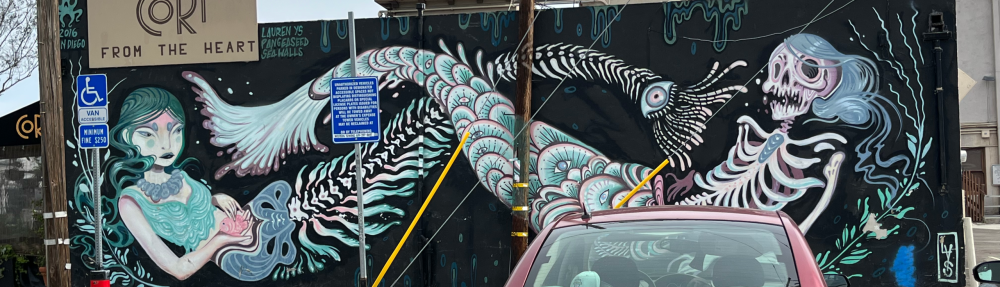
In William Cronon’s ‘The Trouble with Wilderness’, the author explains that what people see as pure nature is actually shaped by human culture. He writes, “wilderness hides its unnaturalness behind a mask that is all the more beguiling because it seems so natural” (7). This image of the mask helps readers understand how humans cover up their own role in creating what they call nature. Cronon argues that seeing wilderness as pure is a dangerous illusion because it lets people ignore their own responsibility for environmental change. By showing how beauty and deception work together in this idea of wilderness, he suggests readers to look closely at their own beliefs and see how imagination shapes the world we think we are simply observing.
Cronon’s words make readers feel the difference between what is truly natural and what only seems natural. The word mask has two sides, it can hide something, but it can also make it look more appealing. When he describes the mask as beguiling, the word adds a feeling of temptation. This shows that humans are not just fooled by nature’s appearance, they want to believe in it. It reminds readers that what looks natural might actually be constructed. Even the structure of the sentence works like the mask itself, beautiful on the outside, but hiding something more complex beneath.
Cronon expands this idea when he writes that wilderness “seems to offer an escape from history and the self, when in fact it is the product of precisely that history” (8). This sentence shows that our idea of wilderness comes from culture and time, not from nature itself. Cronon suggests readers to notice how their sense of pure nature is built by human stories. Later, he writes, “the dream of an unworked natural landscape is very much the fantasy of people who have never themselves had to work the land” (11). The word fantasy connects back to the earlier image of the mask. It suggests that this illusion of untouched nature often comes from privilege and distance. People who do not depend on the land can afford to imagine it as pure and unworked. Cronon’ criticizes this way of thinking, showing how human fantasy turns nature into something unreal.
The mask also represents how modern society separates people from the natural world. Cronon points out that people idealize wilderness because they live apart from it. By calling it sacred or untouched, they make nature seem distant from everyday life. The mask, then, becomes a symbol of denial, a way to hide human influence on the environment. He suggests the idea of pure wilderness hides the fact that humans have already shaped it. I thought that Cronon uses this metaphor to show that the line between human and natural is not real, but imagined.
In conclusion, the mask is not only about wilderness but about how people see the world. Cronon reminds readers that language and culture shape what we call truth. Wilderness may look untouched, but that is because we have imagined it that way. By removing the mask, Cronon asks readers to see nature not as a fantasy or escape, but as part of the same world we live in, one that requires care, respect, and shared responsibility.