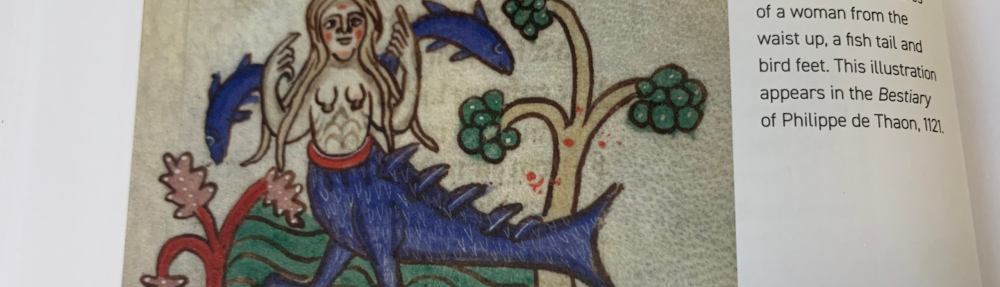
Essay Proposal: After taking the feedback from peer review into consideration, for my final essay, I plan to close read “The Great Old Hunter” from Melusine and the poem “The Sea is History” by Derek Walcott. I’m going to borrow points from my second close reading of Melusine, where I explained that the chapter presents the forest as an evil entity within the community that then leads to the creation of heroes to protect the villagers. As a result, it highlights that humans exist within conditions of their environment that require them to overcome and adapt, which creates the heroic persona. I’m going to tie this into the poem “The Sea is History” since Walcott also weaves humans and nature together through the idea that the sea is a place of historical information about Caribbean history. This situates nature as a place where human identity can be formed and harbored because the sea holds narratives that help the people of the Caribbean understand histories that are often erased. I will also be bringing in the texts “The Trouble with Wilderness: Or, Getting Back to the Wrong Nature” by William Cronon and “Blue Humanities” by John Gillies as my scholarly sources. I think that both texts help strengthen the idea that humans are not separated from the environment around them but that it influences human identity by moulding their lives. These academic texts blur the boundaries by showcasing how the environment is not independent from humans and that they coexist together, which will hopefully help aid me in my close reading of the two creative texts.
Working Thesis: Within the chapter titled “The Great Old Hunter” from The Romance of the Faery Melusine by Andre Lebey, he interlaces humans and nature by depicting the forest as a place of danger that allows for the emergence of human bravery to arise. Similarly, “The Sea is History” by Derek Walcott continues this weaving of humans and the environment by characterizing the sea as a record of the history of Caribbean peoples. In both texts, the intertwining of humans and the natural environment positions nature as an entity that shapes human identity to then help move away from the belief that humans are independent from the environment.