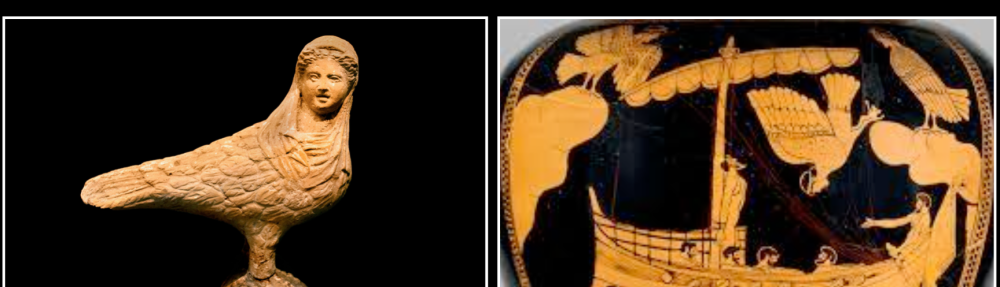
Where should responsibility fall in relation to history?

Solomon brings readers insight into the abandonment of responsibility seen in the Modern human race. Yetu, the historian of her kind, granted the ability to withhold all memories of their oceanic ancestry, highlights the key factor of carrying this burden all alone. She states “I carry the burden of remembering so you don’t have to.” “So you don’t have to” is Solomon speaking directly to modern human readers in regards to their dismissal of the Oceanic history of water, current, and life, and instead, allowing others to push for it remembrance in a way unaffecting our own lives. Modern humans have moved away from our ancestry held within the deep Ocean waters. We have distanced ourselves from our history, and instead, see others passing on the knowledge as enough of a voice to represent us all. 

Oceanic language and history has become “otherworldly” knowledge. Something everyday members of society have little need to know about. In modern human minds, our majority lack of understanding cannot possibly cause negative damage towards the Oceans identity. Yet, when we see something as not our problem, it leads to being the cause of someone else’s. 

Humans in the western hemisphere are so easy to dismiss Oceanic history and origins. Myths and legends are just that. A tale, not a biography. Western humans do not see the need to remember Oceanic history as we have so far distanced ourselves from our ancestry, we care little for our relationship with our home (Ocean) and its future descendants. We place that need of remembrance on those we deem as “inferior.” Those whose lives have less meaning can be responsible for caring for something “like the Ocean.” 

Yetu’s struggle to maintain balance as the historian, alone in her protecting history and her ancestors, tells Modern Humans the danger of ignoring our history and allowing it to be the focal point of someone else’s cause. Why should we abandon our Oceanic history and allow someone else to carry our identity? Yet Yetu believes her community doesn’t care if she’s the only one who has to remember, Western humans have little regard if their “inferiors” are in charge of caring for something as “non – human related” as the ocean.

Final Project Proposal

After viewing everyones feedback aqnd ideas for their final projects, I have decidedto write an essay that incorporates another essay and blog post to discuss Ocean as a language and history, unique in its relationship with the human race. I plan on using the works of Mentz, Roonan, and African Mermaids for use of close reading and analysis. I will have a main question on how the human relationship with the Ocean has evolved over time and how the Ocean itself is a recognized Nation and State, with individual identity and history.

Thesis as of now:

Through the works of Rooda, Mentz, and African Mermaids, exposes modern humans to the ideology of Ocean as an identity and history. Humans are exposed to the ocean as the bases for modern human language and the relationship between all humans across the seas. In our exposure, we connect back to our Oceanic and mythical roots that set the foundation for the modern human race. 

Week 15: The Deep Chapters 5-7

In Chapters 5-7 of The Deep, Rivers Solomon deepens the emotional and cultural significance of memory for the wanjiru, revealing how remembrance functions as both a burden and a necessary act of collective survival. What struck me most in these chapters is Yetu’s growing realization that carrying the pain of the past is not an unfortunate duty, rather that it is the thread that binds identity, ancestry, and community. Her confrontation with the memories shows that history is not passive, it actively presses against the present, shaping how people understand themselves.

These chapters complicate the idea that forgetting is a form a freedom. The wanjiru believe that releasing their trauma to a single historian allows them to live peacefully, but Solomon illustrates how this system fractures Yetu’s sense of self. In absorbing generations of suffering she becomes a living archive, one that is overwhelmed, uncontained, and searching for boundaries. When she finally separates herself from the community, the physical and emotional relief that she experiences exposes the unsustainability of placing an entire history of a people into one body. The compelling shift from silence to shared accountability suggests that healing, whether collective or personal, depends on not erasing the trauma, but confronting it together.

Week 15: The Deep

Immediately, I was entranced with this world created by Rivers Solomon, and the way life underwater was described, specifically the sensation and connection Yetu feels within the deep, of which she has to drown out. She describes what it feels like to let her guard down, connecting to her senses, and immediately being overwhelmed:

“Yetu closed her eyes and honed in on the vibrations of the deep, purposefully resensitizing her scaled skin to the onslaught of the circus that is the sea. It was a matter of reconnecting her brain to her body and lowering the shields she’d put in place in her mind to protect herself. As she focused, the world came in. The water grew colder, the pressure more intense, the salt denser. She could parse each granule. Individual crystals of the flaky white mineral scraped against her (2).”

As interesting as having this deep connection to the ocean may be, it seems to take a toll on Yetu. The currents and creatures within the deep, the remembering, these are sensations that seem to be normal to her people, but affect her differently, degrading her proprioception, her sense of self within space. It translates to me as depression that Yetu may be suffering from, and relates this fantastical premise to reality, in which mental health is seriously overlooked when it comes to young people, and in my experience, to young women. I can only speak from experience, but I’ve observed that especially within POC families, who have experienced poverty, abuse, racism, and who have endured, it is difficult to explain mental illness without being guilt-tripped. The same seems to be happening with Yetu, who is so affected to the point of putting herself in dangerous situations, stifled by the lingering grasp of the past: “Yetu did know what it was like. After all, wasn’t cavity just another word for vessel? Her own self had been scooped out when she was a child of fourteen years to make room for ancestors, leaving her empty and wandering and ravenous.(6)”

Final Project Proposal – The Blue Humanities

For my final project proposal, I would like to explore further what we read in “The Blue Humanities” (from week 10), specifically on the topic of how human perception of the ocean changed alongside the tide of progress. As early in the semester, we learned that only within the last two hundred years did people see the ocean as somewhere ‘fun’ to be. To hang out. How the perception of older myths and literature, based on/taking inspiration from the ocean or similar bodies of water (Undine, the Little Mermaid, etc), was different back then. For example, people back then saw the world under the sea as a mysterious place and just as a way to get from point A to B. While we still have these perceptions, they’ve been expanded upon to include concepts like emotional power and history (as we’ve discussed for works like Rivers Solomon’s The Deep). The sea, once viewed as a distant and dangerous frontier, has become a source of inspiration, imagination, and reflection, influencing our views on nature, life, and the human spirit.

Work in progress thesis: In the last two hundred or so years, human perception of the greater ocean has undergone a profound change. Evolving from viewing it solely as a means of travel, alongside as a mysterious and dangerous void, into a powerful symbol containing emotional, historical, and metaphorical significance. This project explores and examines the shift of literary representations of the sea to reflect the ever-expanding human understanding of the environment in the context that modern progress allows us to.

Final Essay Thesis

In Hans Christian Andersen’s fairy tale, The Little Mermaid, we see life from under the sea through the youthful and curious eyes of the little mermaid. Several of her experiences are enhanced through the use of color, descriptive nature, and her connection to nature, such as the one she has with her garden. The little mermaid’s garden is what grounds her in her environment, rooting her existence in her natural world, which also serves as a place for her to find emotional comfort and refuge. The recurring use of the color red throughout Andersen’s story is used as a literary device to flag transformation, danger, and perhaps the most obvious, love. As red is also the color of human blood, the repetitive use of red indicates the little mermaid’s anticipation and desire to join the upper world, and be one with the humans. Color is correlated with emotion, and is indicative of the state of an individuals well being. The color red is indicative of the little mermaid’s development, not only within the sea, but as well as on land. It is important to look into the use of the color red throughout the story because we are able to better visualize and understand the emotional turmoil and pain that the little mermaid endures, almost always being described right before huge life altering events, marking transformations within her life as she has always known it, towards the unnatural state of being human. 

Week 15: Chapter 5-8

Delving into this Chapter of River Solomon’s The Deep, I notice that it starts off in a hectic moment where Yetu is parting ways from the wajinru and is consistently facing obstacles that makes it that much more difficult to achieve or journey, “Yetu focused on making sense of her surroundings. There was nothing solid that she could see. No land. No boats. No birds. Just water and sky” (pp. 69). This internal struggle Yetu faced has now been matched with the harsh and unpredictable environment which reflects the overall erratic experience when getting caught up with other societies and abilities (breathing out of water).

This sort of tense moment then shifts to a more mournful tone when Yetu meets the last member of the Oshuben tribe named “Oori” which mentions how everything and everyone they once knew has either passed on or has been destroyed. Not only did this bring back memories of class where the correlation was made between Yetu (and now Oori) and people that ultimately have to carry the generational trauma for ages, sometimes for the rest of their lives. The difference in the way Oori and Yetu have processed their past experiences is reminiscent of studies where two completely different people can go through the same events and or treatment, yet interpret them in their own unique ways. The pain and the suffering aspects of life seems to consistently occur with many believing that it is “unfair,” but as Yetu soon realizes and comes to term with, the best way to respond to this resistance is to face it head on.

Peering into The Deep

In this passage from The Deep, Rivers Solomon shows how communal memory can become a bodily burden, and how Yetu’s violent hunt is less about killing a shark than reclaiming a self that the role of Historian has swallowed.

The scene begins with memory already invading the present: “Those years were far behind her, but still, she could not shake the memories” (100). The repetition of “still” and the flat cadence of the sentence place us in exhaustion. As a Historian, Yetu carries the entire people’s past; her hunt is a ritual to push that weight out of her body. She is precise about the target and motive: “A frilled shark. Perfection.” The single-word judgment reads like a diagnosis. The shark is not a trophy but a tool: something ancient and tough enough to absorb her offering of pain.

The close, physical writing turns history into touch: she can “feel it on her skin,” and later she “let the blood cover her.” Memory isn’t abstract; it sticks to the body, stains it, and circulates like current. That is why the sacrifice matters. She names her aim without metaphor: “What she desired was to be free of History.” The capital H and the plain diction cut through the gore, the real fight is against a role that erases her singularity.

When the wajinru arrive, calling “Historian,” the title itself sounds like a chain. Solomon leaves us with a question: what do communities owe the people who carry their pain, and what do those carriers owe themselves? The passage argues that survival sometimes begins with refusing to shed an identity that keeps you alive but stops you from living.

Final Proposal

Plan For Final: My plan for the final essay is to combine both of my midterm essays together. I would like to build an analytical close-read essay that connects both the story of Undine, as well as Derek Walcott’s poem. I will attempt to use these two pieces to synthesize a claim relating to humans and their unwillingness to accept the ocean as a place of importance within our world. The essay may have compare and contrast elements as well as Walcott and the story of Undine share varying views throughout. 

My Thesis Statement : The two passages insist that the ocean is not scenery but a partner and archive: as Walcott says, “The sea is History,” so neglecting it erases our own memory and future. Also, Fouqué’s scene, where Undine decides she “ought to regret” little as she leaves her “crystal palaces,” shows how human comfort can silence the sea and cost us belonging. Therefore, repairing our relationship means listening to marine places and the people who know them, and treating ocean care as ethical and historical repair, not an optional luxury.

I plan to conduct further research on which source I would like to connect to Walcott’s poem to strengthen the writing.

Final Proposal: Sirenomelia

Thesis: The mermaid, from Emilija Škarnulytė’s short film Sirenomelia, bridges nature and human isolation from nature, through her hybrid existence and her ability to explore the human civilization’s remnants in the Arctic Circle. She explores the tunnels that once docked submarines, and views the facility’s equipment from the water, but she also observes the way the base of the facility has become part of the underwater ecosystem. The human facility she explores used the ocean as a means of exploration and a strategic location to conduct submarine intelligence and warfare during the Cold War. Her hybrid existence, however, supersedes what the mechanizations of war were capable of discovering. She can explore this facility through the water, through sight and sound, but this comes at the cost of what is seemingly an apocalyptic post-human world, where humanity has left behind its legacy of destruction by evolving and becoming a hybrid creature. Her existence bridges the human and underwater realms, and is important because it suggests a future in which our evolved selves can grow from the issues of the present and past and learn from humans’ self-destructive tendencies and the imprint they leave on the earth. 

I will be using Twine to present my creative essay through non-linear story telling. Within this non-linear storytelling mode, I will discuss the history of submarine warfare in the arctic during the cold war, as well as citing not only the imagery and sound in the short film, but Emilija Škarnulytė’s commentary on this project: https://www.vdrome.org/emilija-skarnulyte/ 

I was interested in incorporating some creative writing through this non-linear method, by weaving in the thoughts of the siren as she explores the NATO base, which I would write myself.