Deception Within Marriage

While reading the “Legend of Melusina” from The Penguin Book of Mermaids, I couldn’t help but notice how the theme of transformation was something to note. Melusine has to deal with her shapeshifting nature, even described to be, “… a serpent from the waist downward, till she met a man who would marry her under the condition of never seeing her on a Saturday.” (86) This origin sets her up to be deviant by nature even though she does so much in her power to build him a castle and even go as far as to conceal a murder for him. Her deviant nature is settled in a way. This shows the duality of human vs nature and the duality of women and how they can be perceived by others. Raymond, her husband, agrees to her terms and even has children with the countess. Although Raymond is deeply infatuated with Melusine he eventually breaks the promise and is heartbroken that she hid this from him, even though one of their children resembles her mystical nature. I think her being depicted as a great wife and mother tells a lesson on deception within marriage. Although the deception at hand can be perceived about her not sharing her true form on Saturdays. I think it’s a bigger issue that he broke his promise to her after agreeing to her terms. 

Her story reassures women that stories can be perceived in many ways and also demonstrates the duality of women. Although she can be seen as the one who “deceived” in the marriage first, thus making her inherently the bad guy, on further inspection, it demonstrates how men typically get let off easy in marriage deceptions because of logistics. When in reality, it was Raymond who deceived Melusine first after agreeing to her terms. 

The True Source of Fear: Internal and External

While reading Legend of Melusina, I thought that this story shows a tragic ending created by the conflict between two kinds of fear. Melusina lived with the fear of having her true form discovered, while Raymond was afraid of the social pressure and judgment directed at him. In the end, this fear led Raymond to reveal Melusina’s secret to society, and interestingly, he finished his life as a hermit. To me, these fears seemed like a conflict between external fear and internal fear. This opposition made me reflect deeply on what is truly frightening for human beings.

Melusina’s strange appearance may cause discomfort to the eyes, but it did not actually harm anyone. She used her abilities to build castles, bring wealth, and raise a large family, which shows that her appearance had no evil intent. Raymond, on the other hand, allowed his inner fear to dominate his judgment. His fear of shame and doubt pushed him to expose his wife’s secret, destroying both their relationship and his own peace of mind. In the end, human internal fear overcame Melusina’s external fear. I believe this tragic ending makes us question whether true fear comes from a monster figure or from humans themselves. In my view, the true source of fear in this story is not Melusina’s form but the mistrust and betrayal created by humans.

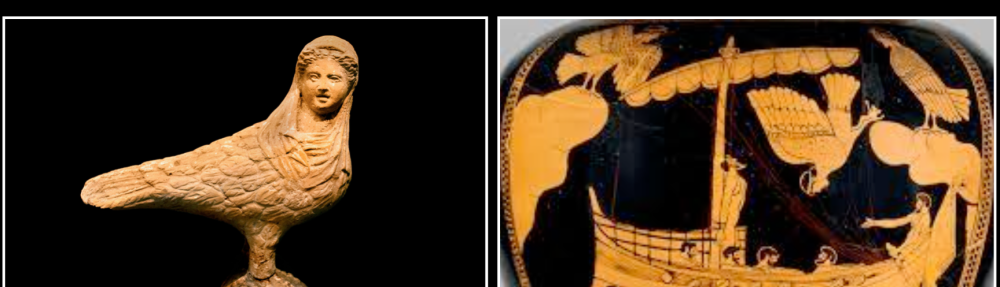
I also think this story has something in common with Odysseus and the Sirens, which we studied earlier. In both stories, human curiosity is strongly emphasized. Odysseus’s intellectual curiosity led him to listen to the Sirens, an action that almost endangered the lives of his sailors. In Legend of Melusina, both Raymond and even Elinas caused tragic outcomes because of their curiosity and impatience. From this, I learned that human curiosity has both pros and cons. On one hand, curiosity has led to scientific development, new discoveries, and the advanced society we live in today. On the other hand, curiosity can also become destructive when it breaks trust or puts others in danger. In conclusion, instead of fearing other beings only for their physical differences, I believe we should recognize that the more dangerous fear is the mistrust and prejudice that come from within ourselves. True fear is not the monstrous body we see, but the destructive choices born from the human mind.

The Fury of Female Knowledge

Man’s dominion. A desire that has not been fully capitalized in this story of Melusine written by Andre Labey. Men did not yet rule the earth as they think they do now, no, “They lived close to nature in those days.” Close to a forest characterized as “menacing and dangerous, full of the unknown, concealing the surprising and the supernatural.” Common men cowered to the beasts who raided their town, “huddled for comfort against their wives… as they heard the scampering of clawed feet on paving stones.” This diabolical depiction of nature leads to a dichotomy of good vs evil. The God-fearing men pitted against vicious, depraved beings of the forest. This is the rhetoric of imperialists. The ideology of justification for tying the earth with fences. Nature is not the only thing that has yet to be seized by men’s dominion. It is women too that are still presented with a layer of autonomy or capability. They are depicted as hunters, as contenders of falconry, and knowledgeable, as we see in Melusine. What is notable about Melusine’s knowledge is that it is not yet feared. Raymondin is not deterred by Melusine’s divine knowledge, but mesmerized by it. For “it was always she, indeed, who led.” Melusine divulged information that had yet to be known, alongside promises of wealth and honour. Raymondin ceased mourning after one look at her. Is this a case of desire presiding over faith? But Melusine is as Christian as Raymondin. What it all keeps coming back to is women beholding knowledge. Divine knowledge. Desire coupled with divine knowledge that continuously leads to undesirable circumstances. There is the root of our sinful sirens. Man’s dominion over knowledge. Because knowledge in the hands of women is knowledge in the hands of beauty. And what man could compete against beauty and brains:

“What minstrel can describe the irresistible power of feminine beauty when it gets under a man’s skin? None can, and that is no doubt how things will remain till the end of the world.”

“Yet all through the land, evil reigned only if heroes failed to confront its dangers. It seemed that the one existed to give rise to the other, for humans do not show their mettle if left to themselves.”

These quotes are the source of female anguish. Evil reigns if heroes fail to confront its dangers. The irresistible power of feminine beauty combined with divine knowledge is more detrimental to the conquests of men than the diabolical packs of wolves scavenging the paving stones.

“I’m Every Woman”: The Duality of Women and the Supernatural

While reading the “Legend of Melusina” from The Penguin Book of Mermaids, something that stood out to me was the theme of duality and hybridity. Specifically, what piqued my interest was the idea that, despite Melusina being “a serpent…from the waist downwards” (87) who can inflict harm, she is also depicted as being a doting wife who builds an empire for her husband. By creating this paradoxical characterization, the author forces readers to contend with the idea that although Melusina is this “supernatural” creature who is capable of damage, she is not an inherently evil being – showcasing the idea that women are multi-faceted. 

At the beginning of the story, we are shown that Melusina “conceived the design of being revenged on [her father]” (87) after he had violated his wife’s privacy and trust. In turn, this results in a curse that forces Melusina to become part serpent on Saturdays as punishment for her crimes (87). This aligns with the nefarious characterization of hybrid creatures that most readers are accustomed to reading about. She is posited as a trickster to highlight that there is still this “deviant” nature within her as a result of being part human and part otherworldly. Starting the story with this dangerous characterization allows the reader to play into their biases so that the later actions of Melusina illuminate her complexity.

However, we are then shown that Melusina has the capacity to be what is considered a “good” wife to her husband and help him succeed since “Out of her great wealth, she built for him… the castle of Lusignan” (88) and other properties. Rather than simply keep the wealth for herself, she used it to help build him up and elevate his status in society. The author shows us that she has the capacity to care for Raymond and their family, which goes against the previous notion of her “untrustworthiness.” The opposing characterization helps rethink the notion that simply because a being is a hybrid, there is something inherently wrong with their disposition. In spite of Melusina having what some would deem “dangerous” characteristics, it does not mean she can’t possess the ability to be loving and caring.

Much like women in real life, Melusina illustrates how women can have many characteristics and qualities. Illustrating Melusina as a complex being allows readers to move past the idea that both women and hybrid creatures are essentially “one size fits all.” The duality that Melusina possesses can be seen in all women since they are made up of a multitude of aspects. To say that all women or supernatural beings possess a limited set of characteristics would be to ignore the complexities that they both experience. Therefore, the story empowers readers to see the duality that can exist in an entity instead of seeing it as a rigid being.

The Cycle of the Serpent

In the story “Legend of Melusina, the serpent Melusina was actually a fairy. Fairies are often very delicate, but mischievous creatures, which is revealed in the story after her revenge on her father. The act of revenge is childish, demonstrating the Fairy as young and childlike. After this act of sin, her mother curses her to become a serpent every Saturday “till she should meet a man who would marry her under the condition of never seeing her on a Saturday, and should keep his promise” (87). This concept resembles the idea that a woman’s life begins once she is domesticated, and the fairy transforming into a serpent symbolizes a girl’s transition into womanhood. The serpent is symbolic of transformation, and in this case, I think it is a metaphor for menstruation. 

France was heavily under Catholic influence in the 14th century, so the rise of patriarchal traditions would be on the rise. With this influence and lack of knowledge about women’s bodies, a woman’s body would be under surveillance, so the boundary for a request for a day of seclusion seems large. 

Once a woman begins her menstrual cycle, there are whole new expectations and pressures thrust upon them. The highest expectation of impurity, in which the act of menstruation was often seen as ‘impure’, so the anxiety to hide the action from others around them was a real societal pressure. This is enforced as no man would want an ‘impure’ wife. Though with the marriage to Raymond, Melusina is seen as the perfect domestic woman. She is the perfect mother and wife.

Her life of secrecy on Saturday was the cycle of her womanhood, a day of seclusion to be herself and allow her body to live naturally. When Melusina’s husband, Raymond, sneaks into her room to peek, he is saddened that “through his breach of faith”(88). The act of Raymond peeking to see his serpent wife was an act of sin, as he lost his purity witnessing the cycle of his wife. At the moment, Raymond did not comfort his wife from his betrayal, but chose to reveal her identity to the “courtiers” around. Meanwhile, Melusina was attempting to comfort him, but was thrown to the side after he betrayed her. Thus erasing her voice from the narrative to the people, and shaming her womanhood. 

This story demonstrates the hardships of the transformation from girlhood to womanhood. Whereas Melusina, as a fairy child, was very free, and once she became a serpent, she carried feelings of shame and expectation. Since her becoming a woman (serpent) she was told that she must find a man to live happily, and to hide the aspects of her that make her a woman. She is met with limits and restrictions, which can all be diminished by a man’s betrayal. Her world is flipped upside down once her husband betrays her and shames her in front of all. In this instance, she is now forced to flee and live an invisible life.

The Power of Fate and Human Agency in The Romance of the Faery Melusine

After reading The Romance of the Faery Melusine, one statement that the author wrote that stood out to me was this: “But fate, for all that, is Fate. We can only control a part of it by our actions or the consequences that come from them. We have to take what is offered when it is to our advantage” (Lebey 25).

This statement is important, because it expresses the conflict of fate vs. free will that haunts all the critical moments of this story. It appears in the middle of a significant exchange when Melusine, a faery who exists in the dual world of the supernatural and the deeply human (material), informs Raymondin that even though she knows his secrets, and could, in some sense, guide him and make him “free,” the possibilities open to the characters are ultimately controlled by fate. The idea that human beings “can only control a part” of fate immediately contradicts the typical heroic expectation of total control of one’s fate. This is both a personal tragedy for Raymondin and Melusine but also a common human dilemma reflected in myths, romances, and real life.

The structure and the pacing of the story are dependent on this outlook: Choices and vows made by Raymondin, Melusine’s supernatural contracts and penalties, and even the rise and fall of their heirs, works beyond our full understanding or control. The romance returns again and again to various moments in which characters are granted opportunities such as blessings, interventions, and magical objects– but they must inevitably face the limitations of their agency. Nonetheless, Raymondin’s vow, and his violation of it, instigates events that are irreversible, demonstrating the limitations of human agency. Those limitations are not exact: There is agency, there is an action, there is taking “what is offered”. Still, the chance of true happiness, restoration, or forgiveness is restricted by fate’s “laws and the perils that threatened him, of which the least were exile and death” (Lebey 26).

The statement ultimately matters because it addresses the existential drama around which the narrative revolves–a drama familiar in human experience across time and within varied cultural constructs. The narrative’s continual return to fate and limited agency is relatable to its central characters and amplifies the pain they are experiencing. Although the medieval romance combines aspects of Christian theology, local mythology, and psychological nuance, the idea that “we have only control over a part” of fate resonates. Human ambition is both lifted and reduced by this notion, urging individuals to accept what one can change and what cannot be changed. Thus, Melusine’s ultimate transformation into her supernatrual form and banishment, and Raymondin’s despair, are not only punishments, but instead symbolize the larger tragedy of existence: the conflict of wishing for perfect happiness alongside reality and the limitations it brings.

Thus, this principle forms the backbone not only of the dramatic arc but of the text’s philosophical legacy. It is a reminder to “take what is offered when it is due to our advantage,” to act where we can, and to accept our fate when we need to. It is a message to aspire to abandon oneself to fate in either timely ways in life or literature.

Sacred Serpent: Melusina and The Fall of Man

What caught my attention most after having read Thomas Knightley’s summary of “Legend of Melusinain The Penguin Book of Mermaids was the religiously charged symbols of feminine power and male transgression. The story integrates many aspects of medieval Christianity ambivalence towards female agency and nature. One way this can be seen is from Melusina’s curse of transforming every Saturday into a hybrid snake-woman which highly reflects Christianity’s mistrust in female agency.

Melusina’s hybridity and curse draws many parallels to that of Adam and Eve in the Garden of Eden. Like Eve, Melusina falls short on transgression of obedience. For Eve it was being tempted by Satan (in the form of a serpent) to eat from the Tree of Good and Evil and in turn she and Adam are banished from Paradise. For Melusina, she “took the king[, her father,] and all his wealth, and, by a charm, inclosed him in a high mountain, called Brandelois” for which her mother “condemned Melusina to become every Saturday a serpent from the waist downward” (87). Both Eve and Melusina’s transgression and fates align with medieval Christian conceptions of the Fall of Man as the result of female agency. These parallels of serpent imagery correlate with duplicity and evil. Satan as a serpent in Eden and Melusina’s hybridity being duplicitous. As a liminal figure, Melusina is a representation of religious binaries: God/Satan, man/woman, good/evil. Often in Medieval perspective, hybridity see’s these binaries as dangerous, suggesting a sense of impurity and crossing of boundaries. On top of Melusina being an impure hybrid, her curse is somewhat of a ritual happening every Saturday or Sabbath, something unholy happening on a holy day. This can be seen as female impurity especially in relation to menstruation something natural yet taboo. With that, Raymonds is in violation of “the taboo” and commits a sin of curiosity, much like Adams sin of disobedience.

While Medieval Christianity views her transformation as a mark of shame, I view it as more of breaking of trust on Raymonds part. Much like many men in this time he ventures into and violates lands and people that are not his, under a sense of religious authority. Yet it is her suffering and departure that leave behind, not destruction but, a mark of sanctity. She leaves her footprint in stone (307), and becomes symbolically a martyr of mans ambition and an example of feminine agency. Her Saturday transformation is something sacred that when crossed exposes human kinds desire for dominance over that which they cannot comprehend.

Week 4: Chapter 1 of The Great Old Hunter Reflection

In Chapter One of The Great Old Hunter, the author describes a traditional culture where hunting was not simply an act of survival or sport, but a practice deeply integrated within cultural, spiritual, and social life. Knight creates a scene which shows how hunting shapes identities, reinforces hierarchies, and even connects humans to supernatural and divine forces. The hunter is not an ordinary person, but he embodies courage, skill, and the ability to connect with both the natural and supernatural worlds. By portraying hunting alongside nature, falcons, stags, and other mythic animals, the chapter tells us that nature itself is charged with meaning and filled with themes of danger, which emphasizes the hunter’s prestige and skill by braving the forest and hunting. One theme that stood out to me is the two-sided nature of reverence and domination in terms of nature. The forest is depicted as sacred, mysterious, and to not be underestimated, however it is also depicted as a place or domain where humans try to assert power over animals through acts of hunting for example. The capture of rare creatures like the white stag or the falcon is described as a big accomplishment with ritual significance and is often tied to prophetic or mythical events. This narrative reveals that hunting was never only about food or survival, but rather it was about reinforcing social order, proving masculinity, and creating a complex description of humanity’s relationship to control and nature. If society recognizes nature as something to be revered, then men trying to “conquer” it through hunts reveals a side of humanity that longs to be in control of the uncontrollable and in power. I also liked how the descriptions also show the way gender and class intersected with hunting culture. Male lords and nobles set up elaborate hunts as a part of maintaining their social status, while women only appear as figures of beauty, inspiration, or prophecy tied to hunting myths. Even so, women are shown flying falcons, highlighting a space where women participated more so symbolically in the hunts alongside men, but in a different way. This reminded me of culture today, where men are the ones expected to actively be doing things, but women’s roles are more to be simply supportive and emotional rather than physical. So, the chapter showed me a worldview in which nature was not something to be ignored or seen as passive, but alive with spiritual meaning and the foundation of certain cultural aspects. Animals carried symbolic meaning, the land held power, and every hunt was more like performance of status and belief rather than for survival.

Lines of Succession Know No Boundaries

The only thing that wives and mothers in the story of Melusina ask for is a respect of boundaries. Pressina, Melusina’s mother asked for Saturdays to herself from her husband and when she curses her daughter she sets for her the same boundary. This story embodies the themes in mermaid stories of demonizing the “other” and the female threat to a patriarchal system. Both of those themes play into the subtle political line of succession message in the legend.

The Fay Women found by human men when they were in need of saving are magical creatures. They provide love and success to these mortals in exchange for devotion and promises of letting them keep some part of their power. This power is not over others like it is expected in the patriarchal system of mortals, but in their autonomy to limit the access to their bodies by others. I found it interesting in both of the marriages of mother and daughter, it was a relative that encouraged the husbands of these Fay Women to violate this boundary set forth in the marriage.

In Pressina’s story, it is her male stepchild Nathas and likely heir to the throne of Albania that excited his father to violating the martial pact. It is not explained if Nathas knows of this agreement. Though if he knew about his stepmother giving birth before his father, it is fair to assume Nathas had his finger on the pulse of the activities in the castle. While the birth of three daughters might have not pushed Nathas out of the line of succession, his father’s current wife providing so many additional heirs might have challenged his position. Creating a wedge or a reason to dissolve the marriage might have been in the prince’s best interests.

Later in Melusina’s story it is the cousin of Raymond who had “excited him (Raymond) to jealousy…by malicious suggestions of the purport of the Saturday retirement of the countess” (88). Nathas used joy to break the martial bond, while this cousin used distrust of a wife who would not provide full access of herself to her husband at all times. As a wife Melusina had given Raymond riches and castles he wouldn’t have had otherwise, but she was still an outsider to the world of mortals. Stories and myths often depict how outsiders are always a threat to the accepted system.

The gender and position of the cousin is not depicted in the story, but the relationship of this family member to Raymond reminded me of the only other mention of his family. When we are first introduced to Raymond he has just “accidentally killed” (87) his uncle who is a count. Melusina uses her power (possibly influence) to protect Raymond from the fallout of this killing.

Could this cousin be a child of that uncle?

Could this be a cold dish of revenge by someone whose position was lost from this coupling?

Or was it just Melusina’s ability to maintain some form of power over the societal powerful position of Raymond?

Raymond’s strength is made secure not only through what Melusina built for him but in the children she bore, his heirs. It is only when the sons of Raymond and Melusina are taken out (or at least compromised) of the line of succession that he turns on her. She then becomes a spectre who will haunt the family line when there will be a death in their lineage.

In respecting a boundary, Raymond and the King of Albania were abdicating part of their power given to them by the patriarchal system they were entrusted to maintain. This clearly illustrates the threat the “other” can impose on the sanctity of the established family, teaching how it only brings heartache and ruin for future generations. Underlining how an “outsider” woman who is not is in complete submission to her husband, like the women of the society were conditioned to do, must have flaws and secrets that threaten societal norms.

Fear and Wonder in the Forest 

In chapter one, “ The Great Old Hunter”, the forest isn’t just seen as a setting or a scenery in the background. To me it feels more alive, sort of like a character in the story. The way it’s described shows how medieval people saw the natural world as both familiar and terrifying and also as something that could provide for them but also threaten them. On page 11 the text says, “The forest stretched beyond, menacing and dangerous, full of the unknown, concealing the surprising and the supernatural” this shows how the forest symbolized mystery and fear all at once. 

The people in this story lived right next to the forest so danger was always nearby. Wolves and foxes could sneak into villages and even sometimes drag children away. The text makes a point to say that the weapons were useless against the wild creatures which shows how powerless the people often felt. Even being inside their villages they could never fully escape the dangers of the wild. What really stood out to me was how the forest isn’t just described in physical terms but also in a spiritual way. Villagers often hear clawed feet on the stones and smell sulphur and smoke and this made them think of the devil. This sort of blurs the line between natural threats and supernatural evil. The forest becomes a place where our physical world and the spiritual world overlap. 

At the same time, the forest is also shown as an enchanting place. Lynxes were described as watching with “burning eyes” and bees drop golden honey from the treetops. I’ve always found the forest to be a beautiful place so this mix of beauty and danger is interesting because it truly shows how unpredictable the forest is and that it’s a place where anything could happen. I think that the forest represents both fear and fascination. The forest is a place that humans can’t fully control, where survival is uncertain and where they believed supernatural forces lurked but it’s also a place where they imagined wonder and magic. By making the forest appear so threatening yet mysterious at the same time, the story shows how medieval people lived right on the edge of the wild even though they were never completely safe and the unknown was just a few steps away.