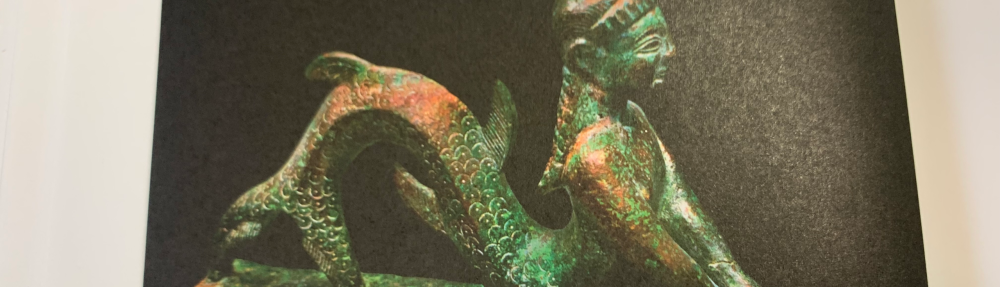
The Legend of Melusina: The Consequences of the Inquisitive Mind

While the title is subject to be debated because it may imply that the nature of being curious is tandem out to negative effects or danger, there is still no doubt that the more one begins to question something, there is a tendency of that certain something turning into an issue on a larger scale with the final outcome taking a toll on the person that posed the questions or searched for answers. This curiosity is evident in the “The Legend of Melusina” and it can be seen in the character of Raymond where he is warned not to see her one day out of the week and although he was initially not disgusted or appalled by the hybrid aspect of Melusina, the very fact that Raymond was willing to break the promise just to glance is an allegory for the dangers of being in a relationship where one partner is inquisitive, and the other demands privacy.

This sort of longing on only one end of a relationship is something that mostly leads to unease and trouble for the most part because like it is mentioned towards the end of the tale, “Raymond died as a hermit” (86). It is with this very line that the reader realizes that all it took was one act of defiance from a partner to ruin not only the relationship, but ones entire life-leading to bitterness. While it is not blatantly stated that this is tale is a symbol of the trials and tribulations that comes with being in a relationship or friendship, it is heavily implied by the way the narrator explains Raymond’s feelings toward Melusina being completely infatuated with her, despite her unique traits. These are the consequences of someone (which in this case is Raymond) not upholding boundaries their partner has set which is typical in certain situations where one partner feels the need to get answers from their significant other even if said person is uncomfortable answering those questions. This shows how the inquisitive mind will sooner or later end up in a moment in their lives where they regret committing an action or saying a comment that offends people and or separates them, then leading them to become isolated just as Raymond did.

Week 5: Medieval Melusine

“This transformation from a half snake, half woman may be tied to d’Arras’s situating her near water –a fountain and her bath– and to the fact that dragons and serpents have scales just like fish (86).”

After reading this tale, I set out to look for some art works of this depiction of melusine, as a serpent or dragon. Many modern depictions are mixed between her as a mermaid, sometimes with a serpent’s tail, even sometimes with wings. However, I also was interested in the remains of the castle that she built, whose ruins can be seen today in France. In this 15th-century depiction of the Chateau de Lusignan, Melusine is in the form of a dragon, flying over the castle and perhaps making good on her promise to fly over at the changing of lords.

.Here is googles rundown on the remains of castle Lusignan

This is a link to the Edward Worth Library’s collection of images of Melusine and her different versions of hybridity.

Although the symbolism of water is deeply tied to her myth, she is also punished for her misdeeds, and in some sense, her greed, to forever transform into a serpent hybrid. There are so many different elements in this story which I hope to explore further, such as the curse inflicted by her mother, the multitudes of her hybridity (half fae and human, half woman and serpent), the nature of the curse being carried on to her sons through deformity and cruelness: “Geoffri with the tooth had burned his brother Freimond (p.88).” I’m still at a loss about the relationship between her husband and the conditions of a broken promise. It seems that even as Melusine bestows many gifts upon her husband and their kingdom, her curse afflicts mostly suffering onto her, with her children’s deformity blamed on her curse(or hidden nature), and in the conditions of her curse being discovered resulting in isolation.

Temptation

The curse that was applied to Melusina was much bigger than just punishment for her wrongdoing, it was a future test for trust and patience for her future husband. The husband had to be strong enough to not only verbally agree to not pursue the desire to see her on a Saturday but to also act upon it. His desire to respect her wishes and to trust her had to be much bigger than his desire to know what he didn’t know about her, in which he failed, resulting to the rupture of their relationship. Melusina’s story represents just how big temptation can be in a relationship and how naturally as a human (or non-human) we are curious creatures who can be easily guided into giving in. Although for Melusina it appears that she was cursed from the start considering the following quote,

“But destiny, that would have Melusina single, was incensed against her.” (P. 87)

This makes me think that no matter what she could have done, in any universe/ world/ time, the revelation of her secret would have always happened. The temptation in her story would have always won while her hope for trust would have always lost. Although her ending did not go as she wished, it did go as planned because at the end of the day our life will always end how it is meant to.

Scales

This weekend’s readings from “The Penguin Book of Mermaids”—“Legend of Melusina” (LoM)—and Andre Libey’s “Romance of the Faery Melusine” return us to the ideas of hybridity of form as well as sapient beings in the periphery/at the ends of the known world. 

In LoM, Melusina is the hybrid descendent of the widowed King Elinas of Albania and the Fay Pressina. Elinas was drawn to his Queen-to-be’s voice—likely a reference to siren songs—and became betrothed to her and assured her company so long as he honored a single condition: he cannot see her on Saturdays. The king of course breaks his agreement thoughtlessly, causing Pressina to retreat to the “Lost Island”—in the periphery/at the edge of the known—with their daughters: Palatina, Melusina, and Melior.

Punishment – Like Father, Like Mother, Like Daughter

Much in the same way that Elinas’s breach of contract is made known by his daughters—who seemed far more capable than any newborns should be—his daughters, as a result of Melusina’s plans, inflict unsanctioned vengeance on their father and are punished by Pressina. For her part, Melusina is punished the most heavily and bears a curse: wielding a half serpent body, and needing to marry a man who can/will respect her Saturday away from him. Like her mother before her, she marries, bears children, and her secret is soon discovered. The “deformity” of her children earns them scorn from their father, which in turns bestows Melusina with grief and her own journey of separation and pain.  

The Deep Dive Into the Human Hero Complex

While reading, one particular passage stood out to me, regarding human nature and interference. In The Romance of the Faery Melusine, we are introduced to the ideology of good and evil being created to “give rise to the other,” the basis that “humans do not show their mettle if left to themselves.” (The romance of the Faery Melusine, pg. 12)

In regards to human nature, how many people only carry out good deeds for the sake of gaining praise. Defeating an “evil” power gives way to the feeling of achievement, the admiration of others. Many people live by a saying, “if I don’t see it, it doesn’t affect me.” There is little empathy or remorse given from the vast population in relation to suffering and danger. In almost all fairytales, the hero, typically a male, only acts on bravery to defeat a “villain,” as their home or community is being threatened. What is the violence was in a town over? Would the heroic prince go out of his way to gallop across the river and save these villagers he barely knew? Highly unlikely.

We can see these examples represented in our own modern day. The government only acts upon brutality when they believe there will be negative connotations for them if they choose to remain silent, or they can expect a certain gain or financial benefits. How would humans function without an evil power to battle, in order to gain applause? Would there ever be a need to commend bravery when such a trait was not needed? What plot would our stories and legends center around if there were no heroic tales to be spread, no lessons to be taught to children on the courageousness of our heroes? Is this the reason for these tales?

To create a sense of “moral good,” encouraging us to fight in order to gain approval? What about what happens when no one is watching, when there is no one around to recount your bravery, your heroic deeds being lost through the passage of time? Is this why Sirens were created as an evil force of nature, hellbent on temptation? The fearless male hero, the turning of a deaf ear to their cries, creating a message that you too can have power over wickedness – the glory you will receive upon your return will be shouted for all those to hear, for generations to come.

Broken promises and the limits of trust

In Chapter 1, “The Great Old Hunter,” we are introduced to Elinas, the King of Albany. He meets a mysterious woman, Presina, in a fountain while hunting. Just like many fairy-tale encounters, it begins with love at first sight. But the relationship only moves forward when Elinas agrees to her one condition: he must never look at her during childbirth or while she nurses their children. At first this feels like a simple magical rule, but for me it showed how fragile trust can be when it depends on promises that test human weakness. What struck me while reading was how Elinas genuinely seemed to love Pressina, yet he still couldn’t resist breaking his promise. This made me think about how often people say yes to conditions without really understanding the weight of them. I feel like the story is less about magic and more about human behavior: it’s hard for people to accept limits, especially when curiosity or pride gets in the way.

I also noticed how this broken promise sets the stage for the rest of the story. Because Elinas fails, Pressina leaves with their daughters, and this is how Melusine’s story begins. In a way, Melusine inherits the consequences of her father’s weakness. I thought about how often in real life, children end up carrying the results of their parents’ mistakes. It doesn’t feel fair, but it happens often. That made me feel sympathy for Melusine before her story even started. Also, what I found interesting too is how the hunting scene contrasts with the fountain. Elinas is powerful and dominant in the forest, chasing animals, but at the fountain he becomes vulnerable, enchanted by Pressina. It feels like the story is saying that no matter how strong someone is in the outside world, love, and secrecy can still make them powerless.

Reading this chapter made me reflect on how promises in relationships work. It’s easy to say to others that we will respect your boundaries, but when the moment comes, it can be really hard to follow through. I think that’s why this chapter still feels relevant: it’s about the difficulty of respecting another person’s space and the big consequences when that respect is broken.

A Story or (His)tory?

After reading the “Legend of Melusina,” I couldn’t help but notice the irony within the story. The idea of husbands betraying or deceiving their wives is very interesting to me because of the notion that they lied first. I get the “conditions” that were in place for them to need a husband to agree to these terms, but it is still ironic. The lying and the deceptions go both ways, as well as the fear behind it all. Both husbands fear losing their wives, but “curiosity killed the cat” is a saying for a reason. The control these women have over the men by getting them to agree to these terms reminds me of why the sirens got the representation they have. Using the weakness of man against them, the lust they are born with, and the fear of ending up alone, which almost every person has.

I liked how the story mentioned, “but destiny, that would have Melusina single, was incensed against her” (85), because it reminded me that Melusina was cursed from the start. The idea that her mother punished Melusina for her “revenge” seeking actions makes me giggle a little. Melusina is gaining a fear of being alone, like the husbands. The world against her love, forever being punished for the revenge she took. I like to think that Melusina is the model for karma. Ran by revenge, only to be forever cursed to be alone, watching over her family. One small deed caused a lifetime of pain, which I feel is spot on for a siren. It almost mirrors everything that sirens are depicted as being: untrustworthy, and deceiving.

I loved reading this story, and it was a very eye-opening story of how sirens came to be. Everyone sees sirens as terrifying creatures, but what if they are this way because of how they’ve been treated? Humans have been untrustworthy and deceitful since the dawn of time. No surprise if the sirens “put up a guard” and were “cursed” for their revenge-seeking thoughts or actions.

Song of the Week: Echo of the Past by Jonathan Geer

The Sirens and the Odysseus

In the book “The Penguin book of Mermaids” the poem and the chapter “Odysseus and the Sirens” and what really stood out to me is that in the passage of “Hear and obey; if freedom I demand,”(10). In this part of the poem it means that there is a part of society that often tells people what to do and controls behind closed doors. It represents how does a siren would play a sound that would be dangerous to play out to the world. What connects this to our world is the quote “Oh stay, O pride of Greece! Ulysses, stay!” (10). It would mean having pride in ourselves no matter what people tell us who we really are. Pride has gotten pretty far in a sense of identity and it has said points that proves why persistence has gone through further and further along on to going out into the sea. This relates to our world because it has to do something with how people take there pride too far like for example when people express themselves and people judge the for something that seems wrong with them but it can turn into isolation and revenge. The relevancy everywhere I go and it is to show the world isn’t really a safe place to express our true selves especially online.

Desire & Respect

For week five’s reading, “The Romance of the Faery Melusine” by Gareth Knight and André Lebey, themes of betrayal and deceit disclosed something to me that I found quite profound. It is that there is a clear distinction between love and respect. Raymondin’s suspicion of Melusine leading to the fall of their unhappiness is the result of his betrayal and breach of trust. True love is rooted in mutual trust and respect for one another. While reading Raymondin’s perspective there wasn’t much respect in the first place but rather this burning desire to own and even to domesticate. “The promised happiness to which he looked forward concerned him less than she herself, whom he wanted to know more and more, and above all to possess (pg. 27)” He is utterly fascinated by Melusine’s otherworldly and alluring nature. Raymondin, who at the start was consumed by a great burden after the accidental murder of his uncle, was approached by a beautiful fae Melusine. She offered him her knowledge and guidance, saying “”I am the one who, next to God, can help you best to gain wealth and honour in this mortal life.” Raymondin takes her offer, accepting her one condition, and together they were happy. 

Melusine is depicted not only as cunning, beautiful, vain, but also wise. It is not without wisdom that she could give adequate advice for Raymondin’s troubles. Yet there was an interesting focus on the hairbrush that she used at the fountain during the two’s first encounter and moments before the reveal of her mystical identity. It’s as if Raymondin chose to focus on her vanity and the surface of her beauty rather than the knowledge that she beholds. When Raymondin was stealthily approaching Melusine in her hiding place on Saturday, his anxious thoughts were comforted by “the thought of fighting for Melusine to restore her to herself, he felt elated. (pg. 121)” The idea of saving Melusine brought him happiness, but he never did consider what it meant to just trust his wife or if his wife needed any saving in the first place. This desire to domesticate, and to control is shattered when he finds out about her hybridity. It is as if there was no love in the first place and only the strong wish to control. Upon seeing a tail, he realized he wasn’t in control, thus destroying his happiness. 

Some might consider this tale a tragic love story, but I see it as a story of  betrayal. Melusine omits parts of her identity in order to sustain her husband’s happiness. Raymondin feels deceived and betrayed, but perhaps the biggest betrayal of all his is actions that crumbled their relationship, breaking his promise and both of their own hearts

On André LeBey

My mom studies traditional folk ballads. She is part of a global community continuing the oral tradition of English/Irish and American music1. The songs she sings have kept certain stories alive for centuries and across continents. Thanks to recorded history we have hundreds of versions of these songs now, and we can see how much they change regionally and over time. While the stories overall reflect the ethos of the cultures they were performed in, the individual tellings always reflect the philosophy of the singer. I see this in real time, as my mom tends to cherry pick for versions or specific verses that empower women and uplift humanity. That’s not an erasure of history– that’s how oral tradition works, and we are seeing it this week in André LeBey’s retelling of Melusine.2 In this short collection of quotes I am not investigating how the story of Melusine reflects the culture it came from, but how this retelling of that story reflects the man who wrote it.

From two chapters of Melusine, I have developed the distinct impression that LeBey loves women. As some of you have been pointing out3, it’s a kind of love that is very hard to extricate from control, possession, domination. The story of Melusine, as Penguin pointed out, hinges on Raymondin’s utter infatuation, to the point of blind trust; I’d argue that this kind of “love” is more universally human- and more beautiful- than a strictly patriarchal reading will reveal.
To LeBey, women are a source of comfort; “townsmen huddled for comfort against their wives,” (11). He presents human men, men capable of fear, men capable of drawing emotional support from companionship.
I appreciated, also, the treatment of legendary female figures. Hildegarde, (12) is described as a “warrior”, saving the life of a man, equal to him, at least in that moment, in dignity, agency, and power. Queen Dido (13) is… mentioned.
LeBey’s description of the female practice of falconry (13) was ennobling as well; although he provides a very clear binary of the sexes (men as ‘big, strong, and majestic’, and women as ‘small, capricious, and fantastic’) he dignifies women as renowned birders. After all, the “simple daughter of a tradesman” could train and tame a famously well-disposed hawk. This also presents a less damning interpretation of the sirens’ songs; to LeBey, women, with their gentle voices and golden brown transfixing eyes are tamers in their own right; it is as respectable for a man to be tamed by a woman as it is for a bird to be tamed by a man.
Another line that struck me as almost worshipful of the institution of womanhood; “Women… told stories… like threads of gold spun from their distaffs… sparkling through the fatigue of their work,” (23)– a refreshing alternative to the demonization of womens’ stories in the promises of Odysseus’s Sirens.

By the time Melusine appears, I am not surprised to see her feelings treated with equal respect to Raymondin’s. On page 25, “it [gives] her pleasure to repeat his name”. And Raymondin’s love is complex. Yes, he above all wanted to possess her (27). But “it was always she, indeed, who led” (29) and he followed her- “he listened to her as if to a living poem”(28).

This collection of lines is only one half of a thesis on LeBey’s Melusine; I would love to explore first his attitude towards women, and then his complex entanglement of love and possession.

To come full circle– from personal, to academic, to personal– I was deeply moved by this text. I believe that the human desire to change that which we love exists outside of patriarchal control of women; I believe it can be seen in the domestication of plants and animals, in the production of art, in the eighteen years we spend raising our children in this country, in the “I can fix him” meme. This is a delicate subject to unravel; I don’t mean to endorse the impulse to control or possess, I think it’s led humanity in dark directions. But I also think that it’s deeply human, and LeBey’s writing– his palpable love for the world– is untangling the edges of this paradox.

  1. She mostly performs unrecorded for other ballad-singers, but she is on Spotify ↩︎
  2. Inspired by our discussion with Steve Mentz and some of my classmates’ posts to bring the personal into the academic 🙂 ↩︎
  3. Adrian on Mermaids and Love ↩︎