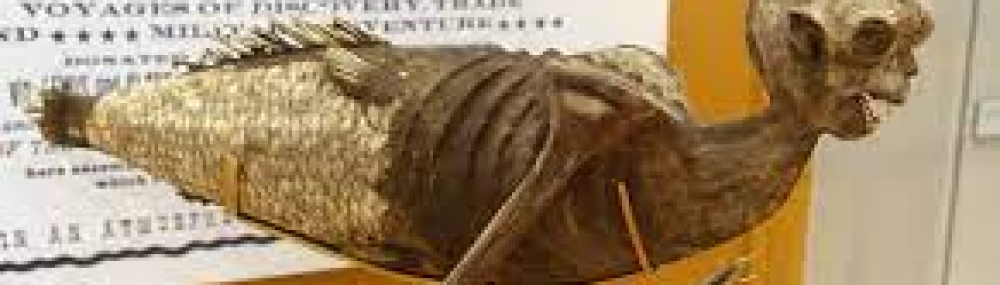
The Meaning of Tears in The Little Mermaid

The first thing that struck me and intrigued me in Hans Christian Andersen’s The Little Mermaid was the motif of tears and one’s ability, or lack there of, to cry. When the little mermaids’ sisters rise “up arm-in-arm through the water, the youngest would stand alone, looking after them, and felt ready to cry; only mermaids have no tears, and therefore suffer all the more” (113). Symbolically the absence of tears represents the mermaid’s separation from humanity, or what makes something human. Though she can internally feel sorrow and longing she cannot externally express those emotions. Furthermore, there is an irony to her environment; the sea, which is made of endless water, surrounds her and contrasts her inability to cry tears. Externally, she is surrounded by water, yet lacks inner “water” of empathy or a soul. Andersen uses this moment to depict that suffering without expression (tears) is cursed pain, and it is with this awareness of her lack of tears (emotional expression) that the little mermaid starts to yearn for a soul. 

By the end of the story the little mermaid is able to transcend with the daughters of the air, marking the turning point in her journey. As one of the daughters of the air welcomed her as an “aërial spirit,” “the little mermaid lifted her brightening eyes to the sun, and for the first time she felt them filled with tears” (130). Her tears are now symbolic of her “true” humanity and capacity for moral and emotional depth. As she looks up at the “sun” she becomes spiritually enlightened, the sun represents her transcendence to having a divine soul. Suggesting that emotional pain, when expressed and understood, is the way to immortality. Her tears are a literal presentation of her invisible soul.

Moreover, the daughters of the air explain that “when [they] see an ill-behaved or naughty child, [they] shed tears of sorrow, and every tear adds a day to the time of [their] probation” (130). The story ends with the tears not just being a representation of having a moral soul or a pathway to immortality, tears now carry a moral consequence. Andersen’s motif of tears is used to define humanity. Tears, in this case, transform ones suffering into a sort of salvation, without tears or the ability to cry there is no hope of such salvation.   

Christianity: An Apparent Constant for all Earthly Creators

Hans Christian Andersen’s The Little Mermaid depicts the lives, but more importantly, the inner thoughts and perspectives of Merpeople. Andersen wrote about what he can only imagine it would be like to look into our world from such an unimaginable viewpoint. Somehow, he still managed to integrate Western Christianity into a fairy tale about a young woman who lived separate from all things “worldly”. This proves that, as much as we try to understand the incomprehensible, and walk in the shoes of or (swim in the tails) of others, our own learned perspectives will often prevail.

On page 108, he writes, “It was the little birds that her grandmother called fishes, or else her young listeners would not have understood her, for they had never seen birds”. According to this logic, the young mermaids had no concept of the world on land whatsoever, yet in basically the same breath, he mentions how enticing the church bells are to the girls. On page 109, he mentioned the church three times, and yes, mostly intended as an example of the sounds of humans, heard from afar, but nonetheless, it was mentioned. Andersen takes the time to point out that they don’t know what dogs are, yet skims past the fact that they’d never been inside a church and still had a full understanding of what they were. If these young girls could understand the reason for church bells, and not birds singing, then well, they were clearly written to be religious mermaids.

This may seem to be very insignificant, but I felt I needed to point out such a minute detail because it really does play a larger role in this story. If this young mermaid knew the significance of the church or religion, or in some ways, morality, then she would, in turn, also know shame. Organized religion has been a tool in inducing shame for centuries, and it was especially potent at the time of this telling. Although shame is a less intense theme in this story than it is in other merpeople tales, its presence is more interesting when it relates to a LITTLE mermaid. A 15-year-old child feels shame for wanting love, for wanting beauty, and for wanting human connection.

I do not think this distinction was necessarily purposeful or intended to be significant, but I do think it points to writing about unknown beings in general. That is my point, I suppose. Andersen was submerging himself in this perspective, over-explaining the way things look to someone who had no concept of them, down to little details. Yet he subconsciously or consciously decided that, of course, mermaids would inherently have a concept of religion, the church, or God.

The Human Sea-Witch

In The Little Mermaid by Hans Christian Andersen, the Sea-Witch is used to illustrate human attitudes toward the environment. When the little mermaid travels to the sea-witch’s home. “Built of bones of shipwrecked human beings, and within the sea-witch, feeding a toad from her mouth, just as people amongst us give us a little canary-bird a lump of sugar to eat” (The Little Mermaid, 121). This depiction of the sea-witch as the ‘other’ to the little mermaid suggests that the witch may have some human tendencies that demonstrate the human relationship to the natural world. 

To start the description of the witches’ home, the little mermaid describes, “Built of bones of shipwrecked human beings,” which creates a grotesque image, a home made out of death. This environment is built on man-made ships and their destruction. The use of the word ‘bones’ suggests the sea-witch power is rooted in their demise. She then describes the swea-witch “feeding a toad from her mouth” is a gesture of nurture in its own grotesque way. Toads are seen as ‘ugly’, ‘poisonous’ creatures, but provide life to the sea-witches’ minions. Hans compares this action of feeding “just as people amongst us give a little canary-ird a lump of sugar to eat” demonstrating the juxtaposition of the grotesque of the toad with the delicate and sweet a canary. This mirrors human affection, where the witch mimics human kindness, but with something repulsive, making that act familiar and disturbing. In her own unique way demonstrates her capability of tenderness in a corrupted form. The sea-witch is another example of the dangerous ‘other’, residing in a world made of death, and her ‘twisted’ way of performing human behaviors.  

Anderson Sea-witch acts as a mirror to human behavior towards the environment, highlighting their destruction and twisted relationship with the ocean. The sea-witches’ home, being “built of bones of shipwrecked human beings,” demonstrates how our ecosystems are increasingly built upon the consequences of human activity. Nature has to adapt to our damage and carries its evidence within it. The sea-witch is haunting because, like nature, it displays the impact humans have had due to their destruction. The revulsion toward the sea-witch’s twisted nurturing behavior reveals how humans only value beauty. When nature can poison or harm humans, they tend to ignore or downplay its role in our ecosystem. This reflects how humans try to control and manipulate the natural world to suit their comfort.

For What We Seek Is Not Meant To Be

In our Mermaid literature, we dive into the realm of human possession and greed, the belief that we must possess what we have not been given. In The Little Mermaid, the conceptualization of greed and consequence is brought in full circle. On the oldest sister’s birthday, upon her return, she expresses the wonderful sights she has seen in the wide land above. The young mermaid “longed after all these things (culture) just because she could not approach them.” Penguins pg. 110. Within Mermaid and Siren media, the goal is to give the audience a perspective on the dangers of flirting with the unknown. What becomes of us when we are exposed to what we most greatly seek. This moment becomes a foreshadowing of the future events that befall upon the youngest sister – The Little Mermaid. So desperate for her love and immortal soul, the mermaid forsakes her identity, her home, for the idea of what could await her on land. Her longing coming not from a sense of passion and maturity, yet rather wonder and amazement

In many forms of Mermaid media, the consequence of discovery is afflicted on the male, the husband. His wife’s betrayal – the beastly form – and loss of trust is a mark of sin and misfortune. Yet in this story – not only is the woman unnatural – she is also a failure. The price of a wandering eye costs her a life of happiness amongst her family, her realm, her identity – all for a love to not be reciprocated. Why is it in all of these stories the woman to be the cause of misfortune? Why is adventure and discovery equal to that of disaster? In the Victorian period, what events of the time shaped how mermaid media was received? Did the coming of industrialization spark feelings of insecurity, weariness of venturing into the unknown? 
The Little Mermaid correlates to many of its former Mermaid/Siren works, as a warning to curiosity and the new age. What will become of us when we reach what we have always been unable to have? The consequences on our soul and psyche will correspond to the rupture in humanity, the abandonment of the rationale to escape to a broader pasture, a pasture that very well will likely not exist.

The Paradoxical Mermaid

In the tale of The Little Mermaid found in The Penguin Book of Mermaids, Hans Christian Andersen uses both sexual and religious imagery to highlight the sexual nature of mermaids and the possible redemption they can achieve through piety. The little mermaid is presented as a sexual being since she “was the prettiest [mermaid] of them all” (Penguin 108) and also has a “lovely form” (Penguin 122). Her body and beauty become the traits she is ultimately known for, painting her into a being that is meant to stimulate attraction in those who see her. The little mermaid is put into a position to be wanted and desired because of her beauty. It is not a choice made by the mermaid but is one that she is born with. Andersen also notes that as a young mermaid, she contains sexual impulses that are featured when she treasures a “pretty statue, representing a handsome youth” (Penguin 109) and “[plants] a bright red weeping-willow beside the statue” (Penguin 109) so that when the leaves grow, “it seemed as if the top of the tree were at play with its roots, and each trying to snatch a kiss” (Penguin 109). The little mermaid sees the statue in more of a sexual way through the imagery of “[snatching] a kiss” and the “red weeping-willow,” evoking a sense of sensuality as red is often a symbol for sexuality and love. Andersen indicates that not only does she serve as a sexual icon, but also a being that harbors sexual feelings. The mermaid becomes a dangerous/sinful being since she represents the sin of lust because of her desire for men and her ability to “befool a man’s heart” (Penguin 122) with her beautiful body and face.

Despite the little mermaid being a sexual creature, Andersen notes that she can still be considered a “moral” being because of her good deeds towards the prince. Not only did she “bore him across the sea to the wood where stands the holy temple” (Penguin 125) when his ship began to sink, she also refused to kill the prince and “hurled the blade far away into the waves” (Penguin 129). By highlighting these good deeds, Andersen formulates the idea that even people who are considered “sinners” can still have a chance at a divine afterlife and redeem themselves. Though the mermaid is an embodiment of lust, the daughters of the air tell the little mermaid that mermaids “can obtain [souls] by their good deeds” (Penguin 129). Despite being painted as a sexual being, Andersen flips the narrative by illuminating the duality within the mermaid. She is both a being that is sexual by nature, while still containing Christian qualities like selflessness, since she saved the prince twice. This redemption forces people to change the way they look at people who are deemed sinners through the paradoxical characterization of the little mermaid. The qualifications to enter the “Kingdom of Heaven” (Penguin 130) are not solely based on who you are, but the actions you commit on Earth.

On The Topic of Pain

In Hans Christian Anderson’s fairy tale The Little Mermaid there are multiple references of pain below and above the water. This story is clearly meant to be shared with children and like most fairy tales there is a concurrent of morality and coming of age allegory, in when and how pain is felt for this young mermaid.

When it is time for the the Little Mermaid to visit the surface, to break through the barrier of her world to enter into a broader and more complicated world, adornments of oyster shells are fastened to her tail by her grandmother. These shells symbolize her rank are so painful that the Little Mermaid voices this discomfort. Her grandmother’s response is “pride must suffer pain” (Penguin, 113). This statement has endless connotations such as religious implications, monarcharical responsibility, the mermaid symbolism of pride, or the mermaid’s ascension into womanhood. The story tells us early on that the Grandmother wears a dozen oyster shells in reverence to her noble birth, but not until the Little Mermaid is gifted the symbol do we know how painful they are. This means that the Grandmother has endured this pain as matriarch for a significant part of her life, without complaint because the Little Mermaid did not know it would be painful.

This has been a common denial in history, this discomfort of body in those who menstruate and birth, many times being categorized as a natural occurrence one must just endure. That there is goodness and purity in this endurance. The Little Mermaid is in some ways a 1800s child-appropriate way to explain to those who menstruate what their experience will be in their adult body. What pain is natural and unnatural in these bodies and how one of the most unnatural things to do is to disobey a parents’ wishes.

The pain of the shells is not mentioned again, it is a brief discomfort that the Little Mermaid adjusts to, a pain of the responsibility and pride she has being part of her family. But when she is in an unnatural state the pain is constant. When the Little Mermaid receives her legs, in rebellion of her family and position every step is painful. She experiences this pain all to be near someone who will never rebel against his title or family and who treats her (in my opinion) like a pet. A condition of the Little Mermaid’s task is convincing the Prince to forget about his parents, putting the Little Mermaid first. With the pair both having royal obligations, not listening to their the parent/family is more than a private rebellion it is a political rebellion with larger implications for their court and country. One must be obedient to the greater good. Making the lesson of the tale about how one will only experience pain when betraying your familial obligation, is not only a way to prove parents know best but to covertly imply it is against nature to do so.

Humanity comes with a cost

The scene that stood out to me the most in Hans Christan Andersen’s “The Little Mermaid” was when the mermaid drinks the potion given to her by the Sea Witch that will transform her and give her human legs. This moment isn’t described as a magical transformation but as an act of suffering. The text says “The little mermaid drank the sharp and burning potion, and it seemed as if a two edged sword was run though her delicate frame. She fainted away, and remained apparently lifeless”. This description makes it clear that becoming human isn’t a beautiful or effortless process. Andersen turns what could have been a peaceful fairy tale moment into a scary and painful experience. 

The language in this scene connects physical pain with spiritual transformation. The mermaid doesn’t just change from, she sacrifices a part of her identity. Her tail symbolizes freedom and her connection to nature but by replacing her tail with human legs she now feels intense pain with each step she takes. This suggests that by gaining humanity whether physically, emotionally or spiritually it will come with a cost. The mermaid’s suffering becomes sort of an initiation into the human world where love and pain are inseparable.   

I also think it’s significant that the mermaid’s pain is something she goes through in silence. She has already given up her voice to the Sea Witch so her suffering goes unspoken. Anderson uses this silence to show the importance of her commitment and how much she is willing to endure for love. It also makes me wonder if the silence reflects certain expectations that are placed on women to bear pain gracefully and quietly. The mermaid’s transformation is both a personal act of courage as well as a reflection on our world that sometimes values beauty and obedience over self expression. 

Throughout the entire passage, Andersen turns a fantasy story into something that is human like. The mermaid’s suffering isn’t meaningless, it’s what makes her a creature of the sea. Her pain is the price of consciousness, desire and soil. By making this transformation hurt it suggests that in order to grow or transcend into a new world, something must be lost. In the mermaid’s case, she loses her identity and her suffering becomes a bridge between two worlds. The natural and the spiritual worlds and through it she becomes something entirely new. 

For just one human day

In even the most seemingly innocent tales of love the soul’s entrance to heaven is held above all other conceivable morals in “The Little Mermaid”. The little mermaid wants to enter the human world to be with her prince, but more than that, she would give up everything for one human day “to have the hope of sharing in the joys of the heavenly world.” Andersen escalates the message we learn from Undine by reiterating the ascent to heaven: “a soul… that rises up through the clear pure air to the bright stars above! Like as we rise out of the water to look at the haunts of men, so do they rise to the unknown and favoured regions” (118). Notice the language, the “clear pure air”. Air being clear and pure and, in that sense, better than the ocean where the sea-folk dwell. The deep is also categorized as clear, “clear as the purest crystal” in fact, but it is not pure within itself, it is not untainted by immorality as the air is. Andersen goes on to explain the ascent is into a “favoured region”. No matter how beautifully the ocean is presented, it is not the favored region, not compared to what is above it, and what is above that. Why is upwards always better? Because the higher you go the closer you are to heaven; and the lower, to hell. And who lives in the lowest region of all? It is not unlike the portrayal of maps. Pre-dominantly white nations/continents laid above. The favored regions, the above, have the right to conquer what is below, whether it be land or sea. It is not just the moral of the little mermaid that perpetuates the need for heaven, or the above over below, it is language as well. In fact, I did it in my very first sentence: “heaven is ‘held above’ all other potential morals”. Circling back, Steve Mentz has a compelling point for the need in the shift of language.

The Warning of the Sea Witch in The Little Mermaid

In the Little Mermaid, the sea witch’s caution to the little mermaid- “If you obtain a human form, you can never be a mermaid again! Your heart will break, and you will dissolve into the foam of the waves”- is one of the most important parts of Andersen’s story (Andersen 121). This quote is not just some magical deal: it showcases how difficult it genuinely is for the mermaid to alter her life. The witch says so the mermaid that desiring a human soul requires her to make a large sacrifice. Even though she desires to be happy, there is still a possibility she could lose everything she has. In Andersen’s The Little Mermaid, the sea witch’s caution shows how the journey of the mermaid is all about sacrifice and the price that comes with longing to be part of another world. This adjusts the idea of happy endings that most fiction tales promise and makes readers think about how difficult it can sometimes be to chase our dreams.

The witch’s statements are very straightforward and direct. They show exactly what the little mermaid would give up if she were to take the witch’s offer. As a result of this, the story starts to become much deeper than the typical loving and happy fairy tale we are used to seeing. The witch uses strong words such as “never,” ‘cannot”, and “break” to explain how if the mermaid accepts the deal it is final and cannot be changed.

This part of the story puts several ideas together, such as leaving home behind, suffering, and not knowing if eternal happiness will ever be possible. When the witch tells the mermaid that she will be unable to return to her family and her home, the sea. This truly shows how much the little mermaid is giving up. In the human sense, this would be like leaving home and never seeing the people you grew up with again. Also, when the witch says that the mermaid will “turn into foam”, this means she will vanish forever if she fails to win the prince’s love and marry him.

This shows the uncertainty involved that comes with having to depend on another person for personal happiness. If the mermaid gives up everything, despite this, the prince could still not feel the same way. This shows how that love does not always promise a happy ending, which makes this story more lifelike and also sad.

Overall, this warning is a crucial part of the story because it shows how altering one’s life and chasing dreams is often very hard to consistently deal with. The mermaid is risking all she has, such as her family, voice, future, and body. Andersen’s tale is truly wonderful, but also sorrowful because life requires sacrifices of our past and present to inherent what we desire most for our future. This story teaches how love and change is a very difficult process that requires bravery even when we may not know what the end product will be. Last, this story is not just about receiving what we want most, but it is about learning how to deal with the decisions we make.

The Day after the Wedding from Undine

All that was echoing in my mind while reading “The Day after the Wedding, from Undine” in “The Penguin Book of Mermaids” was like Professor Pressman said in class, “Love with a capital L”. This tale is the holy embodiment of what we typically consider to be love, or rather, what it’s displayed to be for us in the media. So it only makes sense her soul is tied to male validation, right? *crickets* The entire section was full of contradictions! I found it interesting it says, “She continued thus throughout the whole day, quiet, kind, and attentive,- at once a little matron and a tender bashful girl” (103). Even details like this about her personality also hold these major contradictions. Why is it that Undine can only have a soul if she obtains the love of a man? Why does her humanity have to be defined by her marrying a man? Have you guys ever thought about how odd it is that, in our society, for a relationship to be considered real in the eyes of the law you legally have to go through the ritual of getting married? Also, Undine explains she is magical…literally made from the elements, and even says, “Thus my father, who is a powerful water-prince in the Mediterranean Sea…”(105), indicating that she is of some royal lineage…yet none of that matters? She is, for some reason, less than Huldbrand and depicted as incomplete without him. This is important to think about because tales like this reinforce patriarchal standards, but also when looking at them deeper…heavily favor religion. The entire thing has strong religious themes, echoing the Christian sentiment that love is good and redeeming. According to the text, similar to our friend Undine, our souls can also be redeemed.