In Andre Lebey’s The Romance of the Faery Melusine, the conflict between Raymondin and Melusine is not only about love or trust, it is also about humanity’s fear of nature. This story shows how people try to control what they don’t understand. Raymondin’s growing suspicion toward his wife reflects how humans often react to nature, by fearing and trying to dominate it. His imagination does not just destroy his relationship but also represents a deeper idea about how humans separate themselves from the natural world.
When Raymondin breaks his promise and climbs the stairs to see Melusine, Lebey writes, “he climbed quickly in his eagerness to strike, his heart pumping under his coat of mail as he climbed the narrow winding stair, steeper and steeper, to the very top. There where he had never been before. Neither he, nor anyone, except her – and – who else?” (121). The words “strike” and “heart pumping” create a sense of aggression and tension. He is not moving with love or curiosity, but with the same mindset people have when they want to conquer something unknown. The place “where he had never been before” can be read as more than a room, it symbolizes the natural world that humans are not meant to control. Melusine’s private space becomes a kind of sacred natural environment, one that Raymondin violates out of fear and jealousy. By doing this, he repeats what humans have done for centuries, entering spaces that should remain untouched, just to prove their control over them.
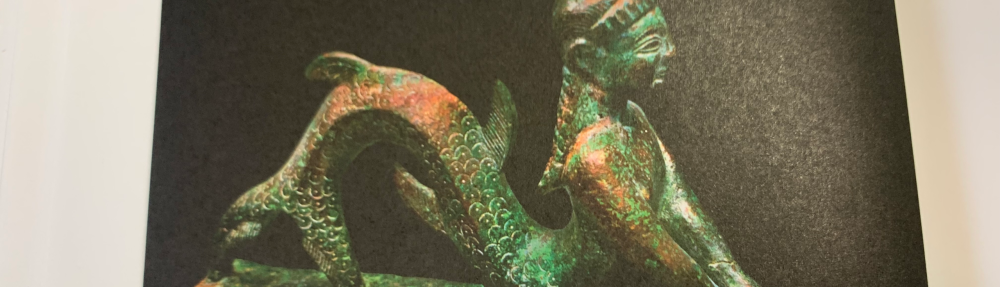
Raymondin’s fear of Melusine’s true form reflects a larger pattern of how people view nature as dangerous or monstrous when it resists control. Melusine, being half human and half water spirit, represents the connection between the human and natural worlds. Instead of seeing her hybridity as something beautiful or balanced, Raymondin sees it as a threat. His imagination turns her into something unnatural and terrifying, showing how easily humans misinterpret what they cannot explain. Through him, Lebey suggests that the real monster is not the creature in the water but the human who cannot coexist with it.
Lebey’s use of sound and movement strengthens the theme of human intrusion into nature. When Raymondin secretly enters Melusine’s hidden space, “he heard not far away, in a place that he could not yet see, a strange sound of splashing water” (123). This soft, rhythmic sound contrasts with his tense and fearful state, showing how calm the natural world is before human interference. As he looks closer, the description of “a tail of green scales stretched under the water made the water lilies move” (125) links beauty and motion, emphasizing the harmony between Melusine and her environment. Yet this harmony disappears the moment Raymondin appears. The sound of water and the movement of lilies reflect the balance of nature that he cannot understand. By entering this quiet, living space, Raymondin’s curiosity and fear turn natural peace into disturbance. Lebey’s language connects his emotional tension with environmental imbalance, reminding us that when humans invade what they cannot comprehend, they destroy both mystery and harmony.
At the end of the story, Melusine disappears back into the air and water, returning to the world she came from. This moment can be read as a form of restoration. She escapes the control and misunderstanding of human society and becomes free again. Raymondin, left alone, represents humanity’s loneliness after separating itself from nature. Lebey’s retelling of Melusine reminds us that when people fear what they can’t control, they end up destroying both their relationships and the natural world that gives them life.