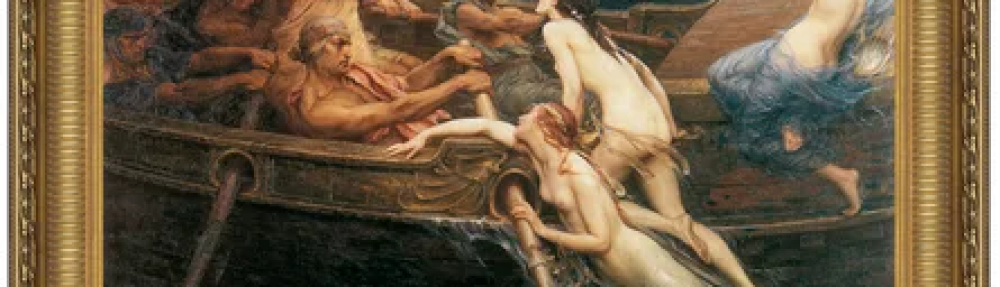
In The Romance of the Faery Melusine, one moment within the story that I would like to closely analyze is Melusine’s serpent transformation and how it is not framed as a decent into monstrosity but rather as a moment of revelation. Instead of describing her as a grotesque creature, the text instead describes her transformation as that of being radiant, imagery more akin to divinity than horror. Through this luminous description and natural symbolism, the passage portrays her hybrid body as powerful, sacred, and deeply connected to the environment. This aesthetic refreshing shifts the meaning of her transformation where the conflict from this scene is not of Melusine’s difference but rather Raymondin’s failure to accept it. Melusine’s revelation as a beautiful hybrid being is contrasted with the unsettling reaction is produces by revealing that the true threat lies not in the feminine wilderness, but in the patriarchal instinct to reject whatever resists containment.
The language surrounding Melusine’s revealed body is deliberately reverential. Rather than dwelling on minute details such as her scales or deformity, the scene is enveloped in a radiant “pale light” which fills the room as she emerges from the bath and her arms “shone like liquid gold” (Lebey 124) while she reached upwards toward the moon. Even her serpent form is transfigured as an extension of the natural world, shimmering like water. This description elevates her body into an elemental spectacle, treating her transformation as a moment of holy communion which aligns with the principle that view the feminine and natural world as two sides of the same coin. Feared because they are incredibly powerful, not becase they are inherently evil. Melusine’s hybridity is presented not as demonic but as ecological: she embodies both human intimacy and nonhuman fluidity.
Raymondin’s response to all this, however, fractures this sublimity. Where the narration illuminates Melusine’s with awe and wonder, his language is riddle with instability and uncertainty. He imagines, “implacable doors” and wonders whether he is “even in the true way to Melusine’s” (Lebey 123). His anxiety arises not from witnessing evil but witnessing something that he cannot categorize. The passage emphasizes his fear of ambiguity where his first instinct is not of compassion or curiosity but that of intrusion. The moment he spies on her, violating her trust and request for secrecy, is when the tragedy of the story truly begins. It is not Melusine’s serpent form that is an act of treachery, Raymondin’s gaze is. He cannot love that he cannot define and in this way, the scene dramatizes a broader ecofeminist critique where patriarchal consciousness recoils when confronted with beings who resist binary classification. In this case woman or monster.
Understanding this passage through this lens allows it to speak not only about gender perception but also environmental ethics. Melusine is punished for being a hybrid: a state of coexistence between human and nonhuman. Her rejection by her loved one reflect the cultural rejection of things that do not conform to human management. Like nature itself, she is cherished when useful, romanticized when passive, but feared when autonomous and unable to be tamed by man. Her serpent body can be seen as a form of resistance as she will not sever herself from the wild to appease a man who is terrified of boundaries. This passage mirrors the societal relationships the environment and teaches that ecological destruction begins with the refusal to recognize kinship across differences.
In the end, the betrayal is not Melusine’s but Raymondin’s. Her transformation teaches that the monster was not her hybridity but rather the impulse to sever ourselves from nature in order to feel a false sense of security. By portraying her serpent body as sacred, the passage advances an early ecofeminist principle: environmental and feminine autonomy are not threats to be subdued or domesticated, but ways that demand open mindedness and reverence.