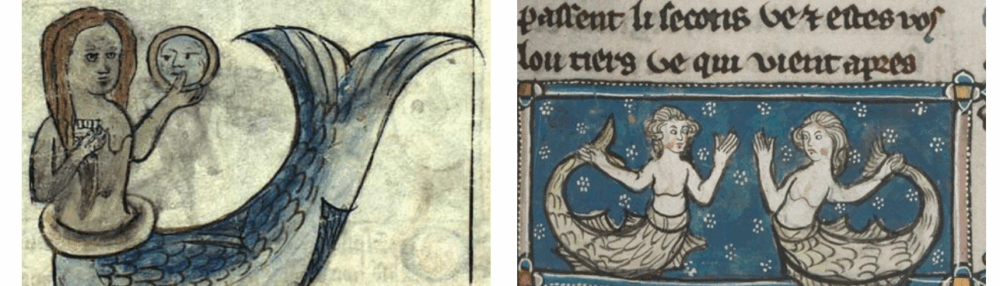
Hans Christen Anderson portrays the ocean, and thus the unknown, in a very dark and alien light through the use of menacing imagery of the depths compared to the bright and jubilant descriptions of the land. By taking into account an older work’s portrayal of the classic mermaid fairy tale, we can compare the dual perceptions that society has crafted about the unknown, especially regarding the deep ocean.
When reading Hans Christen Anderson’s version of the popular Little Mermaid story, it made me realize different ways people have reacted to and decided to depict the unknown. Obviously, Anderson’s older version is much different than the modern version that Disney produced, being much darker and less fantastical, as the mermaid literally dies at the end of the story.
Anderson’s introduction to the ocean in his version was, “But it is very deep—so deep, indeed, that no rope can fathom it; and many church steeples need be piled one upon the other to reach from the bottom to the surface. It is there that the sea-folk dwell” (Penguins, 108). The way he used the description of fallen churches and being unreachable even by rope creates a foreboding, mysterious tone about the depths. I find it interesting how in older versions like this, the unknown, (the ocean and sea) was depicted as menacing and dark, something that the main character wanted to desperately escape from in favor of the bright and vibrant land. In contrast, in describing how the mermaid viewed the land, Anderson writes, “She saw beautiful green hills covered with vines; castles and citadels peeped out from stately woods; she heard the birds singing” (Penguins, 111). Instead of fallen, crumbling churches, the land is described to have towering buildings and beautiful landscape, which goes to show how Anderson deliberately is perpetuating the ocean in a much more negative and dangerous light than the beautiful land, simply because the ocean is more unknown to humans. In this case, the unknown reminds people of danger and fear.
While this fascination with the land and sun and desire to escape from the depths of the ocean remains consistent across both versions. It is described as sort of alien, strange, and not something to be admired in Anderson’s version. The unknown is seen as a dark and bad thing because since so much of the ocean is and was unexplored, it was completely up to human’s minds and preexisting notions of what the depths would look like. However, in modern versions, like Disney, they portray the unknown ocean in a much different light. In this case, the unknown does not automatically mean dangerous, but it provides room for imaginative creativity, which we can see through the upbeat musical numbers of Disney’s version. Instead of the ocean being dark and menacing, it is fantastical and magical, both depictions being based off of something unknown.
This juxtaposition reminds me of the previous reading on Barnum and freak shows. Both depictions of “freak shows” lure in specific audiences but for different reasons. Back then, audiences wanted to gawk at “freaks” even if they knew deep down that it was simply a show and not real. Nowadays, children want to see their favorite Disney characters in admiration at places like Disneyland, even if some might know that they are only costumes.