The Flow of Language: Perception Sets the Seascape

Perception is how we see the world, how we understand it, how we explain it –– but it’s also how we create our world. In Steve Mentz’s “Deterritorializing Preface” for Ocean, he calls for the reader to adapt their territorializing perceptions with adjusting the language we use. Mentz offers seven words to adjust, one I found particularly interesting was flow instead of progress. Mentz states, “thinking in terms of cyclical flows rather than linear progress makes historical narratives messier, more confusing, and less familiar. These are good things” (xvi). I find with changing language to flow there is less emphasis on an outcome than progress, reframing expectations and allowing for developments outside of the perimeters of anticipated progress.

Here’s why I think it matters, words carry weight and word choice frames perception. How we perceive the world is limited within the words we choose. If the attributes of a word are rigid we will accept what is being described as being rigid and incapable of flexibility. This might and often is not true, but the language and habit of that language limits the approach and the ability to change it.

For example, in the Westerner perception a term that is used often when describing non-white people is “minority”. This frames the Western perception (and dare I say myth) of a white majority. While it may be true in some areas it is not an encompassing truth and should not be passed off as one. Adding to that in our political and cultural understanding a majority is the “leading” group, this sets a dangerous precedent that influences behavior and opinions. What of instead of minority we used the term global majority? The frame of reference changes when considering the entirety of the planet and not just one corner or current of it.

As Mentz points out with his word adjustment, it changes the narrative. In the context of a minority and majority, understanding humans only inhabit a small portion or minority of the planet it reframes our perception of humans’ place on it. This awareness and could influence the decisions we make as a territorial minority to the seascape. As we could breach into uncharted waters that reframe our approach and attitudes, perhaps there will be more caution and discernment. Perhaps there will not be one understanding but an acceptance of how we are all in common water. Maybe then we can create our world not in the rigidity of territories and borders, but in the flow of the environment we exist in.

The Forbidden Fruit of Knowledge

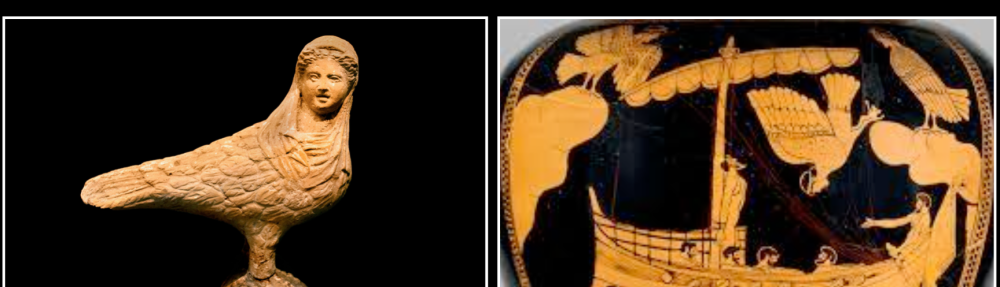
For centuries, stories about Sirens have been used to tell morals or pass down certain values to the next generation due to their wisdom. Though some stories use explicit language to tell readers what they should or should not believe, other tales are more subtle in their messages, and it is through literary elements (such as tone) that the audience is able to come to their own conclusion about the story. The use of literary elements to send a message can also be found in “Odysseus and the Sirens” from The Penguin Book of Mermaids, as the author uses negative language to describe the Sirens and their seductive ways. In particular, the author paints the Sirens as more animalistic than human to paint them as “devious” and “dangerous.” By painting the Sirens in this negative light, the text aims to illuminate the idea that, though these creatures are harbingers of knowledge and wisdom, humans must resist the temptation of knowledge that is not meant for them.

An example of the author using animal language to create a negative connotation around the Sirens and the dangers they possess occurs when Odysseus and his crewmen begin to sail past the Sirens. He notes that “Celestial music warbles from their tongue, And thus the sweet deluders tune their song” (34). The word “warbles” is particularly interesting since it is commonly used to describe when a bird is chirping or singing, something that you would not associate with human song. Using the word “warbles” becomes a deliberate choice from the author since it positions the Sirens as more animalistic than human and, thus, more untrustworthy. Rather than describing the Sirens as softly singing, the author uses this term to instill in the audience that while they may have some human features, their animal hybridity gives way to their deceitful nature. Odysseus and his men must resist the temptation of wanting to “learn new wisdom from the wise” (34) since it may not be to their benefit due to the Sirens’ duplicitous nature. Much like in the Garden of Eden, the Sirens try to tempt sailors with “information” that could lead to their downfall. The story of the Sirens becomes a cautionary tale of forbidden knowledge and the dangers it can have on those who are not meant to have this information.

Mer-interpretations

“The mermaid is a hybrid beast.” Unlike other forms of mythological hybridity, humans have split crossroads when it comes to interpreting these beasts. Do they impart knowledge? Are they friendly? Deadly? Sexual? Unassuming? Just curious? In an interesting analysis, Steve Mentz finds that interpreting shape-shifting clouds “essentially follows a hybridizing theory of interpreting forms of water… about how vaporous forms assume multiple meanings… The challenge is devising a language to understand their forms”. As hybridized water beings, mermaids are vaporous. That is, they are vague, and lacking in clarity. Like hazy clouds, interpretation of mermaids shape-shift throughout time and place. Their soaked and shrouded dwellings cultivate a sense of mystery. We humans are apt to judge. Clothes, cars, houses. We gain a sense of constancy knowing what kind of person we encounter based on their address. So, an ability to construct mermaids into a coercing presence comes from their watery lodgings; able to assume multiple meanings. The church can depict them demonically or hyper-sexualized, myths can represent beings to overcome or avoid, pop culture can take their voices. These representations help push an agenda that is difficult to object when we are wrestling to grasp an interpretation of water, let alone an interpretation of these hydrobeings. Furthermore, examining Mentz’s grappling with the interpretation of the forms of water, he states: “The challenge is devising a language to understand their forms.” Mentz has faced this challenge head on in his preface to his book Ocean. He impels to manipulate the use of terracentral language: changing the word field to current, or state to ship. When we use these words, among others, we stop tethering ourselves to land. Water, in all its forms, becomes less threatening and more of an everyday interaction. This change of language changes our relationship to planetary water, consequently, changing our relationship to the beings that inhabit it. I can’t help wondering, what our merbeing myths would hold now if we had the relationship we have with water today, hundreds or even thousands of years ago.