After reading Steve Mentz, “A Poetics of Planetary Water: The Blue Humanities after John Gillis”, I was lead to believe that nearly any body of water from, “…oceans to include rivers, lakes, glaciers, and many other forms of water”, as well as other planetary features, are open to interpretations of any kind. While the text was heavy with neologisms, one takeaway was the way in which the sea is a deep void where stories can brew and be created as Salman Rushdie was quoted the ocean being a, “Sea of stories”. When you think about it there was not only an infinite amount of stories that are also left untold. When the text went on to include glaciers as a different form of body of water, I began to think of the story unfolding relating to that. Glaciers melting, possible new bodies of water forming, what other forms of literature will stem from that into oceanic, or blue scholarship. One question sparking my interest, why new genre will stem from the stories revolving around the melting ice caps? This seems like more of an unfortunate reality, than fiction.
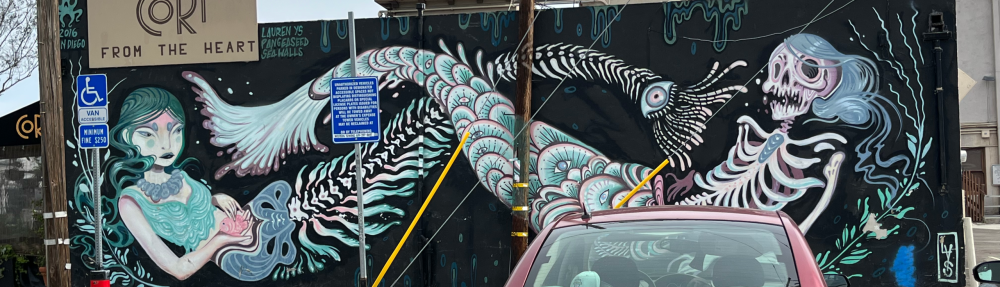
The duality between the ocean being a place of mystery and endeavoring literary journeys, “A poetics that emerges from an encounter with alienating water always relates itself to the awkward relationship of humans and water; we depend upon it and love it, but it cannot be our home”. Similar to what we have been reading lately relating to Merpeople, humanity sees the ocean as a riveting place, yet fears it as much as we do mythical sea creatures. The best we can do at times is simply write about it. Reading between the lines, almost like you’re reading between waves of the sea, like attempting to make sense the the shapes of the clouds. Worth nothing, clouds are an extension of the bodies of water as noted within the text, “[…] take my cue from a famous exchange in Shakespeare’s Hamlet. The prince, in mockery and in jest, attempts to interpret clouds”, giving us insight on how bodies of water have been a peak of interest for centuries.