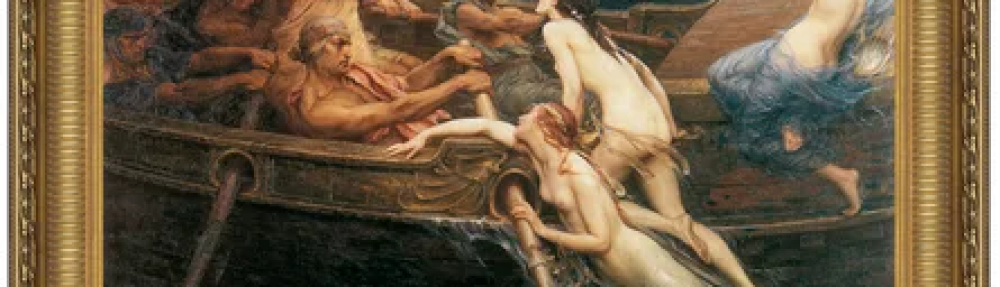
A Greater Good?

A line that stood out to me in this week’s reading was from a memory Yetu had with her amaba as she tried to help her understand the weight of the role of the Historian. “Her amaba didn’t want to believe that things Yetu spoke about were true. I they were, what would it say about her as a parent to have consented to her becoming a vessel of such ugliness?”(99-100).

It caught my attention not because of the question of parental responsibility, but from the systemic structures that are trusted but still inflict pain that is not shared or understood. The role of the Historian is honored and exalted by the wajinru. The role’s importance keeps their community together and brings them history that nourishes their present and future. But it is also a heavy burden that Yetu must carry alone, as it has been done for generations.

When Yetu tries to share her experience with her amaba, her mother is confronted with the truth of this role that her daughter endures. She denies it could be like that, because it is so horrible. Her amaba was told by the system that Yetu is part of that it is necessary role and at this point amaba believes that the system is there to protect all of the wajinru. It is an honor to do this, taxing but something that must be done and needs to continue. There is also the threat that her daughter’s refusal to do this chosen role would result in the predicted end of their people. So Yetu’s amaba must believe that it is for a greater good, but still she is not trusting the individual.

When Yetu approached other wajinru about giving up this role, they rejected as an act of “blasphemy”. Does their system function on the elongated sacrifice of the chosen? Why is this not a term of Historian, so that one life might not be sacrificed in its entirety? There is an element of this dynamic that makes me ask where that last Historian is and why is there not a shared process, also was there any type of training for this role?

This book discusses generational trauma and how it is held and weighted in the body and mind. Yetu has been the Historian for 20 years, but it seems to be breaking her down faster than previous Historians. The system of the wajinru have her believing it is a personal failing, her struggle to hold this history alone and feed her people in measured sips, but I have my doubts.

A Moral Dilemma

Something I thought was exciting, even though this entire book has been captivating. I thought it was super interesting when it states that Yetu “[would] have to live with that for the rest of her days. Her bid to save herself, to save her life, would have the unintended consequence of killing others”(123). I was drawn to this conflict because it frames self-preservation as connected to, or in control of, communal harm. The repetition of the word save in both saving herself and her life draws attention to the amount of desperation in her escape. I think the idea of blurring the line between survival and selfishness is very intriguing. It’s a situation no one would ever want to be in, choosing between one and many. The concept of playing God, having the lives of others in your hands, and at the risk of losing your own.

The choice of the word “unintended” highlights the moral weight being placed on Yetu. This further provides a vivid picture of how the lines between collective and individual responsibility have almost completely disappeared. I also liked the way it states that Yetu would have to live with this decision for the rest of her life. It highlights how guilt itself can become a lifelong inheritance, much like the communal memories that she has to carry as a Historian.

I liked how this short sentence exposes a great tragedy built into a very popular situation. (The train scenario of saving one or many) Seeing how the decision of one person is threatening to affect the lives of so many others. This small quote shows so much, the pain and confusion Yetu has to deal with in seeing how her plan to escape might replicate the very harm she is trying to flee.

So far, this book is very interesting to me, which, if I’m being completely honest, I thought I might get bored a bit. I am loving every part of it. I knew the story was going to be interesting, but sometimes the writing doesn’t do the story’s justice. But this one is amazing so far!

Song of the Week: MILK OF THE SIREN by Melanie Martinez (This one I can’t believe I forgot about, but OMG I think it fits very well. This song connects on a more lyrical aspect than the others. I think everyone should give this one a listen!!)

Week 15 Reading Response

In chapter 5 of The Deep by R.Solomon, there is emphasis showing how being in the sea is prison-like for Yetu. “She needed to go closer to the surface yet if she wanted to escape her people entirely (p.68)”, she is painted as a prisoner escapee trying to flee law enforcement (her fellow waijinru’s). This quote provoked for me to think of the ocean as a restraint (negative) rather than a museum of history (positive) because Yetu has actively showed her disdain for being in the sea with her people. The only way to escape because they will find her in the darkest parts of the ocean is to breach the border between land and sea, where no waijinru would dare to go. Yetu having to leave to uncharted and potentially dangerous territory to escape her life as a Historian reminds me similarly of an immigrant needing to cross a border to a new unknown land trying to escape their past and rebuilding from scratch a life that they are in control of. The thought of having to physically move oneself from their current environment to a new one is a debilitating one that evokes so many emotions to rise out of the person because they have nothing and no one and are placed in a survival mode to not succumb to moving back to their old life which is stagnant and draining.

Yetu’s Empathy

Yetu going above the surface is an unpredictable predictable Western mermaid story: A mermaid going to land, falling in love with a human. Yet, with a queer love story and a human transitioning into the world of merpeople, Solomon subverts Western mermaid stories. On page 129 Solomon writes, “This truth, that two-legs were cruel and unusual, was the most important lesson of the History” In The Deep humanity is the other, the monsters. Yetu being the main Historian of the story line is significant because her character demonstrates an overwhelming sense of empathy. With her empathy, Yetu shows the reader how to overcome monstrosity by relinquishing hatred. In contrast with Basha, who’s experience as Historian leads them to vengeance: “In the old days, when we discovered a ship that threw our ancestors into the sea like refuse, we sunk it. Now we will sink the world.” (128) Yetu’s empathy eventually leads her people to mental peace. She leaves her home, the deep, because of her empathy. It is clear that she cannot handle being the Historian because she feels the pain of her ancestors in a tremendous way. After she leaves, she gains perspective. Not just from conversing with humans, but literal perspective. “The vastness of the ocean looked so different from above, so much less comprehensible.” (77) Yetu gains a human perspective of the ocean, but more than this she shows how easy it is for humans to misread the ocean. An ocean dweller who recognizes the incomprehensibleness of the ocean when viewing its surface gives the reader perspective. How could a human ever understand the vastness, the importance, or the creatures of the ocean from their surface knowledge.

Like “The Water Will Carry Us Home”, The Deep gifts life, History, and descendants to people who experienced attempted erasure. But it also endows mermaid stories with a quality that has seriously been lacking. Throughout the semester I have been yearning for a mermaid tale that designates a human into the mer-world. A human into the mer-world as invitation, not punishment. I have been wanting this story not only for myself. I think inviting a human into a mermaid’s world will help to decentralize Christianity’s dominion over Earth.

“This time, the two-legs venturing into the depths had not been abandoned to the sea, but invited into it.” (155)