The mystery out in the ocean

In the film Sironomelia where it is apart of a decommissioned Nato base and the silence of the film has. It has an impact of what humans are not really knowing what is out in the world where the most isolated and unknown.

From all the previous lectures and how it impacts on what we know about mermaids is very limited. Through out the film It shows how not immersed and knowledgeable that humans know very little about the ocean and the Arctic itself. From Eric Paul Roorda article “The ocean reader theory culture, politics Introduction” where it says humans have unbalanced relationship with the Ocean and how humans are aggressively treating the Ocean as if it were nothing and only care about land borders that is worth conquering. The one thing I often notice is the there is lots of humans aren’t really in the picture because of scientific discoveries isn’t often presented. There is more to the film that is audio and sound has showed that there is a message in the film of not many people are trying to have explorations into the vastness into the unknown ocean. Humans for centuries have been know have the absence of destruction and greed.

So what the film tells us is how life is precious and it prevails in nature unseeded. What the Mermaid sees is peace and quiet that no one else can live a life like them. It is very unique to them and them alone.

Seeing, Hearing

Dion Jones

Prof J. Pressman

ECL 305; Literature and the Environment

3 November 2025

Seeing, Hearing 

This weekend’s texts “The Water Will Carry Us Home” (TWWCUH) and  “Sirenomelia” utilize audio and visual storytelling in order to engage with a blue world. 

TWWCUH utilizes Afrofuturistic elements, as well as traditional African spiritual beliefs in its framing of water. Both aspects reach across space-time to connect them to the Igbo—and others—who chose to drown and those who were forced offboard who would otherwise be further trafficked in the Transatlantic Slave Trade. It depicts the forces—wind and water—that allowed the escape to take place as divine figures—as figures with agency. The formatting of the film includes both stop motion media—presumably physically crafted art—and live action depictions of the unnamed character. In effect, TWCCUH acknowledges the history of water as a path, water as imagination, and water as the future/a connective constant. 

“Sirenomelia” depicts liquid and solid water and the biological, crafted, and formed structures along them. The diegetic sound establishes and conflicts with a sense of isolation and absence. The only visible non-plant life to appear is that of a mermaid who traverses the seemingly abandoned artificial features and structures—which imply the search or use of some resource or foe. The mermaid is a figure that points at that which is not there or is no longer there and compares it to whatever is leftover. The mark of the U.S.-USSR Cold War persists despite the collapse of one of the adversaries. Further, it argues for the continued existence of water despite what comes, goes, or corrupts.

Week 11: The Water will Carry Us Home

In this short film, directed by Gabriella Tesfaye, she illustrates a terrifying truth about the ocean’s history, yet still manages to tell a beautiful, almost comforting story. We all learned about the Middle Passage in high school or middle school history classes, but I fear we were shielded from the gruesome details and horrifying tactics used to transport the victims. I never before thought of the Middle Passage as “Ocean History” necessarily. I saw it as a history of how slaves were transported from one land mass to another. This stop motion film illuminated the fact that the Ocean itself can very much be a holder of history.

These poor pregnant women depicted in the film were thrown overboard and drowned in the sea. That is just one of those truly heartbreaking truths. They now rest (hopefully peacefully) on the ocean floor. They had to endure a horrible, watery death that could never be justified. Tesfaye’s film tells an alternative death story for these women, honoring the Water Spirit, “Omambala”. The ocean has inspired religious practices and gods/goddesses since the beginning of time. Ancient peoples knew the water to have much more history than modern people may ever be able to comprehend. The telling of this story from the perspective of the sea, the true historical setting of the Middle Passage, may be exactly how we need to view it. How many slave bodies does the sea floor hold? Do their souls still reside there? Just how much History was thrown overboard to be forgotten forever? The sea holds secrets that humans wish to rid their minds of, a dumping place of sorts, where all can be cast away, and essentially washed away from reality. When you think of the Ocean as a graveyard, you think of every story, every mishap, or murder that led those bodies there. If the ocean could talk, if it had a civilization to write the stories and illustrate the tragedies, would we have more respect for it? I think it would allow us to know the human race in a whole new light.

Sirenomelia

In the short film Sirenomelia, there is a mermaid that is seen swimming in a decommissioned NATO base. The part that I particularly found interesting was the noise and camera angles of when the mermaid was in vision. The beginning of the video states the sound is “white noise” but I noticed that when the mermaid was in frame it sounded like a disruption in audio. Exemplifying a disruption in reasoning and belief of the reality that mermaids could exist.

The changes in audio and video quality was evident throughout the whole film, another notable change was when the camera was closer to the water/ in the water the video quality was blurrier or not as clear and the audio was stronger—in a almost eerie kind of way. Where as the beginning and the end of the film, once the camera was panned out or in aerial view the video quality was more clear and the audio was more of tranquillity. This detail in the film definitely ties into the description of the film stating that the creators wanted to show “The Future is Certain; It’s The Past Which is Unpredictable…history can both be rewritten and imprint itself on the future.”

The contrast of blurrier images and sounds replicate the past that was something the present could only understand through the lenses of others that show unclarity. Where as the clearer images show the future and the progression that future is advancing in.

Week 11: Nature marches on

After watching Sirenomelia, I thought the short film was powerful in showing how nature, with or without humans, continues onward. The film places us in the perspective of a mermaid, exploring a decommissioned NATO base in Norway and seeing how much of it has been claimed by nature since there are no humans around to maintain it.

The scene at 2:15 especially interested me because it shows how desolate the underground parts of the base really are when there are no humans looking after it. The scene is in black and white with what sounds like the screeching of a tram, and the only “light” we have exploring this part of the base is pointed towards the ground. Meanwhile, there is another scene overlayed on top of it; it’s hard to make out, but there is a light and a part of a wall which quickly gets distorted by a disturbance on the water’s surface. Although there are muffled voices, there is no discernible dialogue throughout the film; what once was a foundation used to study the Arctic Ocean is now an echo of the past.

By using a decommissioned NATO base, it shows us that humans are responsible for maintaining the transgressions against nature that we call machinery/industrialization, which we use to explore and learn about the ocean. Maintaining them means actively protecting it from the forces of nature, such as erosion and invasive species, and that also means we have to exploit the resources given to us to maintain them. Without someone to look after these machines, nature will ultimately come back to reclaim them, reincorporating them as another part of nature. That is why you often see plants growing inside abandoned buildings and theme parks; man-made creations are temporary, nature is inevitable.

Week 11: Sironomelia; Nature Prevails Human Beings

Watching the first few minutes of Sironomelia was rather confusing to me, as we only got small glimpses of what was labeled to be an Arctic Nato submarine base with some underwater shots. But as the video progressed, we see a mermaid figure swimming around the waters of the base, completely alone.

I think back to the lessons we have discussed in class before, specifically on the relationships humans have with the ocean. Humans have historically neglected the ocean’s past, treating it as a history-less abyss devoid of life. However, that is far from the truth. Not only is it a historical wonder that holds all the secrets to life from millions of years ago, it is also full of life. However, if there is one thing about humans, they will do anything to conquer and politicize land that isn’t theirs to begin with. We talked about borders with coastlines in Eric Paul Roorda’s The Ocean Reader and in Helen Rodzwadoski’s “Introduction: in Vast Expanses: A History of the Oceans. Both of these readings emphasize the relationships humans have cultivated with the oceans. Dismissive, but also aggressive. What I notice in Sironomelia is the absence of humans—and with it, the absence of destruction and greed. We see a mermaid traversing this abandoned base, and I speculate that the intention of the film was that it takes place in the near future, devoid of humans.

Sironomelia tells the story of what kind of life prevails: humans are but a speck in comparison to the geological history of the Earth. But what does prevail is nature. What will prevail is the oceans. The mermaid we see is at peace because she doesn’t have to worry about the destruction that humans once brought to her world.

Week 11: Sirenomelia; She Swims Away

Emilija Škarnulytė’s film Sirenomelia explores a distant imprint of humanity on the world’s surface. In siren form, her exploration of the decommissioned NATO base in the Arctic circle, is as beautiful as it is haunting. This human construction is an abandoned effort by northern powers to position itself, and control movements between the northern nations. But it appears to us as remnants of an alien world, accompanied by quasar sounds, or noises of distant objects.

Like whales who can echolocate distant objects through their sonar, this siren creature might have similarly found this distant human construction. Though, now devoid of human life, but encrusted upon its submerged foundations is ocean life growing upon it, even in frigid temperatures, as seen through the eyes of the mermaid.

The mermaid is perhaps our future selves, wading through our past and trying to decode our creations; our legacy. As the namesake of this film, the condition called sirenomelia, are we viewing a potential future of humanity, adapting to the rapid change of the climate by returning to the water. And what is the cost of this evolution, but to view our past through an alien lens, of a collapsed civilization from a bygone era.

The siren explores the base, but unlike the lively civilization that entrances the little mermaid, there is nothing to truly hold her attention. She swims through its canals and docking bays, past it, away from some human archeological site; remnants of old empire, and back to the open Ocean. She swims away. Perhaps our future is no longer on land.

Week 11: Fluid Identity

The short film Sirenomelia uses underwater imagery and minimal sound to explore the bodies that exist between categories, challenging the viewers to rethink what it means to be seen, understood, and accepted. The fshort film first begins with blurred figures moving through water with nothing being clear at first, almost dreamlike. By making it visually uncertain, the film pushes us to question the way we normally expect bodies to appear in the water

As for the title, Sirenomelia refers to a real congenital condition in which a baby is born with fused legs and is often commonly referred to as “mermaid syndrome.” Naming the film after this condition sets the tone and encourages us to focus on the bodies that society may label as “abnormal”. By presenting the body underwater where shapes can flow and merge freely, the identities feel fluid both literally and symbolically. This is shown when the camera lingers on a slow gentle movement under the surface and distorts the body, not in a cruel or frightening way, but in a peaceful, almost protective manner. The silence and soft ambient sounds reinforce this feeling, making the view become more aware of breathing, movement, and presence.

In this sense, the films main message seems to be about embracing difference. By keeping the body partially hidden, the film resists the idea that identity is something that must be clearly defined or fit within a standard. Instead, the film invites us to slow down and accept the ambiguity, and see beauty in forms that wouldn’t normally match conventional expectations.

Womb of the Ocean: The Third Eye

In Gabrielle Tesfaye’s The Water Will Carry Us Home, the image of three women (as depicted above, 4:30) underwater, each marked with a single, open third eye, symbolizes both the divine vision and spiritual rebirth. The third eye connects each of them to one another and to the divine world of the Orishas–these are water deities from Yoruba tradition. Rather than showing them drowning, Tesfaye transforms them into beings of power and awareness. I felt that it was important as well to point out how their eyes are closed, leaving only the third eye open, which emphasizes that their perception has shifted from physical to spiritual. Their open third eye suggests they have crossed into a higher state of understanding, one that exists beyond the material world.

I researched more about the representation of water deities with a third eye and discovered more about the traditional Yoruba culture. I found that Yemoja is a mother spirit and patron deity of women, especially pregnant women. She presides over rivers, but she can visit other bodies of water–showing that she has the ability to transcend lands and borders. Her name, meaning “mother of fish children,” shows her protection of life and her dominion over living things. Yemoja is also often portrayed as a mermaid, linking water and motherhood together, which resonates with Tesfaye’s depiction of women’s rebirth and collective awakening. https://en.wikipedia.org/wiki/Yem%E1%BB%8Dja

By placing these women in the water (as pictured above, seconds before their transformation, 4:28), Tesfaye ties the idea of sight to rebirth and return to water. The ocean acts as a womb–a place of transformation. They are thrown overboard and not simply lost to the sea, but they are received by it. The third eye marks the moment of this change, showing us that death has turned into a spiritual transformation. There also seems to be a calmness in their faces after their transformation, the calm and glowing look of them in the water suggests acceptance and peace, as if the Orishas–like Yemoja–have embraced them. Their bodies no longer are sinking but floating in harmony with the sea, indicating further of this spiritual rebirth. The third eye makes this awakening a collective experience, connecting them to each other and their history carried by the Atlantic. Tesfaye turns the ocean from a symbol of death into one of a return to the ocean. The third eye, alone open, represents the vision that comes after suffering–the ability to see beyond the pain and into renewal. In their return to water, the women are restored, not erased, their divine sight guiding them home.

“Sirenomelia, also called mermaid syndrome, is a rare congenital deformity…”

There are three individuals known to have survived infancy with Sirenomelia. They are the stars of inspirational documentaries, the subjects of research publications, and featured on blogs dedicated the the macabre. It goes without saying; humans are fascinated by disease, deformity, and abnormal morphology. We see these anomalies through various lenses; as symbols of strength in the face of adversity; as demonstrations of the state of medical technology, or merely as perversely, fascinatingly, bizarre. In any case, individuals with physical abnormalities are monsterified. They take on that role; non-human emblems, culturally imbued, figures which demonstrate something, make us aware of something, make us uncomfortable, demand our attention.

In one extreme, these real live Monsters are stripped entirely of their humanity– their individuality, their dignity. “Freak shows” are an example– the people responsible for the profits were often unpaid, especially if they were people of color, and, to the public, unnamed (The Bearded Lady, The Elephant Man)– treated as animals. In some cases, even, they become inanimate objects– the human value of respect for corpses does not extend to preserved specimens of monsters, such as these fetuses presenting Sirenomelia, preserved in the Medical Museum of Copenhagen. Preserved collections of biological specimens can be critical to studying and understanding disease. But these specimens are stored and displayed as curiosities; these prenatal humans were too strange to be buried. 1

Bringing the name of a medical condition this loaded into a short film representing a fantasy mermaid is a powerful choice. Škarnulytė portrays a graceful mermaid with a glittering tail, swimming powerfully through water barely above freezing. Her mermaid is not disabled, she is not a medical miracle, and she is not a guest on Oprah. But– she is also a monster. She operates to show us our world from a different angle– in fact, through this mermaid’s eyes, our “normal” world becomes as strange and fascinating as abnormal physiology. This defamiliarization (or distortion! 1:11) of things like satellite dishes (1:51), roads (2:43), and bridges (3:32) has a powerful effect; it allows us to bring everything to a level playing field– the human and nonhuman, the terrestrial and aquatic. Icebergs are as strange as ice-cutting ships. Trees are as strange as tunicates (3:14). From this new perspective, we see, briefly, unburdened by our associations, biases, our values, and our deeply programmed sense of “normal”. From this perspective, for a moment, we might see infants born with sirenomelia not as monsters, not as objects, but as babies, as strange and fascinating as all babies are.

Our instincts to collect, cultivate, categorize, and understand are powerful traits of our species. Those instincts are responsible for our technology. Our ability to form cultural values has allowed the unification of our societies. Our extreme sensitivity to “normality”, evidenced by the uncanny valley effect, the narrow threshold between normal and abnormal, is an artifact of remarkably powerful brains, capable of processing incredible amounts of information. Whether or not we assign positive or negative value to these human traits, we cannot escape them; they are part of being human.
However– every once in a while, we benefit from lifting those blinders; Sirenomelia is an opportunity for us to release the need to categorize, to pathologize, to separate water and air, to understand.
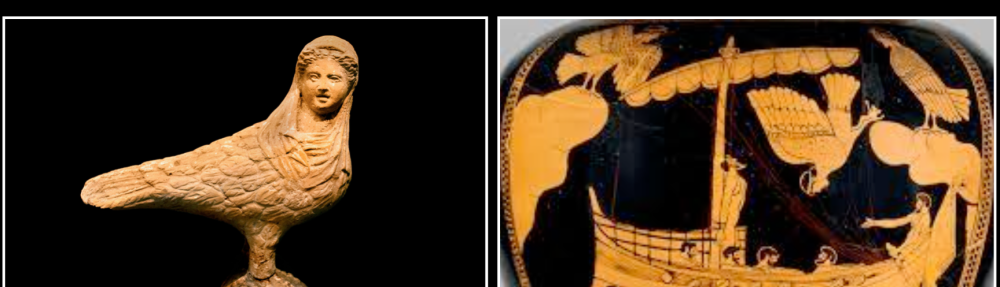

  1. What might different spiritual practices say about the fates of their souls, due to the lack of burial ritual? Undine, Melusine, and the Little Mermaid were born without souls, and ultimately each failed to acquire one. Do souls come from a pair of legs? ↩︎