The vast ocean of the unknown

In the reading “The Ocean reader by Eric Paul Roorada and what in the passage what stood out is how much involvement of human beings are in the ocean and still has lots of mysteries that we don’t much about.

Roorada says about how humans viewed the ocean and its entirety is that “Those who have considered the watery majority of the planet on its own terms have often seen it as a changeless space, one without a history”(1).

This describes humans people who are just ignorant about our planet and were too busy to try to understand on why the ocean is an important part of our planet and essential to life as we know it to be. It is crucial to have knowledge of the ocean itself because it is a large part of life that is needed and lots of potential to be explored. Most people rather go and discover parts of our universe out in space rather than taking care of our planet.

For what the author puts a spotlight on how humans are seeing the ocean “Terracentrism, a term that is rapidly gaining currency, refers to people’s tendency to consider the world and human activity mainly in the context of the land and events that take place on land”(1). People tendency to dominate other people have been for thousands and what the environment has taken a toll from humans for quite a while and really needs to considered how resources are limited due to climate change.

Week 10: The History of the Ocean

In reading “The Blue Humanities”, I was very intrigued by the discussion of the unfolding history of the ocean, a place becoming more and more widely studied.

 “More is known about the dark side of the moon than is known about the depths of the oceans,” writes the sea explorer David Helvarg. Yet large numbers of people know the sea in other ways, through the arts and literature. From the beginning of the nineteenth century, fiction has been imagining undersea worlds that explorers were unable to reach.

This short passage from the preface to the text stood out to me in particular. We have been studying pieces of literature all year that have unraveled the history of how the ocean has been viewed for centuries. For a long time, fiction was all we had to tie ourselves back to the ocean from which we evolved at the beginning of time. Time after time, our fiction has been proven to be accurate in many ways. We discussed in class how Hans Christian Andersen’s description of a living sea floor was outlandish at the time, but almost completely accurate from a modern, scientific perspective. Now that we can reach these depths and have the technology to truly understand the sea and all that has transpired there, who knows what new fiction will be stirred up? I don’t believe that the scientific exploration of the seas and discovering the “true” history of the oceans will stop mankind from thinking up oceanic stories to enchant generations. Sure, we may know more about the moon than our oceans, but that hasn’t stopped the continuous flow of “moon media”. After all, even when we have explanations for, or seem to be able to grasp a concept or space (practically a non-human one), we still find ways to pull art and literature from them.

Week 10: The Ocean is big, but its resources are not infinite

After reading the introduction to The Ocean Reader by Eric Paul Roorada, one thing that stood out to me is how the author reminds us that humans are constantly exploiting the Ocean (with a capital O) and hurting its ecosystems, and wants us to become more environmentally aware of the Ocean due to its limited resources.

Roorada writes, “[T]he multifaceted Ocean … is an enormous and very complicated system. Humans interact with that system in many ways. They relentlessly hunt sea creatures, taking 90 million tons of fish from it annually.” (3)

This description of humans “relentlessly” hunting sea creatures shows how we take these gifts of Nature for granted. The Ocean is enormous, but it is not infinite. Like land, it is home to many resources that can only be found underwater. However, there is only so much that we can gather from the Ocean before it eventually runs out of said resources and we have to compete for it.

The author also sheds light on overfishing, giving us a statistic of humans “taking 90 million tons of fish from it annually.” Overfishing leads to a depletion in fish stock, which endangers marine ecosystems and harms human livelihoods. Because of this, it is important for us to consider what resources we really want and how much we really need, taking in mind how efficient we need to be with the resources we have. Limited resources cannot fulfill our unlimited wants.

Value

A particular line that stood out to me In The Blue Humanities by John Gills was “The focus was almost entirely on the ships and the skills of the men who manned them.” Gills explains the acknowledgement that the ships and skillful men received while there was a disregard for the foundation— the sea. The sea is the foundation for the ships and the sea is what the skillful men had to not only work with but obtain some knowledge about in order to be successful in their travel. So why was the sea undervalued?

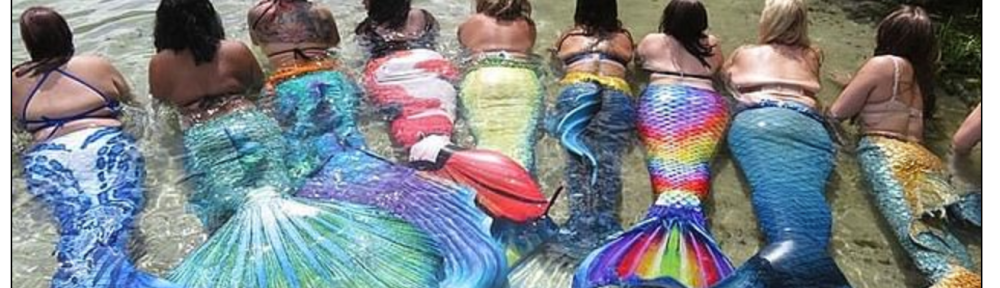
Tracing this back to what our discussions about mermaids/sirens being considered dangerous and unfit for society, there is a similarity considering the sea was was also considered “…as dangerous and repellant, ugly and unfit for literary or artistic representation.” The value of mermaids have had a similar value that the sea had at one point. Gills explains “…and more attention was paid to extracting the wealth of the seas…” Humans extract the parts of the sea that is of importance to them because it is benefiting to them. There is a lack of empathy towards the sea, the only value that the sea held was in a form of travel, whaling, etc. Much like the mermaids, who offered knowledge, their beauty, etc. Ignoring the fact that there is more knowledge that was missed out on to understand the depth of the sea, much like the mermaids as a being.

Week 10 reading post

“Beginning in the late eighteenth century, people began to come back to the sea in search for a quality they felt to be missing in the new industrial environment, that something called wilderness.”(John R. Gillis, HUMANITIES, May/June 2013, Volume 34, Number 3)

Humans crave nature because of the manmade world filled with fumes and concrete has deprived them of being in their natural environment.

The sea, for the most part, has been ignored by humans and just used transactionally, never acknowledging the sea as an “it”. When industrial revolution begins to rapidly spread across land, nature is being destroyed. The coexistence of land plants and animals lived beside humans, with a life cycle. Now, that technology is involved, natures life cycles have run short due to humans at fault. Some humans sensed that emptiness and crave an outlet of purity, which is the sea. Humans didn’t dare to enter the sea but watched entrancingly the waves come and go from a dry distance on their land. The sea has now become an “it” in their eyes, an embodiment of “wilderness” that no man can tame. Rather to admire from afar the power she has and no manmade revolution will harness her. Humans crave nature because we all came from the same place, water. The ginormous sea being at the edge of our land, alluring us to keep seeking for “wilderness” that will fill our missing pure/untarnished quality,we humans crave.

Week 10: Seeing the Ocean As a Place

In this weeks’s reading of The Ocean Reader, the author exposes how terracentrism, our land-centered worldview, has pet us from recognizing the ocean as a dynamic and vulnerable place that requires human awareness and action. They write how human struggle to “…think of the Ocean as a place” largely because we cannot visibly shape the sea in a meaningful manner in the same way we alter the land. We can plow or pave the earth but changes to the ocean tend to happen out of sight, creating an illusion that it is “changeless, inexhaustible, and impervious to the onslaught of harvesters”. This misunderstanding has greatly contributed to the staggering overuse of the oceans resources each year, such as the 90 million tons of fish.

By introducing the concept of terracentrism, the text calls out the bias that treats the ocean as secondary to land when it in reality covers more than the majority of the planet. The idea that human actions can’t truly affect it due to its vastness has allowed environmental harm to go unchecked. A small but symbolic decision to capitalize the ocean pushes the reader to rethink this bias and view it from a new perspective. Rather than seeing it as a generic feature of the globe, the author argues that capitalizing the term recognizes the ocean as proper place with respect equal to that of continents and nations.

Ultimately, this passage calls for a shift in how we see the world. The ocean is not the empty space we tend to think it as, rather, it is a living interconnected system that is facing an unprecedented crisis. Acknowledging the ocean as a place is the first step to take in protecting the future we share with it.

Unity with the Ocean

For this post I will be talking about “The Blue Humanities” (Humanities: The Journal of the National Endowment for the Humanities. Web. 2013).

The article discusses the changing perception of the ocean among those in the Western world, more specifically in America and middle-class Americans. To some extent, the ocean probably provides more harmony with nature than land does. As the article puts it, “A passion for yachting developed on both sides of the Atlantic in the later nineteenth century, and, by the early twentieth century, swimming had become very popular”. While it depends on the person, you technically see a lot of land scenery all the time, living your life. So the ocean is new. But there is a difference in how people enjoy the land’s nature in comparison to the ocean’s nature. I’ve personally heard and seen online posts that often say you have to separate from civilization (aka human progress) to reconnect with nature. You’ll have to go somewhere deep, without any structures, roads, cars, etc. But with the ocean, there’s an immediate connection, and you don’t have to go somewhere devoid of civilization to fully enjoy. This brings to mind the perception that man is separate from nature.

To quote Paterson-Hamilton from the article, “Often it seems that the more people become urbanized, the more they want about them talismans of nature on their walls, their shelves, their keyrings”. There is a desire to connect with nature, and the ocean is a good place that allows one to see urbanized areas (coastal towns/cities, for example) alongside the refreshing breeze and hear the gentle waves of the ocean. Thus, there is no separation but rather unity.

The Water Planet

The first of the readings this week, although incredibly content and numerically heavy, really seemed to open my eyes about a reality we know, but don’t think of: water outnumbers us by an immeasurable amount.

It’s specifically the way it’s enumerated and compared within the Ocean Reader introduction: “The largest of the regions is the Pacific Ocean, which is an expanse of 64 million square miles (about 165 million square kilo- meters [km]). It is difficult to grasp such enormous dimensions. By contrast, the landmass of Asia, the largest continent, is only about 17 million square miles (44 million square km), while North America covers just 9.5 million (24.6 million square km), of which the United States represents less than half, with 3.8 million square miles (9.8 million square km)” (Roorda, 2). Obviously, the fact that the Earth is 70 percent water is considered a common place fact, but it’s never really actualized how greatly that stretches across the physical space unit its existence becomes contrasted to something we recognize. It returns us to this conversation from class prior, that human beings consistently need to label based on comparison and recognizing it because of what it is not.

This disconnect of disregarding water, and treating as some sort of minute thing compared to our landmasses, only for it to be larger than even our largest areas, really puts it into perspective how disproportionately human beings seem to recognize the world around them. It’s so common to hold this assumption that because we can identify ourselves as sentient, it places us above everything else in this ecological food chain. The decision making and this labeling of important versus not becomes ours to choose, ours to define in spite of never recognizing its capacity because of our typical definition models. Despite being so commonly terracentric in our speech, so selfish in the way we acknowledge the world around us and never considering how our speech, our action, even our momentary thought has lasting effect, the water really has all the power.

Week 10: Oceanic Abuse

Out of the reading for this week, there was something that sparked my interest in Eric Paul Roorda’s introduction. The entire introduction was honestly a lot to take in because of its scientific nature but I especially liked when he wrote, “This awareness in turn contributes to a growing consensus that we need to take concerted action to avoid the devastating consequences of having ignored the Ocean for too long” (Roorda 1).

I thought this was interesting because I feel it’s captures the bigger idea that the Ocean should not be treated as a background but as a living system, something that is entangled without our own human existence. From our talk on Tuesday it this quote got me thinking about how the human relationship with the Ocean isn’t typically something that we are aware of, it just is. It’s become something that we as humans take advantage of without even realizing, because of the fact that it’s always been there. But what if one day it isn’t, what if we have ignored it for son long like Roorda is saying in this introduction. Which makes sense in his use of the word “Terracentrism”.

Roorda’s use of “for too long” highlights the historical guilt that the world may have for abusing its relationship with the Ocean. This one sentence brings both awareness and action into one place, it does the showing and the telling all tied up with a pretty bow. It brings the right amount of devastation to the table, some kind of motivation to open the eyes of his readers. I feel this quote really ties up his entire introduction and what the rest of it entails. The combination of urgency and consciousness for our Ocean and ecosystem that it involves.

Song of the Week: Before the night by Joël Fajerman (I loved the mythical(ness) that this song brings to the ocean front. Also sorry this post isn’t super strong, I’ve been fighting sickness for what feels like weeks now and just and my body finally caved!)

People and Oceans

In the Vast Expanses, Helen M. Rozwadowski talks about how people and oceans have always been connected. She explains that the ocean is not just empty space between countries, but a place full of history, stories, and human activity. One sentence that caught my attention was, “The sea has always been part of human history, but only recently have historians begun to see it as a central force rather than a background.” This line means that the ocean has always mattered, but people are only now starting to see how important it really is.

I like how Rozwadowski uses the idea of the sea as a central force. Normally, when we study history, we focus on land, cities, empires, or wars. The ocean is often seen as a blank space. But she shows that the ocean actually connects people across the world. Through sailing, trading or exploring, humans have built relationships with the sea for thousands of years. The word “expanses” also gives a image of something wide and deep, reminding us that there is so much more to learn about the ocean.

Reading this made me think differently about nature and humans. Rozwadowski shows that humans and the ocean affect each other all the time. The sea gives us food and shapes our climate, but people also change the sea through travel, pollution, or stories. From this I thought that we should understand the ocean as part of our world, not something separate from us.

By reading this, now I see the ocean as something alive that holds memories and histories. Rozwadowski helped me realize that the ocean is like a storyteller. It remembers everything people have done and still connects us all through its movement and sound.