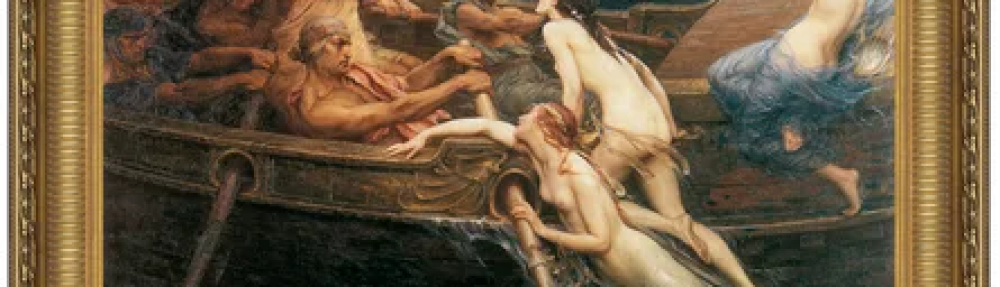
Humanity in Femininity

Melusine’s story reflects so much of life from its introduction: discussions of the fluid nature of opposing concepts, patriarchal structures and their implementation within relationships, and of course, the need to hide deep secrets from those we love in order to protect ourselves. This then spills over into one of the most realistic parts of the story in my opinion: the use of mermaids as a vessel for fate, and how that plays a role in romantic ideology for women.

Emotionally, it’s made incredibly apparent how his betrayal of her boundaries, a concept all too well fated to modern societies and relationships, becomes a point of vulnerability for her. The moment her image of their love seems to unravel, she crumbles: “the fate that was now imposed on her, she felt everything uncertain, herself, her future, as if her heart was breaking, and she fell to the ground as if she were dead” (Lebey, 140). Emphasis on fate, how this was inevitable, begins this narrative of how love stories are considered written as a part of our lives. Life as we know it in the 21st century often means marriage, the nuclear family; it is destined regardless of women’s desires for their future. In Melusine’s, her one explicit desire only lies in being loved, and seen as more than the curse she’s been fated to. She truly represents how destiny plays a role in women’s reality, how escaping the circumstances placed upon them is something they so deeply crave, and that is often found in love in literature. His respect of her boundaries for so long implied reality in these desires finally being fulfilled, in this escape of her unfortunate through the power of a soul-crushing love that’s so often depicted to women, making his betrayal so impactful.

Seeing it from a holistic perspective, it’s apparent how being betrayed by someone she loved shatters her world view beyond love. It resonates deeply with those who’ve experienced that first major love heartbreak, to consume yourself so completely within another human being only to be so earth shatteringly devastated at their disappearance, and faced with the reality that you and this other are not intertwined forever. Mermaids being seen as these powerful and divine creatures that build upon womanhood’s principles, only for Melusina to become so distraught by the loss of a man shows how integrally incorporated love becomes as a part of womanhood. Despite being a figure of supposed vanity, and caught in a moment of “narcissism”, his betrayal wrecks her so deeply, it feels like a death of such a major piece of her. It humanizes her, equating the way so many girls and women react to losing a partner they invest themselves within to her, as well as paints how in a patriarchal society, natural state, hers being a mermaid, ties women to the inevitability of whatever their situation may be.

Sociologically Swimming

Melusine’s story of her fall at her own hands of destruction really drew my attention, because it reminded me of such a common sociological theory: symbolic interactionism. In her story, her devious behaviors against the king force her mother to punish her to become half serpent every Saturday, in her mind, effectively cursing her from any man ever wanting her. Once she gets married, she shuns him every Saturday, with this consequence that she would isolate him should he ever approach her.

In symbolic interactionism, the idea of labeling develops an association within people’s minds about how these labels hold weight. When juveniles are labelled as criminal from a young age, they internalize this mentality and shift their thinking to continue to act out because they have been deemed by society as these deviant beings, and recognize this as their only possibility for life. Melusina does the same, acting in an attempt to get revenge and even the score, but becomes branded as this evildoer by the curse set. Her inability to drop this act, to admit to her husband the reality of her behavior and her situation seems to reflect how this societal reaction theory acts within her.

His reaction, even when their kids are born as mutants, proves how her mentality surrounding it is an entirely internal thing: “still Raymond’s love for the beauty that ravished both heart and eyes remained unshaken” (Penguin, 86). His love for her in every sense transcended the reality he discovered until it presented real life effects, and one son was burned by the other. It’s then that he lashes out, and insults her the way everyone else had, and the story confirms its impact on her: “Melusina’s anxiety was now verified” (86). This confirmation from the one they love, in spite of the obvious nature to the audience that their avoidance caused it, feeds into this narrative of theirs and their destruction of this facade that they care not about perception of them, that they solely care for manipulation and power.

Her exit with him, her sincerity in grief of having to part with him actualizes that she did feel deeply for him and all of her behavior spiraled from this moment of childhood irrationality. It reflects how deeply our nature as human beings is to protect ourselves, and how our actions truly are all reactions to the perceptions in life, which stem from labels. The labels placed on mermaids as trivial childhood beauties or creatures of deception intended to destroy mankind’s sanctity, the labels we place on individuals as inherently kind or inescapably criminal, even the labels used commercially to lure us in regardless of how harmful, indicate how little we truly recognize how the ever-changing and important nature of everything within society. Our inability to decipher reality from what’s being presented lies at the heart of the tale, as a moral warning utilizing a monster and its nature to prove how our interpretations cannot always be correct.

Humans: The Truest Aquatic Mammalian Species

Steve Mentz takes a really interesting perspective on establishing a clear relationship between the ocean beyond its existence just being something we enjoy; he recognizes it is embedded in our nature in more ways than one. He references the popular oceanic centric book we often discuss, Moby Dick: “One of the most widely quoted phrases from the novel holds that ‘meditation and water are wedded for ever.’4” (Mentz, 139). The word meditation is what truly defines this, considering how it’s perceived and utilized within modern society. Meditation’s connotation of peace and relaxation begin to flesh out how water belongs to “nature”, in the sense of relaxation’s connection to being stationary, to being at rest.

Without trying, water finds itself resting within us, our genetic makeups, and connecting to it allows almost this greater connection and grounding to ourselves. Minor habits like needing to drink water when we want to stop tears from coming, or splashing cold water when we become so consumed by anger, we need a snap back to reality. It is literally married to our ideals of breaking calamity, our need for stability because of its connection to the natural world around us. The life it takes on, the movement of its own, to run and crash the way we could, to dance and shine the way fire can, draws us to spiritually connect with it as something of solitude, as it juxtaposes flame’s intensity.

His insight on this intertwined reality ties back to our focus on mermaids specifically when he addresses the ocean’s connection to us: “A poetics that emerges from an encounter with alienating water always relates itself to the awkward relationship of humans and water; we depend upon it and love it, but it cannot be our home” (140). This peace found within it, combined with an inability to ever truly be immersed in it totally seems to have almost driven the need to create mermaids. Desire to be and feel human cognition, but be able to survive as aquatic beings describes them so exactly, and reflects how their existence forces us to recognize how the peace can be disrupted. So long as the world deteriorates at the rate it does, our creatures that depend on it for sustenance, and not just a moment of grounding, suffer and thereby push attention on its decline. It gives us a way to holistically appreciate it, and in trying times, a way to recognize faults.

Apprehension and Apathy: Entertainment’s Love Story

“What bears keeping in mind is that the value of stories is not the degree to which they are authentically native, but the ways that they reflect the concerns or values of the group who tells and retells them” (Penguinn xv). This week, all of the historical understandings and ways of consider mermaids legitimacy are just as interesting as last week; although this week’s takes a much more opinionated approach from the get-go. In reading this passage about mermaids, and recognizing how methods of story passage reflects human thought, it really only becomes clearer how fear drives us in thinking of mermaids.

While we convey them as beautiful sea creatures to be fawned over as princesses or to be immortalized in art, we still consider them other. The passage begins outright with admitting how their existence is something humans inherently do not trust; their ability to be half aquatic, half part of a world we understand so little of, and half able to disguise themselves and coexist with us. The introduction truly names this as a result of our view of that which confuses us: “We humans do not deal well with the betwixt and between – liminality makes us anxious” (xi).

As outlandish as it sounds, this phenomenon appears majorly in children’s television, with monsters completely unrelated. The biggest example I can think of was watching Wizards of Waverly Place as a kid, a show about a family of wizards in New York City, and how major the plot point of them keeping their powers a secret is. The threat was if they were to be found out, they’d expose the rest of the Wizarding World to be questioned/dissected by the authorities to discover more about these unnatural beings, effectively dismantling their society (which eventually actually does happen in a two-parter in the later seasons). It’s similar to the characters in Harry Potter, who cannot expose magic because of regular people’s dangerous curiosity that borders on harm. Looking at it as an adult, it’s clearly a result of human anxiety; if we don’t understand something, we need to pick it apart until we do, and we disregard how it impacts whatever we’re researching for the sake of our peace.

The same occurs with even more ridiculous examples, like my favorite adult sitcom, American Dad. The existence of Roger, an alien who puts on human clothes and appears to everyone outside the family as an actual human, plays a joke on the human conspiracy that aliens walk amongst us, but have the ability to blend themselves in with regular people. Because the main character works for the CIA, Roger’s nearly discovered multiple times, but utilizes his personas to throw them off his trail by accusing anyone else, or claiming to have random powers that he could hurt them with so people avoid provoking him. People truly believe him blindly, and puzzle us, the audience, into wondering how an alien with basically zero tangible powers could be both incredibly powerful and so unrealistically feared. It all ties back to this idea that humans won’t tolerate something “other” that exists and can be indistinguishable; it terrifies people enough that they’ll believe anything negative told about it once, because it means they don’t have to accept something that disobeys natural order.

While it all seems entirely unrelated to mermaids when you look at it from a perspective outside of mine, it comes together when we recognize how these beings are treated because of their differences. They’re ousted, and painted to be villains, so nobody really cares what happens to them in the television shows, except the outside audience that understands them on a deeper level. With mermaids, unless we actively seek to study them, and recognize their relevance to our lives, or their relevance in the overall natural environment that’s currently deteriorating, they just seem like monsters to be pushed aside. Humanity doesn’t care about mermaids, in spite of the rich background and cultural understanding they hold about our past, present, and vulnerable future. They act as warnings the way monsters should, as told by the quotes presented in class, and as a major reflection of our vital interaction with the Earth itself; we can only begin to see these if we reject this apathy as a result of artistic anxiety.

Mermaids: Monsters and Women

The classification of mermaids as monsters rather than mythological creatures has a lot to do with variation in perception of women. The introduction discusses the existence of all hybrid creatures in ancient literature as being seen as both cautionary and also exciting. When it comes to creatures like unicorns, their fantastical existence made them a staple for children, versus centaurs seen as freaks of nature for their unnatural mesh between human and horse. Horses natural undesirability as animals made them something humans would never want to be associated with, versus unicorns being entirely one species with these concepts understood as beautiful attached to them.

The human half of mermaids reflects the almost selfish view people tend to have; if it’s not happening to us, we cannot begin to understand it. When we don’t understand, it arises fear and these representations become “monsters” because of their inability to relate to the experiences that only our brain actualizes. Their non-human existence and how its impacted by the environment becomes imminent for us to be able to place ourselves in the aquatic world, in the real world that fish and other animals suffer in as a result of the incredible issues facing the ocean as climate change worsens.

In the same light as centaurs and unicorns, but alternate views, mermaids original beginning as mermen allowed them much more freedom to be seen as powerful and forces of nature. Following that, artistic interpretations skewed the eventual Greek creation of mermaids as Triton’s wife became more of an additive than a standalone character, and made mermaids a reflection of these sexualized ideals of women. Religion then utilizing these characters to squash any of humanity’s belief in femininity’s benefit, painting them as lustful creatures who intended to bring humanity’s destruction, thereby added to the mountain of rhetoric against womanhood.

Their eventual sexualization additionally has to do with this societal perception when it comes to women, and how femininity immediately signifies a difference in the subject at hand. Going from mermen that focused on anything but their beauty and stories of Triton to women seducing men and glorious creatures trivialized them to the standards women must comply to . It creates the conclusion that regardless of being seen as monsters, they will always be considered women above it, and that’s their actual issue.

Introduction!

Hi, I’m Kenzy and I’m a second year English and Comparative Literature major in preparation of SST. I’m the youngest of four, two older sisters and a brother, and I love all things media. I’m a huge reader and have been since I was a kid, and I try to keep that up outside of assignments, but I feel like being an English major, it’s easy to be exposed to a lot of literature without needing to actively seek it out. I listen to music basically any time it should be silent; it’s a peaceful background noise that almost stimulates my brain just enough that it can function a little better. I love Taylor Swift so I am a basic fan girl at heart and any chance I can be about her and boy bands like 5 Seconds of Summer and even my favorite rap artists. If I’m not listening to music, I have movies or TV on. I’ve been in the film world since middle school and it’s so fun to watch it from an analytical lens even if my preference is comedy. The use of the same tactics they do in dramatic cinema to convey points in comedic or lighthearted ones is spectacular.

I was initially drawn in to the class because of its relation to the environment and that being something I care about; it wasn’t until a week or two prior to the semester starting that I actually realized it focused on environment specifically reflected through mermaids. I think the fictional aspect draws attention better from me anyways because it’s my preferred genre, and it’s always interesting to see how authors create allegories or metaphors that represent greater conflicts.

My sister and my best friend in the picture are my favorite people; I do everything with at least one of them and I will do just about anything to bring them up. They are my unintentional physical representation of how important community and relationships are to humanity.

This is Rapunzel, my old and absolutely angelic cat at my moms house 🙂