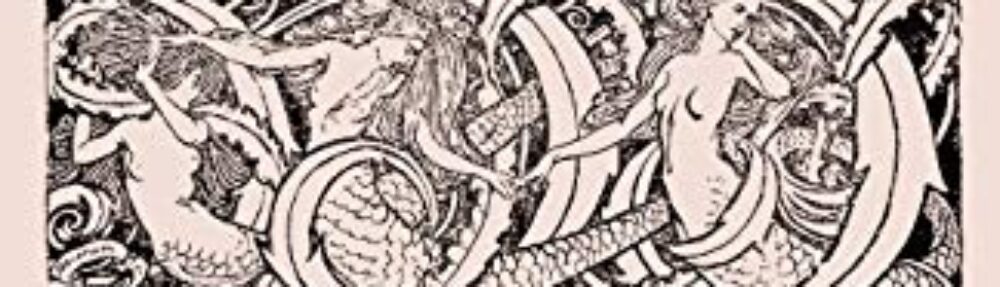
In these first few pages of the book Merpeople: A Human History by Vaughn Scribner, has already brought so much new knowledge to me about mermaids. In particular, the idea of humans building sympathy towards the ocean is based on the half-human aspect of mermaids. Scribner writes, “like the mirror which the medieval mermaid often clutched in her delicate hand, merpeople serve as a symbolic reflection of humankind’s changing conceptions of myth, religion, science, and capitalism” (27). Here, I would expect Scribner to showcase the various allegories mermaids have taught humans about the environment, emphasizing the importance of preserving the environment. To demonstrate how humans have built a connection of sympathy towards the ocean, but this is not where this story begins.
In the first chapter, Scribner begins the discussion of mermaids in Christian beliefs using mermaids as a fear tactic for sin. As Scribner describes, Christians’ “ultimate goal remained tethered to decentering the feminine” (39-40). The inherent sexism blames women for the lack of men’s self-control with over-sexualized images, and they also created fear within their “siren song”. To first highlight that women have always been reduced to their sexual nature, and have been looked down upon, but to add that a woman’s voice was dangerous calls to hold a big mirror to men. This mirror reveals that Christian men have created the belief that a strong woman with a powerful voice is dangerous, showcasing their fear of a dominate woman. This fear begs the question, so why would a man listen to woman (mermaid) speak about the environment? Why should we care about the ocean if it’s dangerous to us? How does the fear bring us to have empathy towards the environment?
Fear can trigger fight or flight within people, and how do these responses contribute to our choice in action. This instilled fear towards the ocean leads to neglectful behavior (Flight). Often time when someone is in fear of something, some place, or someone, there is an innate feeling of needing protection from the source of fear (Fight). There may also be actions of a lack of acknowledgment or a need to save the source of danger. For example, as someone deathly afraid of spiders, I have never read Charlotte’s Web simply because I am too scared! Due to my fear, I have no idea of a possible great story I could be missing out on! In addition, because of my fear, I do not feel like I need to protect spiders; my instinct is to first scream and then throw my shoe at it. Meanwhile, spiders are so important to our ecosystem, but I am so caught up in fear that I do not think about how my neglect of spiders in the moment could have a great impact on the environment. So, if people have such great fear of meramaids in the ocean, this could lead to neglectful behavior towards our ocean.
Now I understand we are only in our first chapter of learning merpeople history, but I cannot help to think if the widespread belief of mermaids to already be dangerous and frown down upon feminity, How can we convince people the beautiful mermaid is our protector? I hope to see the mermaid gain her voice!
