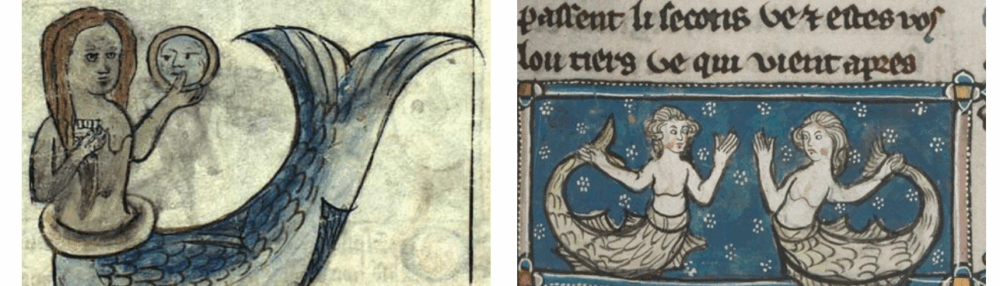
Final Project – Essay

In The Deep by Rivers Solomon, intergenerational trauma surfaces as a living archive, revealing how bodies carry and transmit historical memory. Through Yetu’s anguish, showcased in her collapse under the weight of Remembrance, reveals how bodies become living repositories of history.  By examining the ethical responsibilities of narrating such inherited pain, this essay argues that the novel redefines history not as a fixed record but as an embodied, collective experience shaped through storytelling, silence, and survival. 

In the novel, the weight of History of the Wajinru is placed upon Yetu, where she must relive the narrative of her ancestors to be able to tell their story. Earlier in the novel, before the Remembrance is conceptualized to the audience, Yetu is described as having been “withering away” (3). Yetu’s emotional burden is transformed into physical deterioration, illustrating that intergenerational trauma is carried in the body. The verb “withering” evoked the image of a plant losing life, shrinking, drying, and collapsing inward. This metaphor underscores that the historian’s role does not merely tire Yetu but literally erodes her from within, as though the accumulated weight of ancestral grief drains her life force. Her body became evidence of the community’s unresolved past. The use of past progressive “had been withering away” also showcases duration. This is not a sudden collapse but a slow, ongoing unraveling, mirroring how generational trauma operates over time, lingering, cumulative, and inherited. Then, it’s introduced how Yetu would go through a ritual described as “Remembrance,” where she would “relive the wajinru’s history all at once” and “put order and meaning to the events, so others could understand” (9). This description of Remembrance in which Yetu must “relive the wajinru’s history all at once” foregrounds the bodily intensity of inherited trauma. The phrase “relive..all at once” suggests not a distant or intellectual engagement with the past but a total overwhelming re-experiencing. To rely is to undergo something again in the present tense; the verb collapses historical time into the immediacy of sensation. Rather than consulting documents, Yetu’s body becomes the site through which generations of suffering return, situating her collapse not as weakness but as evidence of how intergenerational trauma saturates physical being. The requirement that she “put order and meaning to the events, so others could understand” reveals the ethical burden placed on the one who carries communal memory. The verbs “put order” and “meaning” indicate that the historian’s task is no neutral recording but a transformative interpretation: she must shape raw pain into narrative. The phrase “so others could understand” underscores that Remembrance is not only an act of recall but an obligation to translate trauma for the collective. The ideas arise on what narratives are told and to what extent to make History understandable and digestible to the majority. What pieces of history are cut off because they hurt too much to retell, or there is fear of making another feel uncomfortable?

In Yetu’s experience during the Remembrance, she experiences the outward expression of the wajinru people, noticing that rememory is just as physical as it is emotional. She describes this observation as “they knew things in their bodies, bits of the past absorbed them and transformed into instincts” (11). This line collapses the distinction between memory and physicality, suggesting that knowledge of the past is not learned intellectually but embodied. The verb “knew” paired with “in their bodies” implies that wajinru’s history circulates through muscle memory, sensation, and reflex rather than through conscious recollection. Thus, showcasing intergenerational trauma functions as a living archive, one stored not in written record but in the flesh itself. The phrase “bits of the past absorbed them” illustrates that the past is not something they retrieve but something that literally enters them, seeping into their physical being. The word “absorbed” evoked osmosis, permeability, and involuntary intake. It positions the body as porous to history, unable to choose what it takes in. This echoes Yetu’s experience in Remembrance, where inherited trauma overwhelms her body, demonstrating how the past is not simply remembered but imposed. The line “transformed into instincts” reveals how trauma becomes behavioral, shaping how the wajinru move through the world. Instincts are automatic pre-conscious responses; they bypass deliberation. By describing historical memory as transformed into instinct, Solomon shows how intergenerational trauma becomes habitual and self-perpetuating, guiding the community’s actions even when they do not actively recall the sources of their fear or cation This transformation also races ethical questions: if the past shapes instinct, then history is not a neutal inheritance but a force that molds the body’s responses, often without consent. This showcases that history in The Deep is not simply carried but embodied, absorbed, and enacted; the novel reconceives history as an intimately physical collective experience shaped by storytelling, survival, and the silent workings of the body.  Yetu also embodies this weight and pressure as the historian internalizing “her people’s survival was reliant upon her suffering” exposes the ethical and bodily stakes of historical memory (15). The phrase frames Yetu’s pain not as incidental but as structural, a requirement for the community’s continued existence. The noun “survival” evokes the most fundamental of needs, suggesting that memory is not simply important to the wajinru but essential to their identity and cohesion. Yet this survival is sustained through “her suffering,” a phrase that isolates Yetu as the singular vessel who must bear the collective’s inherited trauma. The choice of the word “reliant emphasizes dependency and imbalance. It signals that the community has built an entire cultural system on the extraction of Yetu’s bodily and emotional well-being. The burden of remembering of carrying the living archive is not evenly shared but placed disproportionately on one body. The fact that their “survival hinges on her physical and physiological deterioration shows that memory is not external but enacted through the body. Her suffering becomes the mechanism through which that past is preserved. The health of the community necessitates the breaking down of the individual, further illustrating how trauma takes material from in Yetu’s body. Ultimately, the wajinru’s need to remember and the violence of making on body hold that memory. It encapsulates the ethical dilemma of how storytelling, the preservation of history, demands sacrifice, and how that sacrifice becomes inscribed on the body of the historian. 

Towards the end of the novel, the existence of Yetu herself is an external archive; her life brings the narrative of her ancestors alive.  She has an inheritance of the intergenerational trauma being wajinru, claiming “All the memories of those who’ve come before, they lived inside me” (94), demonstrating the novel’s central claim that history is not an external archive but an inhabiting force, one that takes up residence within the body. The phrase “lived inside me” is especially powerful because it gives memory agency; memories are not static objects but living presences that occupy Yetu’s internal world. By describing them as “living,” the text emphasizes that the past is active, animate, and continual, aligning directly with intergenerational trauma in The Deep functions as a living archive rather than a closed, completed record. The shift from “those who’ve come before” to “inside ne” collapses the boundary between ancestors and the self. The collapse shows that Yetus’s identity has been overtaken by the historical suffering she carries; she contains multitudes not metaphorically but literally. Memory here is spatial; it fills crowds and occupies her, revealing the overwhelming nature of inherited trauma when it is borne by a single body. At the same time, the sentence’s simplicity conveys the emotional exhaustion behind it. There is no ornamentation, only the stark truth that Yetu has endured. This clarity reinforces the ethical stakes when history “lives inside” a person; it becomes impossible to maintain emotional distance. The line foregrounds the cost of being the historian. Yetu becomes the place where past and present merge, where the community. This quote encapsulates the novel’s redefinition of history as an embodied, collective, and ethically fraught experience. It demonstrates how storytelling and survival intertwine, how silence becomes both refuge and danger, and how the body becomes the ultimate vessel for ancestral memory. In affirming that the past “lives within her, Yetu articulates the novel’s final insight, that history is not something we stand outside of, but something that inhabits us, shapes us, and must ultimately be renegotiated to allow both individual healing and communal continuity. 

In Walcott’s poem “Sea is History”, Walcott’s question “where is your tribal memory?” (line two) functions as both accusation and lament, pointing to the erasure of African and Afro-diasporic history through colonial violence. The pointed ‘where’ carries a tone of loss, implying that what should have been preserved has been scattered, submerged, or forcibly obscured. This question mirrors the central concern of The Deep: how people whose pasts have been ruptured by atrocity can reconstruct a sense of identity when their archives have been destroyed. Memory becomes embodied, stored in Yetu’s collapsing body because no external repository remains. Waltcatt anticipates this idea that if “tribal memory” cannot be found in books or monuments, it must exist elsewhere, often in the body itself, through inherited pain, silence, and survival. The question, therefore, underscores the fundamental problem both texts confront: how to locate a history that has been drowned, suppressed, or never written down. Both texts ultimately suggest that history does not disappear; it migrates into new forms. Further down in the poem, Walcott creates an image of the middle passage: “then came the men with eyes heavy as anchors who sank without tombs” (line 26). This imagery of “men with eyes heavy as anchors” evolved from the Middle Passage, where enslaved Africans were thrown or forced overboard, their bodies sinking to the sea floor. The simile “heavy as anchors” gives their eyes a weight beyond physical gravity, emotional, historical, and symbolic. Their eyes carry the burden of what they have seen: violence, rupture, and dislocation. This weight parallels the unbearable load carried by Yetu, whose role as historian forces her to hold within her collective trauma of her people. The phrase “who snake without tombs” speaks to historical erasure and the violent denial of memorial space. These men have no graves, no monuments, nor records, echoing the absence of written history that haunts the wakinru. Their bodies become their tombs; their descent into the sea becomes an archive. Walcott thus transforms the ocean into a repository of unmarked trauma, directly aligning that history survives through embodied, submerged, and non-traditional form. In The Deep, the submersion is literal: the wajinru originate from pregnant Africans thrown overboard. Their entire existence emerges from the very bodies that “sank without tombs”. Yetu’s suffering as a historian reenacts their descent;  the weight of remembrance threatens to drown her. Walcott’s anchors and Yetu’s collapse are parallel metaphors for how violence enters the body and remains there, shaping future generations. Overall, Walcott’s imagery of drowned men and lost “tribal memory” amplifies that history is never fixed or safely archived; it is bodily, fragile, collective, and continually reshaped by those who bear its weight. 

In The Wake: On Blackness and Being by Schritina Sharpe discusses the power of rememory. Sharpe asserts, “in the wake, the past that is not past reappears, always to rupture the present” (9). The assertion “the past that is not past” powerfully captures the concept of intergenerational trauma as a force that refuses containment within historical time. The repetition embedded in the phrase “past that is not past” disrupts linear chronology and insts that certain histories, particularly those shaped by racial violence, remain ongoing. This resonates directly that trauma in The Deep operates as a living archive, lodged in embodied rather than isolated in a distant, completed moment. Sharpe’s language of “reappears” highlights that the past resurfaces involuntarily and unpredictably, much like the wajinru’s ancestral memories surge through Yetu’s body during Remembrance. The verb emphasizes return and haunting, echoing Yetu’s experience of being repeatedly overwhelmed by memories that are not hers alone but inherited, communal, and unresolved. Both Sharpe and Solomon depict the past as active, a force that continually intrudes upon the present rather than a stable record that can be stored away. The phrase “to rupture the present underscores the violence of this reappearance. The word “rupture” connotes a breaking, tearing, or shattering, highlighting the destabilizing impact of historical trauma on contemporary life. This aligns with Yetu’s physical collapse under the weight of Remembrance reveals how bodies become sites where historival trauma interrupts and overwhelms the self. Her fractured sense of identity, pulled between her own desires and the collective memory she carries, embodies the rupture Sharpe names. The present is not allowed to remain intact; it is continually split open by what came before. Finally, Sharpe’s framing of living “in the wake” connects to The Deep at the level of metaphor and origin; the wajinru emerge from the wake of the slave ship, from the literal waters that hold the dead of the Middle Passage. Their very existence is shaped by this ongoing past that never stops reappearing. Yetu’s struggle to carry their history mirrors the condition Sharpe describes, living with a past that insists on being felt, witnessed, and re-narrated even as it wounds.

Ultimately, The Deep positions trauma not as a distant inheritance but as a living, embodied archive that demands ethical reckoning. Through Yetu’s sole role as bearer of communal memory and her eventual recognition that history “lives inside” Solomon, the text exposes the violence of isolating collective pain within one body. Memory in the novel is not safely and comfortably contained in records or monuments; it circles through flesh, instinct, and suffering, shaping identity and survival in what cannot be ignored. Historical remembrance is a practice to teach and for us to listen. Intergenerational memory as a living archive, Solomon challenges readers to confront the violence embedded in acts of remembrance while also imagining new forms of collective care and shared responsibility. No one should hold the weight of their trauma solely on their own. It is very important to hear history from the perspective of those who truly lived. We have to be open to the truth, the real traumas, and pain they experienced. When people tell their narratives, they should not feel they need to leave out details in fear of making the listener uncomfortable. This novel affirms that healing does not come from forgetting the past, but from renegotiating how it lives with us, so that survival no longer requires the quiet drowning of those who remember. 

Works Cited

Academy of American Poets. “The Sea Is History by Derek Walcott – Poems | Academy of American Poets.” Poets.org, 2019, poets.org/poem/sea-history.

Sharpe, Christina. In the Wake: On Blackness and Being. Durham, Duke University Press, 2016.Solomon, Rivers. The Deep. Saga Press, 2019.

Solomon, Rivers. The Deep. Saga Press, 2019.

Arts and Letters Open House & Master’s Seminar

In the Arts and Letters Open House, I was able to learn so much about the Master’s program here at San Diego State University. I got to engage in conversation about the transition from a BA to an MA, learning about the workload difference and the discipline needed to achieve an MA.

Within the Open House, I was able to talk to various of my professors and learning about their journey to San Diego State University, and the motivations that got them through. One of my favorite questions is to ask what they studied, and I got to learn about so many different avenues of literature professors here at SDSU adventured off to.

My biggest takeaway from this open house was how everyone’s journey is not linear; it takes time to find a place that feels like it’s meant for you. And sometimes it’s important to just take a gap year and reset to find what you truly are seeking.

Pic Creds: Professor Bailey

Halloween Costume: Sailor

For Halloween, I dressed as a sailor! Throughout the mermaid stories we have discussed in class a sailors have been a recurring character. Sailors are said to be lured into the waters by the mermaid’s beauty, and even more sinister, her hypnotizing voice.

Sailors are characters used to push narratives about women’s sexuality and demonize women who freely express their sexuality. Thus, only promotes women’s sexuality as something dangerous and should be kept away or hidden.

Though what if the sailor was a woman? Would they be able to hear the voice of the siren? Would they be lured? Or would women be the only people who would care to hear what the siren is truly communicating to us?

Feat. my car as a prop for the ocean…if you look closely, there is a stingray inside.

Thank you!

I was so excited to start this class, and I can confidently say it did not disappoint! Before this class, I was very much in my own little bubble about mermaids, seeing their stories as a beautiful sacrifice for true love. Throughout this class, I was provoked to think deeper, to read the text, and to grasp what, why, and how a piece of text at hand is written. I learned that the interpretation of a piece of literature is endless.

Within these mermaid stories, I learned so much about how a myth can reveal so much about society at the time. With stories of Melusine and Undine, we uncovered themes of patriarchy and women’s agency (or lack thereof), and The little mermaid themes of immigration and homosexuality. With all stories holding a belief that nature is something so grand and different from humans.

To discover how the environment holds history by thinking of the ocean as an archive. I think this moment in class was one of my biggest takeaways. History is more than what we can see, read, or hear. To think about the environment as a piece of history. In discussions about the middle passage and the ocean holding the bodies of those who passed was really eye-opening. With this knowledge, I think I will forever look at history differently, being more interested in the forgotten details.

I am so grateful to have the opportunity to have this class, and I fear this class will forever linger in the back of my mind as I go forward in my academic career, analyzing literature. I feel so lucky to have a class that makes saying goodbye so hard.

Thank you so much for a lovely semester,

Kaila

Feeling and Telling History

In the novel The Deep by Rivers Solomon, “These rememberings, these secrets of their History, were for Yetu and Yetu only”, he uses the sentence’s unusual syntax, repetition, and emphasis on Yetu’s isolation to demonstrate how the wajinrus’s survival depends on forcing her to bear the entire weight of the trauma, revealing the profound injustice of inherited memory. The novel critiques patterns of placing the burden of remembrance on marginalized communities, challenging readers to reconsider how societies distribute the cost of historical pain.

The phrase “these rememberings” treats the word “rememberings” as a noun, creating memory as a type of substance, a weight that is carried. To make the word plural showcases that it’s not a single event but various multitudes of recollections, fragments, voices, and sensations. Solomon emphasizes the material weight to memory, as if it’s something Yetu must physically carry within her body. 

The repetition of “these” demonstrates the burden, pointing to particular highly charged memories, such as traumas of origin, ancestral suffering, and the collective past of the wajinru. This demonstrates that these memories are not abstract history, but dangerous secrets, something intentionally hidden from the majority. 

Once again, “History” is referred to with a capital “H”, elevating the word beyond factual record, allowing it to become a sacred archive, cultural origin myth, and the traumatic truth of the wajinru’s creation. To call their History “secrets” showcases the community’s deliberate decision to forget in means of survival. History is treated as something both sacred and destructive that must be contained.   

The isolation in the phrase “for Yetu and Yetu only” exclusively assigns the task of memory constructs Yetu as both indispensable and abandoned, emphasizing the injustice of the Historian’s role. The doubling of Yetu’s name conveys an almost existential significance, as this realization highlights her role as the sacrificial vessel of generational trauma used to tell wajinru history. 

Often, the history of the marginalized communities is placed upon them to educate. In which it is very important to hear history from the perspective of those who truly lived, we have to be open to the truth, the real traumas, and pain they experienced. When people tell their narratives, they should not feel they need to leave out details in fear of making the listener uncomfortable.

Final Essay Proposal

My final project will be an essay about the novel The Deep, elaborating and researching the concept of History. Within the story, I will analyze and explore the scenes of ‘Rememberance,’ and its impact on Yetu physically and emotionally. To navigate intergenerational trauma and how we tell these narratives ethically and fully, discussing how the body holds memories, trauma, and history.

Below is my working Thesis:
In The Deep by Rivers Solomon, intergenerational trauma surfaces as a living archive, revealing how bodies carry and transmit historical memory. Through Yetu’s anguish, showcased in her collapse under the weight of Rememberance, reveals how bodies become living repositories of history.  By examining the ethical responsibilities of narrating such inherited pain, this essay argues that the novel redefines history not as a fixed record but as an embodied, collective experience shaped through storytelling, silence, and survival.

Final Project To Do:

I have decided my final project will be an essay about The Deep, elaborating and researching the concept of History. I want to navigate intergenerational trauma and how we tell these narratives ethically and fully, discussing how the body holds memories, trauma, and history.

First, I need to complete the novel, or at least make significant progress in the story. While reading, I must take notes to help gather information for my paper. Then, I need to search for scholarly commentary on The Deep, particularly regarding this topic, to enhance my understanding of the story and develop a claim for my essay. Finally, I need to piece together my findings and create an outline for this final paper.

I am looking forward to my peers’ feedback on Tuesday to help develop a strong Thesis to create a strong paper.

What is History?

In the poem “The Sea is History” by Derek Walcott, he transforms the sea into a living paradoxical archive, as a space that both conceals and preserves the suppressed histories outside of Western civilization. The Westernized idea of historical thinking of History needing to be physical or tangible is challenged when Walcott asks, “Where are your monuments, your battles, martyrs?” (line 1), and he answers that “in that gray vault, The sea” (line 3). Derek Walcott collapses the divide between natural landscape and historical record, redefining the sea as both a literal and symbolic archive that holds bodies, memories, and traumas erased by colonial violence. Walcott reimagines the sea, restoring silenced Caribbean histories, but also argues to consider what counts as historical evidence, insisting on recognizing how the landscape itself bears witness to the suppressed pasts Western narratives refuse to acknowledge.

The poem begins as an interrogation towards a Eurocentric audience, those who measure civilization by visible signs of achievement and memorialization, such as monuments, wars, and heroes. The first line “where are your monuments, your battles, martyrs?” creates both an ironic and defiant tone, as the speaker exposes the colonial logic that quotes “history” with documentation, or tangible symbols of empire. The question implies that the Caribbean-descended peoples’ historical legitimacy is denied because their past does not conform to those material standards. By asking and answering the question himself, he asserts his authority and establishes that he will define what and where “History” is.

The word “Sirs” contains Irony; it showcases formality, but its placement in the middle of the stanza sharpens the poem’s oppositional stance. The placement of the word implies that the speaker is responding to a condescending inquiry from people who believe in a one-sided, westernized “history,” those who demand evidence. Walcott capitalizing the ‘S’ in “Sirs” gives the word additional weight, standing for a collective historical gaze of authority and condescension. By addressing the “Sirs” directly, he positions himself and his culture as subjects who have been questioned, but now have the voice to answer back.   

The image of the “grey vault. The sea” (line 3) is the first major image depicted within this poem. The “vault” can be both a burial chamber and a secure box, illustrating the sea as a tomb and an archive, a place that both conceals and preserves. The description of the color “grey” evokes neutrality and obscurity, being neither light nor dark, illustrating that what lies within the sea is unknown or unrecorded. Here within this line, the rhythm of the poem comes to a full stop after “vault” and then in short fragments declaring “The sea. The sea” (line 3), creating an echo with weight and finality. This repetition enacts the sea’s vastness and the inescapable truth of its claim over history.

The metaphor of “The sea is History” (line 4) collapses the distinction between history and nature, between written record and lived experience. The sea becomes both a lateral and symbolic archive, where the sea literally holds the bodies of the enslaved Africans during the Middle Passage, and symbolically represents memory, trauma, and the erasure of people’s past by colonial forces. Walcott, calling the sea “History,” overturns Western epistemology; history is no longer the narrative written by victors but the silent depths that remember what was suppressed. 

At the end of the line “The sea. The sea. / has locked them up.” (line 3-4) the rhythm mimics waves, each phrase crashing, receding, and returning. The repetition of “sea” once again reinforces the vastness of the image. The sound of the ‘s’ gives the lines a hushed, whispering quality as though the sea itself is speaking. The rhythm mirrors the poem’s larger movement between silence and speech, between historical records and what it silences.

Ultimately, Walcott’s poem “The Sea is History” dismantles the dominance of Western historical frameworks by insisting that the most profound archives are not found in written records but in the natural world that has borne witness to colonial violence. Through the sea’s paradoxical role as both tomb and testament, Walcott reclaims history long denied, showing that absence is not emptiness, but evidence of lives drowned, submerged, and narratives deliberately erased. By transforming the sea into an alternative archive, Walcott not only restories the Caribbean’s silenced past but also exposes the narrowness of Western historiography itself. This poem demands that the audience expand their understanding of what constitutes history, urging them to listen to the landscapes that carry the weight of collective memory. Walcott ensures that the histories dismissed by empire are neither forgotten nor lost; they are simply waiting, held in the shifting, unending pulse of the sea.

Guardian of the Waters

In a brief excerpt from “African Mermaids and Other Water Spirits” included in the Penguin Book of Mermaids, it is illustrated that African mermaids are seen as guardians of the water against industrialization. There had been rumored sightings of constructions in the water, “mermais were blamed for delays in the construction of a reservoir at Mutare, also in Zimbabwe” (166). This rumor suggests that mermaids protect the ocean to prevent industrialization from entering its sacred depths.

To “blame” mermaids for ‘delays’ or ‘stop’ of construction highlights the strength of power they hold over man. The mermaid’s dedication to protecting its waters illustrates an understanding of life on land and the consequences of industrialization. Once again, it highlights how mermaids possess more knowledge than humans. The mermaid possesses the ability not to fear humans. The ‘delay in construction’ showcases humans adjusting to the whims of nature. 

The mermaids were described as “angry spirits” and appeared as “a mermaid and a large snake” (167). As previously noted in other stories, the mermaid, often referred to as ‘half fish,’ is depicted as a serpent, symbolizing protection, transformation, and wisdom. This shows that the mermaid has access to the human world and knowledge about it, revealing her face only when necessary or when threatened. The act of the mermaid only appearing when they are ‘angered’ showcases the mermaid’s knowledge and disagreements with humans trying to invade the waters. 

Humans cannot travel into the water to access the mermaid; only the mermaid can travel to shore and testify to the humans. The power is in the mermaid’s hands, to be seen, not to be seen, known, or not to be known. Meanwhile, the humans are left in the dark, unable to comprehend what they encountered or why. Thus, this portrays the mermaid as the guardian of the ocean, appearing when humans encroach on its territory to protect against their industrial activities.

Historical Records vs. What It Silences

In the poem “The Sea is History” by Derek Walcott, he transforms the sea into a living paradoxical archive, as a space that both conceals and preserves the suppressed histories outside of Western civilization. The poem begins with a question challenging a Westernized idea of historical thinking, “where are your monuments, your battles, martyrs?” and answers that they live “in that gray vault, The sea”. Walcott redefines what counts as history itself, rejecting the colonial notion that historical legitimacy is based on written records or physical monuments. 

The poem begins as an interrogation towards a Eurocentric audience, those who measure civilization by visible signs of achievement and memorialization, such as monuments, wars, and heroes. The line “where are your monuments, your battles, martyrs?” creates both an ironic and defiant tone, as the speaker exposes the colonial logic that quotes “history” with documentation, or tangible symbols of empire. The question implies that the Caribbean-descended peoples’ historical legitimacy is denied because their past does not conform to those material standards. By asking and answering the question himself, he asserts his authority and establishes that he will define what and where “History” is.

The word “Sirs” contains Irony; it showcases formality, but its placement in the middle of the stanza sharpens the poem’s oppositional stance. The placement of the word implies that the speaker is responding to a condescending inquiry, to the people who believe in a one-sided westernized “history”, those who demand evidence. Walcott capitalizing the ‘S’ in “Sirs” gives the word additional weight, standing for a collective historical gaze of authority and condescension. By addressing the “Sirs” directly, he positions himself and his culture as subjects who have been questioned, but now have the voice to answer back.   

The image of the “grey vault. The sea” is the first major image depicted within this poem. The “vault” can be both a burial chamber and a secure box, illustrating the sea as a tomb and an archive, a place that both conceals and preserves. The description of the color “grey” evokes neutrality and obscurity, being neither light nor dark, illustrating that what lies within the sea is unknown or unrecorded. Here within this line, the rhythm of the poem comes to a full stop after “vault” and then in short fragments declaring “The sea. The sea” creating an echo with weight and finality. This repetition enacts the sea’s vastness and the inescapable truth of its claim over history.

The metaphor of “The sea is History” collapses the distinction between history and nature, between written record and lived experience. The sea becomes both a lateral and symbolic archive, where the sea literally holds the bodies of the enslaved Africans during the Middle Passage, and symbolically represents memory, trauma, and the erasure of people’s past by colonial forces. Walcott, calling the sea “History,” overturns Western epistemology; history is no longer the narrative written by victors but the silent depths that remember what was suppressed. 

At the end of the line “The sea. The sea. / has locked them up.” the rhythm mimics waves, each phrase crashing, receding, and returning. The repetition of “sea” once again reenfoces the vastness of the image. The sound of the s gives the lines a hushed, whispering quality as though the sea itself is speaking. The rhythm mirrors the poem’s larger movement between silence and speech, between historical records and what it silences.