Final Essay/Creative Project!!!

The Musical Tale of the Siren

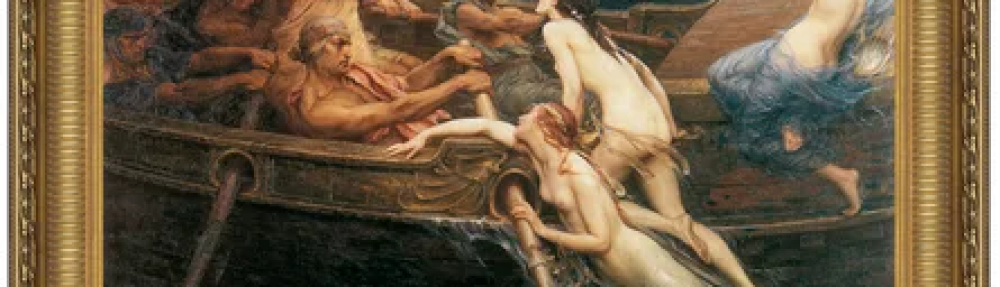
Sirens and their connection to the sonic are crucial to understanding Mermaid history. Sirens, as a symbol of sound and music, illuminate their role as sonic storytellers. This connection is emphasized through a playlist that was cultivated over the course of the semester, The Penguin Book of Mermaids by Christina Bacchilega and Marie Alohalani Brown, and claims from Meri Franco-Lao’s Sirens: Symbols of Seduction. In exploring early concepts of Mermaids as Sirens, these references accentuate Sirens as voices that embody survival and memory through both literature and sound. Each song within this playlist furthers the notion of Sirens and their historical connection to the sonic through music and sound.

From early literature, Sirens have been portrayed as accompanied by musical instruments and hypnotic voices. The Penguin Book of Mermaids mentions that “reductive definitions of mythological Sirens as real-life ‘harlots outstanding in both instrumental music and sweetness of voice’ who ‘reduced passers-by to beggary’ already circulated in Greek and Roman antiquity” (Bacchilega and Brown xii-xiii). This furthers the idea that Sirens have almost always had some form of relationship to the sonic. Sirens connect to sound on both a literary and an instrumental level, intertwining them with their own history as an alternative form of storytelling. The idea of Sirens as sonic storytellers is presented by “a phrase from Clement of Alexandria,” as Franco-Lao states, “Those who were as if dead and did not partake of the true life were revived by the sound of their song” (Franco-Lao 54). This revival illustrates the importance of storytelling, for instance, historical remembrance. The voices and music of the Sirens revive the stories and the lives of those forgotten throughout history. 

The song of the Sirens is more than just a hypnotic sound; it’s also “Music of movement and music to form movement, according to the Platonic concept”(Franco-Lao 43). This musical movement emphasises the idea that a Siren’s voice carries meaning and importance. Historically speaking, the music and voice of a Siren tell the parts of history the world might have forgotten or washed away. Their voices shed light on lost stories and memories because it was originally thought that, “Whoever hears this [Siren] sound acquires memory of past and future and of the underlying truths governing them” (Franco-Lao 40). This connection of Sirens and the sonic emphasizes the idea that water tells a story, and Sirens are used as the voice of water and history.

Each song within the playlist I’ve created relates to some form of history through the eyes of a Siren. The connection between the music and the Siren will be either lyrically or musically, depending on the song. Each song portrays something different and unique, following the flow and growth of our understanding of the Mermaids and Sirens over the course of the semester. This playlist will further examine the notion that the music and sounds of a Siren can tell a historical story that contains memories.

The first song is Mermaid Song by ConcernedApe. The eerie music and hypnotic voice grow louder as the song continues, helping us grasp the original concept of Sirens. This song plays a role in our understanding of how the Siren first started; these scary creatures that use their voice to lure men into the sea.

The next song is Elevenses by Lena Raine. The peaceful nature and alluring aspect of this song strongly connect to the true concept of Sirens. The flute in the song can be seen as a simple reference to the original tale of Sirens and how “they acquired human arms to hold their instruments”(Franco-Lao 1). This song adds to the idea that the Siren’s music doesn’t always have to be eerie. 

The following song in this playlist is Falling Stars by A Shell In The Pit. This instrumental song aids in the communal idea of the ocean. Seeing water as a form of history paves the way for those untold stories to see the light of day. This is possible because of the Sirens who play that music for the world to hear.

Echo of the Past by Jonathan Greer is another song that enlightens our understanding of Sirens and the sonic. This is because of its emotional tone and slow music, the kind of sounds that make someone reminisce. The softness of this song reminds us of the memories hidden beneath the depths of the ocean. This is the kind of memory the Sirens tell through similar songs.

Bellhart by Christopher Larkin is a song that aids in the idea that Sirens and water carry emotion. Holding onto history and memories causes emotions, and this song is perfect for reminding us. Each instrument holds an emotion, like water, and the Sirens use it to tell those emotions.

The next song is La petite fille de la mer – Remastered by Vangelis. This song carries a hypnotic yet peaceful tune that highlights the first concepts of the Siren. Vangelis’ song aids in our learning of the story of Melusine and how she “would return during the night, secretly, to protect her children, and even to nurse the youngest”(Franco-Lao 127). It holds an almost nurturing sound that only a Siren could execute.

The Shadow of Love by Stomu Yamash’ta is a song that brings to light the relationship between love and the Siren. Sirens and Mermaids have been known to be creatures of seduction, using their song as entrapment for young sailors. This song brings to light the emotional and loving aspect of the Siren. Where their song “is the music of the cosmos, ordered and harmonic by definition”(Franco-Lao 40). Yamash’ta’s song emphasizes the loving embrace of the Siren and her song of history and knowledge. 

Another song from the playlist that aids in our understanding of the Siren and the sonic is Before the Night by JoĂ«l Fajerman. This song feels like a fairytale, which reminds us that the story of the Siren isn’t meant to be just a fairytale or myth. Their music is meant to tell a story, the stories that have lost their voices over time. Fajerman’s song plays an important role in the true nature of the Siren’s song.

 The next song in the playlist is Lure of the Siren by Mo Coulson and Chris Conway. This song is exactly what it sounds like; it plays the sound of the Siren, her faint whispers as she’s meant to lure you to the sea. But this song shows something greater, the peacefulness of the water as the instruments play. It reiterates the importance of hearing the Siren, listening to what she is trying to tell you about the water and its history.

Oceans Breath is another song that aids in our learning of the Siren. This song is meant to remind us of the ocean’s rawness, the birds, and the sounds of the waves. The eerie start of the song, followed by the peaceful quickness of the jazz-like tune, highlights the importance of not looking solely at the surface. Sirens are only ever given surface definition, but the true meaning lies hidden underneath. This song shows the importance of looking further into the things we are being shown throughout history.

The next song is called The Last of Her Kind by Peter Gundry. This song is crucial to understanding the history that Sirens bring. The tune is dramatic yet whimsical and incredibly embodies the concept of Sirens as storytellers. It’s a peaceful start that slowly turns dramatic and reminds us of the painful aspects of the history that Sirens tells. This song shows us how Sirens take every and all memories of the ocean and use their songs to tell those stories.

THE MILK OF THE SIREN by Melanie Martinez is a song from the playlist that is important based on its lyrical content. Martinez states, “Engraved in our memory the harm that was done. Our mothers, the witches, they banished and burned. All of our sisters were killed and abused by sword-swinging men who would always accuse”(Martinez lines 6-8). This song is important to understand because it accentuates how the Sirens use their songs to expose the parts of history that have been brushed under the carpet. It’s crucial to note that Sirens have always been associated with music; their songs carry painful memories that have been forgotten by the majority.

The last song in this playlist is Frozen Drifts by Upright T-Rex Music. This song is completely peaceful throughout and plays a role in finally understanding Sirens. Once we see the Siren song as educational rather than torturous, we can use the knowledge to spread the stories they tell. 

All things considered, it’s important to see Sirens and the sonic as the voices of the ocean. They tell the stories of lost history washed away and forgotten. The Sirens bring light to those memories, and their songs give voices to those who have been silenced. The songs in this playlist emphasize the work Sirens do with their music. Music carries knowledge, and Sirens oceanize them, paving the way for a deeper understanding of the ocean as a living form of history. These songs reveal the true knowledge of the story of the Siren as sonic storytellers. When we listen to the Siren with an open heart and mind, we are shown stories we never knew had been lost. 

Works Cited

Franco-Lao, Meri. Sirens. 1998.

Bacchilega, Cristina, and Marie Alohalani Brown. The Penguin Book of Mermaids. New York, New York, Penguin Books, 2019.

My Playlist:

‌https://open.spotify.com/playlist/36IJC6BkSjvOto8BKkw2ji?si=mGHUVhXHR36UxGtuN-47WA&pi=vqIoc3EYTRq1b

I hope everyone has an amazing break! I will miss our class time together and all of your insightful takes on Mermaids!! My last semester has been one of the best ever, thanks to you all!!

Final Takeaways!!!

Oh my gosh, I cannot believe this semester is already over! I have enjoyed this class so so sooooo much!! I knew coming into this class that it was going to be very interesting, and it exceeded that expectation in every aspect! I have learned so much from class lectures and even other students in the class. I have loved our discussions, and they have honestly helped my understanding of our natures, History with a capital H, and Science!! I didn’t realize how much mermaid history was going to be included in the class, and it did not disappoint!!

I have loved learning about how much of our history is tied to mermaids, and how much of it has been skewed over time. It’s been incredibly fun for me to learn as much as we have all while still staying completely entertained and somehow always wanting more at the end of each week! I have appreciated all that I have learned in this class and hope to be able to use it in my life after! Thanks for all your amazing input over the course (Dr. Pressman and Classmates), it has been such an honor!!!

Last Song of the Week! 🙁

Frozen Drifts by Upright T-Rex Music (I like the vibe this song brought to the poem, it almost felt like a farewell song, which is fitting for the end of the semester!!)

A Moral Dilemma

Something I thought was exciting, even though this entire book has been captivating. I thought it was super interesting when it states that Yetu “[would] have to live with that for the rest of her days. Her bid to save herself, to save her life, would have the unintended consequence of killing others”(123). I was drawn to this conflict because it frames self-preservation as connected to, or in control of, communal harm. The repetition of the word save in both saving herself and her life draws attention to the amount of desperation in her escape. I think the idea of blurring the line between survival and selfishness is very intriguing. It’s a situation no one would ever want to be in, choosing between one and many. The concept of playing God, having the lives of others in your hands, and at the risk of losing your own.

The choice of the word “unintended” highlights the moral weight being placed on Yetu. This further provides a vivid picture of how the lines between collective and individual responsibility have almost completely disappeared. I also liked the way it states that Yetu would have to live with this decision for the rest of her life. It highlights how guilt itself can become a lifelong inheritance, much like the communal memories that she has to carry as a Historian.

I liked how this short sentence exposes a great tragedy built into a very popular situation. (The train scenario of saving one or many) Seeing how the decision of one person is threatening to affect the lives of so many others. This small quote shows so much, the pain and confusion Yetu has to deal with in seeing how her plan to escape might replicate the very harm she is trying to flee.

So far, this book is very interesting to me, which, if I’m being completely honest, I thought I might get bored a bit. I am loving every part of it. I knew the story was going to be interesting, but sometimes the writing doesn’t do the story’s justice. But this one is amazing so far!

Song of the Week: MILK OF THE SIREN by Melanie Martinez (This one I can’t believe I forgot about, but OMG I think it fits very well. This song connects on a more lyrical aspect than the others. I think everyone should give this one a listen!!)

Final Project Idea

Honestly, I have ZERO idea of what I want to do for this final. I definitely want to do something creative, I don’t know if I want to do a kind of playlist for this course? Since I have been putting songs at the end of every post, I feel like that would be good, but I would definitely struggle with the thesis for that. I’m not sure how I would tie it into the course. I think I could also do a playlist for a specific text or video we watched. I feel like making a playlist for “The Water Will Carry Us Home” would be a good one. I feel that there I would definitely need to focus on something specific, I struggle with my essays being too broad and trying to close read and stay on one topic. I want to stick with the music aspect, because other than creative writing, music is something I have a really great interest in. So, either make a song to fit the stop motion film, or a playlist that leads you through the video. Making a song would be fun! So I definitely narrowed it down to two options while writing this so that’s great!

Mother Water and Mother Nature

I really loved the “African Water Spirits In The Caribbean” section of the reading because I love how it could be connected to Gabriella Tesfaye’s “The Water Will Carry Us Home”. The story that Mami Wata “has the power to transform a human into a water spirit by changing the lower half of their body to that of a fish” (273) was almost parallel to the “water spirit” and main mermaid in Tesfaye’s story. The only main difference is that Tesfaye’s water spirit played a special role in preserving African History, and Mami Wata’s role is to protect her waters and forests.

I especially like how “Mother Water” can directly be connected to our(American) version of “Mother Nature”. The myth that there will be consequences to those who mistreat nature, or in this case, “pollutes its waters”. The only main difference is that Mami Wata targets beautiful young women to use as her “assistants” to punish any man who damages her waters. I think this part is very interesting because of the idea that innocent women are believed to be in danger, whereas any man who does wrong will be rightfully punished. This myth has a similar form to the myth of La Llorona, a spirit or ghost whose main purpose is to take souls as a form of protection. The concept of needing a myth to scare people into not polluting or mistreating nature is actually quite sad.

These tales have a greater purpose; although they may seem silly, they serve as a form of protection. They are something greater than us, using beautiful women mixed with serpents, which typically spikes fear, is a great way to pique interest while also causing enough fear for people to truly listen to the main clause here.

Song of the Week: The Last of Her Kind by Peter Gundry (I thought this song was interesting. I especially loved the violin throughout the song. This was something that gave me Siren vibes, but in a non-deadly way. It feels more magical and welcoming, and I liked that, like the Water Spirits from this reading and last week’s!)

Discovery #2

The Ocean as Living History

In Gabriella Tesfaye’s short film, “The Water Will Carry Us Home,” she reimagines the Ocean as a living history, depicting it as a place that holds the souls and voices of the enslaved, transforming their anguish into freedom and renewal. The use of Mermaids in Tesfaye’s film explores the concept that the Ocean not only remembers and preserves but also restores. Her stop-motion film paves the way for lost voices to be brought to the surface. 

Following the ships that sailed through the Middle Passage, Tesfaye’s film highlights the lives of numerous enslaved Africans who were thrown overboard into the sea. At 3:38 of the video, Tesfaye shows someone being thrown from the ship, depicting how “unwanted” Africans were meant to be forgotten. Not only is this film made with hand-drawn art, but Tesfaye also uses cutouts of real enslaved Africans. This enhances the reality of the story she is telling, as authentic pictures of historical events help prove to the watchers that these are real stories. One minute later, at 4:38, a water “spirit” is shown following close behind the ship. This water spirit takes the form of a Mermaid and presents the notion that she is protecting the History of the Africans aboard the vessel. At 4:20 of the video, we see this Mermaid spirit whispering close to one of the abandoned Africans. Rather than seeing the Ocean as a void of the Earth, she illustrates it as a form of consciousness. Using this spirit to reimagine the Ocean as a place that holds living archives of their stories. She highlights the essence of the Ocean as it absorbs and remembers the souls of the enslaved, ultimately reviving their spirits. These bodies and stories, which were meant to be erased, have been preserved and protected by the Ocean. Tesfaye turns a moment of horror into beauty by displaying the Ocean as a place of safety and stability for these forgotten stories. This accentuates the concept that the Ocean holds on to the stories that History wants to silence. By giving the water its own voice, Tesfaye highlights the importance of protecting the humanity of the people who were denied it on land.

The main Mermaid depicted in Tesfaye’s film serves as a kind of guardian to their lost souls. At 4:32 in her short film, three lost souls are shown being transformed into Mermaids, ultimately preserving their cultural history. The Mermaid portrayed in this short film serves as a spiritual rebirth for the enslaved, transforming their suffering into a new beginning. These people have been given a second life away from the pain and suffering they endured on land. Tesfaye’s Mermaid creates a haven for these souls, reinforcing the idea that ancestral traditions survive through the Ocean despite erasure. The Mermaids embody the essence of the Ocean, restoring souls and humanity within these forgotten memories. At 4:46 of her short film, Tesfaye shows the mending of a family whose lives were meant to be lost at sea. A mother, father, and baby are the main focus of this scene, emphasizing how the Mermaid carries out the Ocean’s role in preserving their souls. By restoring their agency and identity, the Mermaid in this story brings a sense of belonging to those who were forcibly removed from their homes. Ultimately, illustrating how the Ocean acts as a form of History, giving new life and preserving the souls of the Africans whose stories were suppressed. 

Through her rich imagery and artistic language, Gabriella Tesfaye transforms the Ocean into an active form of History and rebirth. Her short film reinforces the idea that the Ocean is the keeper of their souls and stories. She restores the History of the Middle Passage through her exposure and remembrance of their History as protected by the Ocean. “The Water Will Carry Us Home” serves as a voice for the enslaved, demonstrating that the Ocean preserves not only their pain but also their identity, strength, and link to their ancestors.

The Sea Is History

I really liked this poem because in last week’s post, I mentioned something similar about how the Ocean contains its own history. I liked the imagery in it as well, but my favorite line was “bone soldered by coral to bone” because I feel that it reminds us that our past bodies and lives are still beneath the surface of the Ocean. I love the way it implies that not only does the Ocean carry a symbolic history of life, but a physical one as well. All the archives that have been preserved at the bottom of the ocean, or even in the shallow ends. There are aspects of life that, if we one day can venture down and capture, we can see into the history of so many lives.

The idea that the ocean holds history is something I love to think about. The amount of space the Ocean covers gives it the opportunity to hold so much history. There is also this connection this poem had to the film “The Water Will Carry Us Home”. It’s an extension of the idea that the water tells a story, a story of life that once was. The water acts as a preservative for life, the one thing in our world that over decades and centuries never truly changes. At least, it doesn’t change completely by itself, so not only is it its own history, but it is also the history of humans. The impact that human lives have on the Ocean is also the kind of history that it holds onto.

I love the way this poem guides us to acknowledging that the water holds stories of suffering, identity, and survival. Showing us the importance of seeing the Ocean as a form of history and not just a body of water. Taking care of us as if it were a museum of relics rather than a big puddle. It takes the life of the Ocean and compares it to the life of humans, showing the similarities between life in the water and life on land.

Song of the Week: Oceans Breath by Software (I like the way this song starts and then how jazzy it gets. Even with the jazz, this song has a background of “sea-like” siren sounds/music.

The Water Is Alive

In the breathtaking short film “The Water Will Carry Us Home”, we are met with the history of Africans who were brutally thrown off a slavr ship while sailing through the Middle Passage. In the film, their souls are saved by a passing mermaid; not only were the adults saved, but the unborn children they carried.

This story was absolutely amazing! Stop motion has got to be my favorite kind of filming, next to claymations. I thought the most fascinating part of the film was around 4:15, where the mermaid came into contact with the Africans who were pushed into the waters. The idea that the mermaid was able to save their souls and essentially turn them into mermaids was my favorite part. To see mermaids as this kind of “water savior” is something that really catches my interest. Especially because of what we have talked about in class with Sirens and sometimes mermaids being seen as monstrous creatures. Taking on the tale of mermaids saving lost humans and saving their souls to be one with the waters is awesome.

This short film helps further the idea that water tells a story; it’s something that encapsulates all of its own history. The mermaid in this story gave the lost people a sense of purpose and another chance at life. Almost like the water was their escape, it gave them a newfound freedom, as well as a place where they could feel they belonged. I also love that this film more accurately portrays mermaids than how we are conditioned to seeing them. This film really embodied the black history of mermaids and the tale behind the life of water. Can’t wait to talk about this in class!!

Song of the Week: Lure of the Siren by Mo Coulson, Chris Conway (This song is exactly what you’d expect, except I like the fact that it isn’t eerie, but it’s enticing in a non-threatening way if that makes sense)

Week 10: Oceanic Abuse

Out of the reading for this week, there was something that sparked my interest in Eric Paul Roorda’s introduction. The entire introduction was honestly a lot to take in because of its scientific nature but I especially liked when he wrote, “This awareness in turn contributes to a growing consensus that we need to take concerted action to avoid the devastating consequences of having ignored the Ocean for too long” (Roorda 1).

I thought this was interesting because I feel it’s captures the bigger idea that the Ocean should not be treated as a background but as a living system, something that is entangled without our own human existence. From our talk on Tuesday it this quote got me thinking about how the human relationship with the Ocean isn’t typically something that we are aware of, it just is. It’s become something that we as humans take advantage of without even realizing, because of the fact that it’s always been there. But what if one day it isn’t, what if we have ignored it for son long like Roorda is saying in this introduction. Which makes sense in his use of the word “Terracentrism”.

Roorda’s use of “for too long” highlights the historical guilt that the world may have for abusing its relationship with the Ocean. This one sentence brings both awareness and action into one place, it does the showing and the telling all tied up with a pretty bow. It brings the right amount of devastation to the table, some kind of motivation to open the eyes of his readers. I feel this quote really ties up his entire introduction and what the rest of it entails. The combination of urgency and consciousness for our Ocean and ecosystem that it involves.

Song of the Week: Before the night by JoĂ«l Fajerman (I loved the mythical(ness) that this song brings to the ocean front. Also sorry this post isn’t super strong, I’ve been fighting sickness for what feels like weeks now and just and my body finally caved!)

Week 9

In his essay “The Trouble with Wilderness”, William Cronon highlights the irony of the modern idea of wilderness. Something I thought was exciting was his take on how the wilderness is stolen land, something that was taken and demestocated by modern government and cultures. Cronon writes, “Once set aside within the fixed and carefully policed boundaries of the modern bureaucratic state, the wilderness lost its savage image and became safe: a place more of reverie than of revulsion or fear” (Cronon 15).

I thought this was very interesting because of his use of the word “bureaucratic”; sometimes I forget this word exists, and when I remember it, it always hits me like a truck. It shows how the government has turned the wilderness into something more manageable and less wild. The idea that the wilderness has been taken and turned into something to either profit from or control is wild to me. (see what I did there XD ) The irony of this idea is that the wilderness has become something worth putting time into because of the control the world has over it. No control = not worth the time.

Cronon’s saying “carefully policed boundaries” shows the irony of controlling the wild. He argues that we have turned the wild into something controllable, a mirror of our ideals as humans, rather than something of true wildness. By saying that the wilderness “lost its savage image,” it shows just that. The wild is not the wild anymore, but merely a copy of the wild through the eyes of humans rather than nature. This quote highlights Cronon’s idea that to gather true ecological ethics, we must remove the idea of separate human and natural worlds. The wilderness is not supposed to be something that is controlled, but something that we as humans live with and in. Something we inhabit and enter every day, and not just when we feel like it.

Song of the Week: The Shadow of Love by Stomu Yamash’ta (this one is a bit different than the rest, but I still heard it and instantly thought “Mermaidcore”, it’s very peaceful and it gives more “the peace of the ocean” than anything else!)