Human Curiosity – The Mermaid Craze

This week, the readings gave us a deeper dive into the 19th century Mermaid phenomenon and how the populations of Britain and the United States reacted to these “mythical beings.” A trend I took note of, specifically when reading Penguins “The Feejee Mermaid Hoax” and A Human History: Freakshows and Fantasies, is the desperate level of connection humans crave to have with nature, the other, the unknown. The obscene is a reflection upon human knowledge, desire to gain more of it, no matter the cost. Humans want to understand what they are bred and taught to not. “As they had since Medieval times, merpeople continued to strike varying measures of skepticism and credulity, fear and wonder, among Westerners. (A Human History)  The question I want to dig upon is not the idea of how humans do this but the why? Why do these creatures promote skepticism, wariness, imagination, and creativity? Why are mermaids a phenomenon the human psyche is fixated upon? 

Are they seen as a connection to what we once were, what we could have been? Do they allow us to see a part of ourselves at one with nature in a way in which man can never be again, roots we have long forgotten? Are they to be seen as a warning – a sign of consequence from the removal of oneself from faith and society? All of these questions have surrounded humans since the dawn of the first “mermaid sighting,” another world meant for us to remain separate from. Is this why they remain hidden from us? Are we too unwilling and cruel to the environment and its gifts to behold such a beauty it has created, no communication ever being able to be established with us humans, so far lost from our origin? 

Why is there so much fear surrounding all unknown species? Why are humans so desperate to conceal what we believe we cannot understand? How do we know we won’t understand until it arrives right in front of us? Why is knowledge used as such a weapon of destruction among human kind? Perhaps the mermaid is only one part of our journey – the path towards enlightenment beyond human conception, the world around us we have exploited and refused to truly gaze upon.

The Power Within Feminity – Sirens of the Ages

Over the course of our class and readings, we have discussed the control Sirens have been said to have over mankind, the power that creates sin and abandonment of morale. In the story of Melusine, after Raymondin’s betrayal, he says to her, “Yes, serpent always…you are only a phantom, and so is your fruit…you have dragged me down in your fall and I am lost.” (The Romance of the Faery Melusine, pg. 139) Raymondin blames Melusine for his transgressions and fall from his faith, the kingdom of God, yet he himself is to blame for his own actions, betraying her trust and seeking her out when she had asked him not to. Melusine is blamed for an outcome she did not cause, simply because of her nature being unwillingly discovered.

In many other forms of Siren/Mermaida media, a man’s temptation or fall from grace is placed purely on the shoulders of the woman figurehead. It is within their femininity and lustfulness that men are to be captured and deceived. The time period of this story reflects these views withheld by the church, the siren used as weaponry over manhood’s relation to God.

Melusine reflects the struggle faced by the woman of her time, the past, and even present day. The woman is portrayed as a beast, a negative power given too much liberty over herself, causing destruction and chaos if allowed to live within her own identity. Her deceitfulness caused such anguish and hurt within her marriage, demonstrating the downfall of femininity in control. Yet – it was Raymondin who decided to force ahead with his suspicions and desires. He is the one who broke the trust and sacredness in their marriage. The audience was made to feel sorry for him, empathetic towards the loss of his love.

The story of Melusine is not just a simple tale about the betrayal and mistrust between a man and wife. A husband and his serpent lover. It describes the wickedness possessed by secrecy and false fruitfulness of womanhood. The dangers these “monsters” impose upon good men of faith, being held responsible for mankind’s regrettable decisions. And yet – Melusine was the one forced to forgive Raymondin’s anger, no right placed upon her to fault him in his breach of oath he entrusted to her.  

The Deep Dive Into the Human Hero Complex

While reading, one particular passage stood out to me, regarding human nature and interference. In The Romance of the Faery Melusine, we are introduced to the ideology of good and evil being created to “give rise to the other,” the basis that “humans do not show their mettle if left to themselves.” (The romance of the Faery Melusine, pg. 12)

In regards to human nature, how many people only carry out good deeds for the sake of gaining praise. Defeating an “evil” power gives way to the feeling of achievement, the admiration of others. Many people live by a saying, “if I don’t see it, it doesn’t affect me.” There is little empathy or remorse given from the vast population in relation to suffering and danger. In almost all fairytales, the hero, typically a male, only acts on bravery to defeat a “villain,” as their home or community is being threatened. What is the violence was in a town over? Would the heroic prince go out of his way to gallop across the river and save these villagers he barely knew? Highly unlikely.

We can see these examples represented in our own modern day. The government only acts upon brutality when they believe there will be negative connotations for them if they choose to remain silent, or they can expect a certain gain or financial benefits. How would humans function without an evil power to battle, in order to gain applause? Would there ever be a need to commend bravery when such a trait was not needed? What plot would our stories and legends center around if there were no heroic tales to be spread, no lessons to be taught to children on the courageousness of our heroes? Is this the reason for these tales?

To create a sense of “moral good,” encouraging us to fight in order to gain approval? What about what happens when no one is watching, when there is no one around to recount your bravery, your heroic deeds being lost through the passage of time? Is this why Sirens were created as an evil force of nature, hellbent on temptation? The fearless male hero, the turning of a deaf ear to their cries, creating a message that you too can have power over wickedness – the glory you will receive upon your return will be shouted for all those to hear, for generations to come.

A Contrast in Storytelling Viewpoint – Greeks Vs. The Church

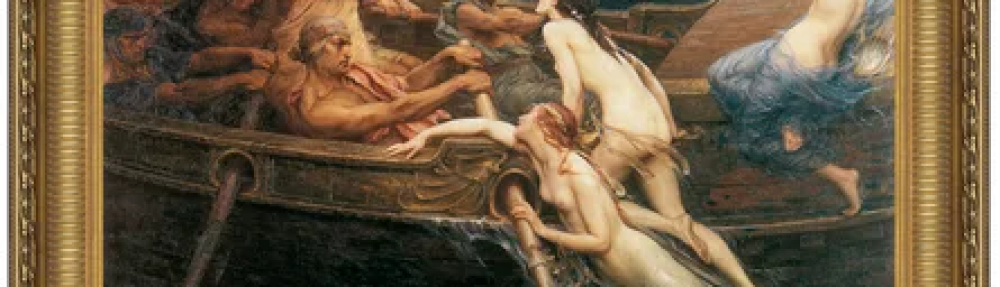
In the excerpt we read this week from the odyssey, we are introduced to the story of Odysseus and his interactions with Greek sirens. In this particular version, sirens are represented to be creatures of knowledge and fulfillment. The threat of the song – contrasting with what we are usually predisposed to think of when we think of sirens – conveys the sirens as being enlightened ones, willing to share their wisdom with those courageous enough to fall into their trap. In grecian mythology, the seduction of human kind, opposed to a sexual attraction, is that in which humans gain wisdom beyond that of human conceptions. The mind would be allowed to expand beyond the present forces of earth, gaining wisdom transcending possible universes. 

In the traditional English church, sirens and mermaids are presented to be sexual beings, intent to lure men in with sinful and lustful promises, eager to create sin and treachery. The use of mermaids and sirens meant to reflect women as immoral creatures, the cause of men to fail in their religion and faithhood. The church created such emphasis that men must abstain from fraternizing with women, in hopes of curbing their lewd fantasies leading to a state of unrighteousness. 

This comparison between how Sirens were transcribed and developed across different narratives was very stark and intrigued me into further thought. Why in Grecian culture was the thought of knowledge women a threat versus sexualized femininity. In a way, both can be interpreted to mean that a woman in a higher state of power over men would be detrimental to society and manhood. In other ways, we wonder why there was more emphasis on purity inside the church culture compared to that in Greek culture. In my own opinion, I see the English church finding the idea of women being knowledgeable a laughable idea, only being creatures designed to hinder the teachings of the divinity. 
In both backgrounds of storytelling, they become objectified, only to be seen as a hindrance to a man’s success. They are obstacles, attempting to gain unrightful power over a “higher” being – a male. These stories are a direct reflection of these time periods, a place where women did not have an identity outside of her husband, no place to be within her femininity or obtain her own knowledge. Why then is a story such as The Odyssey conceived with such reverie? Why do we continue to idolize works in which a man’s victory is his conquest to outwit a womanly being?

Week 3: The Relationship between Man and Mermaid

Mermaids. Often described as beautiful, majestic, half woman – half fish hybrids, roaming the deep waters of the ocean and visiting land for a glimpse of mankind. The myths surrounding hybrid sea monsters have existed for centuries upon centuries – and yet, I have begun to see as we dive deeper into the immense history of these wonderful beings, there seems to be similar patterns regarding storytelling that have remained stable since the dawn of human to mermaid relationships.

One particular example I want to focus on is discussed in the Penguin Book of Mermaids: Introduction, in regards to the romantic relationship between mermaid and man. Of course, the same as many others, I know of many tales in which the hopeless romantic mermaid falls in love with her mysterious Human male counterpart, and typically, by the end of the story, has given up her life in the sea to be with him. As mentioned in the book, there is a trend in which mermaids come to shore expected to be “domesticated” to fit the idea of a perfect wife and mother. The mermaid is seen as wild and carefree, something the human male must correct to integrate her with his society. This directly correlates with the misogynistic viewpoints and stereotypes we still see today. Correlating with what we have discussed in class, the church used mermaids as a scare tactic – something for men to be cautious of. In other words – the dangers of women and their femininity. Why is it that the mermaid is expected to conform to the human male society and not reversed?

I do not know any mainstream or popular stories in which a merman falls in love with an onshore woman, ready to give up his life at sea for her. The story is deeply rooted into our society’s misogynistic and patriarchal beliefs centered around how women should act and behave in the company or relationships of men. This aspect of mermaids and sea monsters in general (including selkies) is something I never imagined spending so much focus and attention on, yet the representation of mermaids as “objects” vs a being is something I am very interested in diving deeper into.

Hi I’m Emily!

Hello! My name is Emily and I am a third year Poitical Science major with a minor in Theatre Arts. Helping people, the enviorment, and animals has always been a passion of mine and led me to my decision to where I am today. This photo is of my dogs, Ranger and Lola, and they are definitley my babies. I adore dogs and would love to help organizations in the future centered around animal welfare. There are so many dreams and adventures I want to take care of after college and I am so excited where that road will take me.

Some of my many hobbies include reading, writing, and acting. I have been acting in plays since I was 8, and after coming to college, I realized it was something I couldn’t live without, hence why I added the minor. I also have always been interested in Greek Mythology and the ocean (Percy Jackson kid) and my friends and I often watched H20 mermaids together. I am very excited to learn more about mermaids and the oceanic enviorment and how it relates to humankind.

I am super excited to get to know more people in the class!