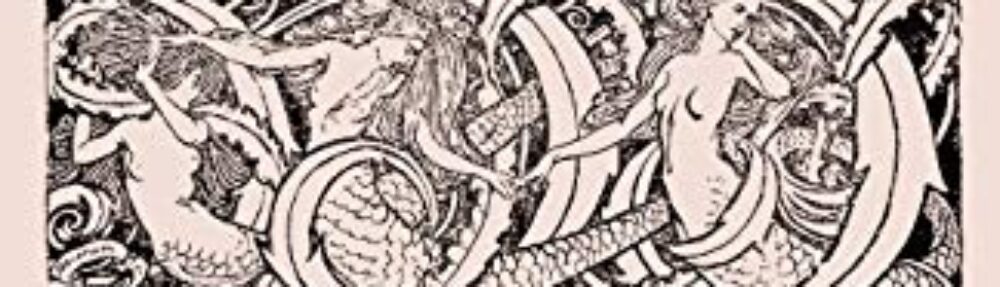
The passage “Aganju and Yemaja” from The Penguin Book of Mermaids frames a Yoruba environmental ethic: nature is a family of land, water, and air, and when that bond is violated, all life is shaken. Caring for the environment means honoring those kin.
Aganju stands for land, “an uninhabited tract of country, wilderness, plain, or forest.” Yemaja is “Mother of fish,” the goddess of streams who “presides over ordeals by water.” Their son Orungan means “In the height of the sky.” The text says the union of Obatala and Odudua “represents Land and Water,” so this family maps the basic elements, earth, water, and air, as one household with duties and limits.
The break shows the cost of crossing those limits. After Orungan’s assault, “two streams of water gushed from her breasts,” forming a lagoon, and from Yemaja’s body come the systems that sustain life: rivers (Oshun, Oya, Oba), the sea (Olokun), mountains (Oke), agriculture (Orisha Oko), even “the sun” and “the moon.” Ife, the city of “distention,” is built to remember this rupture. The message is direct: damage to water spreads everywhere. When water is harmed, land, sky, food, health, and time itself are thrown off balance.
This myth is also a guide for action. If water can judge, she “presides over ordeals by water,” then water demands accountability. Treat rivers, wetlands, and lagoons as kin, not resources to use up. Protect headwaters and floodplains. Farm in ways that respect Orisha Oko. Guard mountains as Oke, not as mines to strip. Keep public spaces like Oju-Aganju as places of shared memory. In short: honor Yemaja and her descendants in policy and practice, because our well-being depends on theirs.