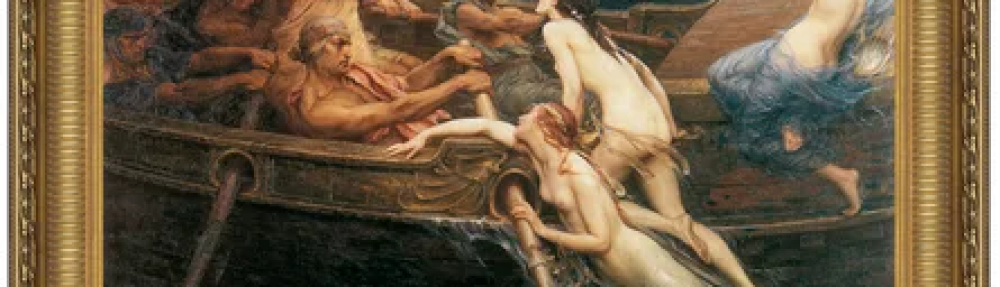
While we may have just started the topic of Merpeople and we can already make some assumptions of what is to be expected as we expand our knowledge of these sea deities (or monsters), the truth is that this just the surface and of course an introduction. However, what seems to be a motif in the subject of mermaids is the fact that these “creatures” tend to instill an extreme feeling in others whether that be a feeling of displeasure (Homers version), or a completely opposing feeling pertaining to femininity and the dangers of lust (Christian Church version that borrows from Pagan views).
Delving further into Merpeople: A Human History by Vaughn Scribner, it describes the appearance (or more so the descriptions) of deities and religious figures in Paganism consisting of androgynous features and attributes. This to me also goes to show how humanity is always interested in the topic of hybrid creatures or hybrid characteristics in humans, which is prevalent in pop culture with superheroes having animal powers while still remaining in their human state superficially as well as in myths such as the Minotaur, and now after completing this weeks reading, a mixture of female and male features, “Even more interestingly, because pagan gods could be both male and female” (Scribner 30). Not only does this further prove that civilizations no matter how ancient or where they originated, there will always be a common interest between cultures regarding animal-human hybrids, as well as mixed features in general.
Image is everything to most societies and it still is to this day, but one thing that is certain is that this way of thinking can lead to misunderstanding which is clearly apparent in mermaids. With their appearance showing the downsides of lust and sex, it explains why civilians where advised to not sing “with a maiden voice” to not lure any dangerous creatures (Scribner 44). Although the sea is vast, diverse, and majestic, there is no doubt that the sea is also mysterious and will continue to be for the rest of time.