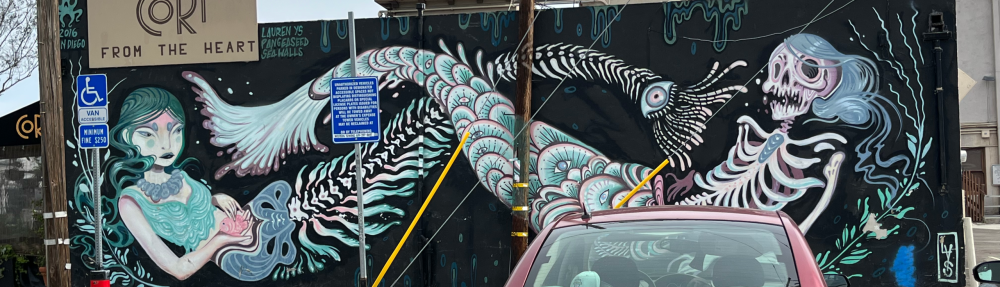
Before I start my blog post, I want to recommend a song I listened to while reading this introduction, which made the reading experience more magical! The song is instrumental (I cannot listen to words while reading), and I think it fits the mystical, magical aspect of mermaids. I did play it on repeat, but I will say it made me feel like I was in the water with the Merpeople. The song is called: Elevenses by Lena Raine. I believe it is part of a soundtrack to a video game, as I listen to video game music when studying! Okay, now on to the post!!!
This introduction was magical, not only because of the song I listened to, but also because of the amount of information I got from just a short twenty pages. Something that caught my eye and interest the most was the amount of Christian background there is to Mermaids and Mermen. That was something I truly had no idea about, when the introduction stated that, “Sometimes, mermaids would hold a fish instead of a comb, which probably further symbolized her link to the fish as an early symbol of Christianity” (14). This was something that absolutely shook me to my core. Seeing as how Christianity used Mermaids as a kind of “symbol” of worldly temptations was unexpected. The idea that her femininity is inherently full of lust, sin, and used for temptation was very interesting. Seeing how, in that time, women’s beauty was seen as men’s temptation and frowned upon, it makes sense that the symbol of the Mermaid would be used as such a symbol. Which is even more interesting because of the later statement that, “hybrid creatures of myth and lore–symbolized the early Christian Church’s willingness to hybridize itself” (15). Seeing how Mermaids went from being a symbol of sin and lust to being a big part of Christian hybridity is hilarious in and of itself.
I do, however, enjoy how merpeople went from an evil symbol to “notions of exploration, growth and national prowess” (18). Seeing the different ways Merpeople are depicted is very cool to me; to see how many different viewpoints and lenses they were seen through. I also love the term “mer-mania” (20), and I cannot exactly explain why, but I do. I, however, am not surprised that the Mermaid became a symbol of “sex, media, capitalism and profit” (25) because of the inherent greed of humans. This introduction actually made me excited to continue reading more about the history of merpeople. I definitely recommend a song, similar to mine, to listen to while reading, it made everything so much more magical.
Hahnnah, I had to come back and appreciate your post. I read it on Monday and I have been listening to Mermaid vibe music ever since. You mentioned something that I think turns up in a lot of mer-media- “the inherent greed of humans”. I would define greed as desire for that which one doesn’t need; our desire to own, control, hoard, even to understand, are reflected in our relationship with the ocean, and therefore in mermaids. I look forward to sharing more mer-music!
I am listening to the song now– and loving how the soundtrack serves the reading and your interpretation of it. Thanks for reminding us of the sonic aspect of mermaids, as we will definitely get there when we read about the sirens. So glad that you found this music… and the importance of our reading… and shared it with us!