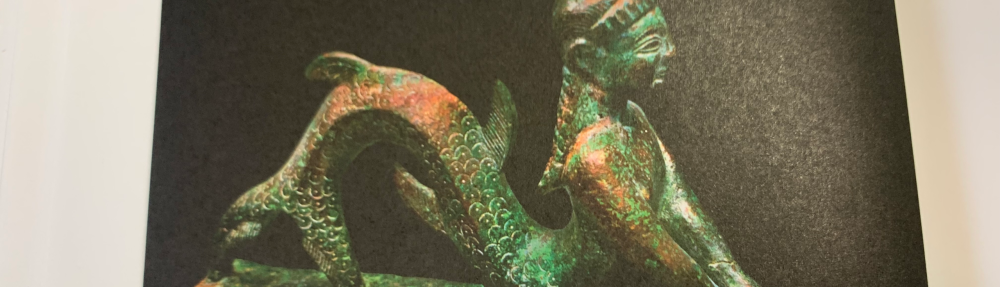
Vaughn Scribner’s “Introduction” to Merpeople: A Human History contextualizes the origins and importance of merpeople. Scribner poses and answers questions about this well-known hybrid creature throughout Western history. Notably, he asks: “How might such a creature change their understanding of humanity’s origins? How might it alter our conceptions of classification, and even humans’ supposed supremacy on the planet?” (Scribner 8-9). Humans have always held a certain level of superiority as the most intelligent life form on Earth. The idea of another life form, merpeople, closely resembling humans puts that superiority into question and forces humanity to rethink its previous notions of our role on earth.
Within literature, there has always been a tendency to anthropomorphize animals, whether as a way to make certain themes more digestible or to comment on our own actions as humans. Think E.B. White’s Charlotte’s Web or George Orwell’s Animal Farm. Scribner expresses this through the words of historian Erica Fudge: “reading about animals is always reading through humans…paradoxically, humans need animals in order to be human” (8). On that point, though merpeople may not be certified creatures on Earth, they are arguably the most relatable non-human creature known today. Merpeople are anthropomorphized myths that people fantasize as a way to reach parts of the world we have yet to discover. These hybrids have access to the deepest and darkest parts of the world that people strive to understand, and having access to such creatures even through stories—allow people to question what could be. They are also a window to question our impact on the ocean and its creatures. If humans keep putting toxins into ocean what happens to the sea creatures that live in it? Having a more humanized creature allows for empathy and understanding of humanity’s carbon footprint and climate change. Scribner notes from Harriet Ritvo that the classification of merpeople says as much about the classifier (humans) as it does the creature. Whether one classifies them as sirens, selkies, mermaids, or mermen these hybrids may be myth but, like any form of story, they are also a reflection on humans and humanity.
Great reading response– situated in the text and then developed from it. You are right to note the literary aspect of anthropomorphizing as rhetorical and purposeful device. I hope we can talk about this in our class and consider its larger ramifications. Good work.
Love this!! Anthropomorphism, a window into an alien world, and a reflection on ourselves.