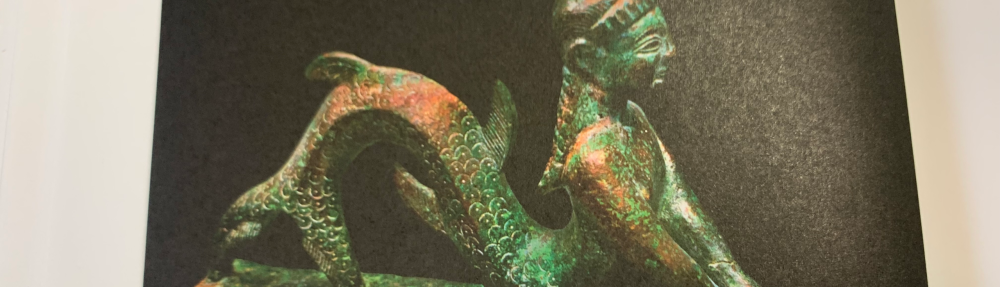
In The Deep, chapters 8–9, the part that stood out to me was the scene where Yetu and Oori meet again at the end of the story. The line, “She did not transform in the way wajinru pups transformed in the two-legs’ bellies. She didn’t grow gills or fins, but like Yetu, she could breathe both on land and in the sea. She was a completely new thing.” I thought this moment shows how the story connects memory, pain, and love to the idea of becoming something new. Oori doesn’t just change into a wajinru, she becomes a bridge between two worlds, land and sea, human and ocean. Through her, I think it shows that transformation can come from understanding and connection, not just survival.
I also liked how this scene turns the ocean from something dark and heavy into something peaceful and full of life. When Yetu invites Oori “into the dark, into this world of beauty,” the darkness doesn’t feel scary anymore. It feels calm and comforting, like the deep sea itself. I think this shows how Yetu learns to see her memories differently, not as pain, but as something that gives her strength. I thought the water became a symbol of healing, where remembering is not a burden but a way to live more fully. Another part that I found interesting is how Oori can breathe both underwater and on land. It feels like a metaphor for balance, between past and present, pain and peace, self and community. It made me think that being “a completely new thing” means not choosing one identity, but accepting both.
For me, this ending reminded me that healing means carrying the past with us, but letting it shape us in a softer way. Like water, memory keeps moving and changing, but it also gives life. In this way, I thought The Deep ends not in tragedy, but in rebirth, where Yetu finally finds peace within the waves and within herself.
Great point: For me, this ending reminded me that healing means carrying the past with us, but letting it shape us in a softer way. Like water, memory keeps moving and changing, but it also gives life.” Water, especially the Ocean, is never just one thing and certainly never means one thing. You are right to note how the novel prompts to see the ocean as a living force, and one in which the Merfolk live in symbiosis.
Hi Bomin! This is a great quote that you brought up, which reminded me of human origins. In yeti’s perspective. All babies/pups are weijinru before they grow two legs in the womb. Even more interesting, that Oori remains the same, not going through a physical transformation again, like the weijinru, but welcomed as she is, not having to change. I loved that in this book, water, memory, pain, and love become connected and interwoven-related, encapsulating a full life of experiences.