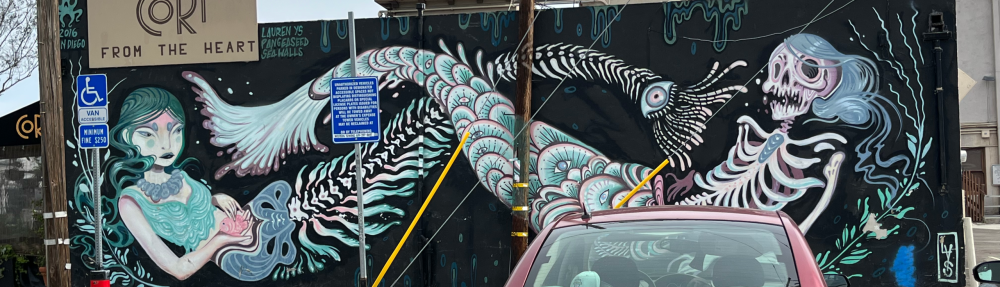
My final essay is still a work in progress but it will expand on my discovery #2 argument by examining the sea as a non-traditional archive of colonial trauma. I would like to revisit the passages from Walcott’s “The Sea is History” in addition to supplementing it with John Gillis “The Blue Humanities” to contextualize Walcott’s vision within a scholarly framework that understands the ocean as a historical agent rather than just a mere set piece. Both these readings challenge the readers to recognize that history does not always appear in the typical western forms we’ve come to expect and learn to interpret environmental memories.
Thesis: In “The Sea is History”, Derek Walcott reimagines the ocean as a fluid unstable archive that preserves the many dark histories that colonial narratives attempt to erase. By positioning the sea as both a grave and record, Walcott exposes the limitations of Western historiography and compels readers to interpret history through silence, submersion, and environmental memory. When read alongside John Gillis’s concept of the Blue Memories, which also argues that oceans hold “deep histories” beyond conventional documentation, Walcott’s poem reveals how the natural world itself functions as a corrective to colonial erasure.