strop on these goggles, I’ll guide you there myself.
It’s all subtle and submarine,
through colonnades of coral,
past the gothic windows of sea-fans
to where the crusty grouper, onyx-eyed,
blinks, weighted by its jewels, like a bald queen;
and these groined caves with barnacles
pitted like stone
are our cathedrals,
and the furnace before the hurricanes:
Gomorrah. Bones ground by windmills
into marl and cornmeal,
and that was Lamentations—
that was just Lamentations,
it was not History;
For this close reading, I aim to take a deeper look at Derek Walcott’s poem, “The Sea Is History”, particularly these five stanzas. In this passage from the poem, Walcott beautifully frames the ocean floor as its own cathedral or church of sorts. Throughout the poem, he uses the Old Testament and biblical references to equate the history of the slave trade with written religious History. At the poem’s climax, he finally confronts the irony and reshapes the Ocean into its own sacred place. Fusing the “natural” world with our perception of a divine and holy place. This passage exposes how Western historical education ignores the submerged history of the slave trade, placing written biblical tales on a higher plane than a physical archive of history, such as the ocean.
In the very first line, Walcott writes, “Strop on these googles,” calling on his readers to look underwater and be witnesses to the concrete history hidden beneath the surface. This reminded me of a quote from David Helvarg we read earlier this semester, “More is known about the dark side of the moon than is known about the depths of the oceans.” Eurocentric education could utilize technology to uncover more about the slave trade, but it seems that when history reveals human flaws, it is often left buried, or rather, submerged. When Walcott uses phrases like “colonnades of coral” and “gothic windows of sea fans”, the imagery invokes us as readers to blend our religious practices, monuments, and architecture with the natural environment of the sea. Where our churches, propped up by columns and decorated with stained-glass windows, are our archive of time past and people lost. The sea is the same for the history of the Caribbean
slave trade. “Crusty grouper, onyx-eyed, blinks, weighted by its jewels, like a bald queen.” Perhaps this fish is a perfect metaphor for a decorated pope or priest. An integral part of this sacred submerged place. “And these groined caves with barnacles pitted like stone are our cathedrals.” The beauty of the sea and all it can create can be just as impressive and awe-inspiring as a human feat, such as the Notre Dame Cathedral. We count the days it took Michelangelo to paint the ceiling of the Sistine Chapel, but we do not tally how long it took for the caves to become “groined,” just like the ceiling of a church. And when we do discover information about the archaeological wonders that are sea caves, it is not added to our curriculum and spoon-fed to us. Just as the human church holds loss, suffering, and destruction within its history, so does the “sea church”. The sea also holds places like “Gomorrah”, a city of death and despair, destroyed for its sins. “Bones ground by windmills into marl and cornmeal.” The seafloor is a graveyard for more than just fish; the ocean acts as a cemetery for bodies, stores, and memories. There are bodies and items submerged that may never be discovered, but the story of brutality and cover-ups remains the same. Saltwater may erase physical evidence, but humans are the ones who tried to erase history first. When the education system fails to provide the proper setting and context for history, we are left with no concept of our impact off the land. The Middle Passage is taught as a transportation from one landmark to another, but what happened in between foreshadows all that follows on land. We can dig into the sparse historical accounts of the brutal, long journey, but we know that the voices drowned and all the stories silenced by pure fear are lost to history. If we can see the ocean as a physical archive of history, we could unravel the secrets hidden beneath layers of Eurocentric perspectives and written historical education.
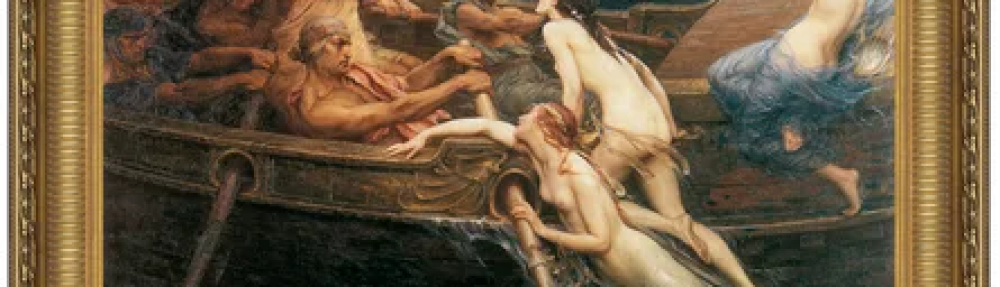
As much as Walcott is calling on us to reframe our perspective of the ocean as a museum, literally, he is also calling us to dive into history itself. To determine the truth that lies beyond the surface of the written page. After all, there is heaps more history beyond the Bible and the moral lessons it holds. “And that was JUST Lamentations, it was not History.” This line packs the punch in this passage and really calls us to question everything we think we understand about history. In this line, we are reminded that just because something is written or material does not make it fact. With 8 years of catholic schooling under my belt, I’m no stranger to biblical texts being used as a tool for justification, as if it were almost scientific. I was taught about the stories of the Bible in a linear timeline that felt like a history class. And even in my history classes, the history of land and more importantly, “holy land” was presented as the cornerstone of my catholic education. I know that there is truth to these biblical stories just as much as I know they are riddled with myth, as I do with the environmental literature we have discussed in this class. I do believe that stories of sea creatures may be just as accurate as stories about turning water into wine. In reading this poem, I began to see the ancient stories of mermaids, sirens, and other hybrid seafolk as a kind of bible. A way to frame oceanic history through human writing. A more accessible or comprehensible way of understanding the environment that takes up over 70% of our globe. If we read these stories as cautionary tales, as we see in the Old Testament, they can also serve as a tool for teaching history. Noticing the myths and natural environment as historical truths or sites is of utmost importance.
Overall, this group of stanzas from Derek Walcott’s Poem, “The Sea is History,” urges us to view history as more than what is written. To see the sea as a literal and metaphorical holder of earasaised histories. By illustrating the ocean as both sacred and dismal, he challenges harmful Western narratives that silence a time and place in history. This passage illuminates the fact that cherry-picked colonial historiography dictates U.S. education, ignores essential stories, and promotes a false collective memory of the slave trade.