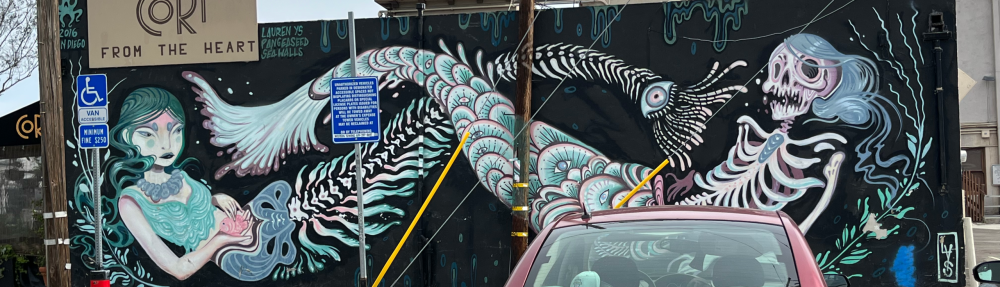
In “Introduction: People and Oceans” by Reaktion Books, a line that stood out to me was “ The time has come to put the Ocean in the centre of some of our histories, not to replace terrestrial history but to add the history of the Ocean itself to the other important histories we tell (pg.7).” This opens the narrative that we can make space for broadening our perception of the environmental humanities, one that is inclusive to the Ocean. There is this idea that some of us believe, that if we are to introduce a new idea it is made in lieu of another. This quote tells us that we can deepen our pre-existing understanding and knowledge of our history by adding the unfamiliar, which is incorporating blue humanities.The Ocean is perceived as unchanging, a timeless body of water that remains the same, even to those who are well acquainted with it such as sailors. Stories of the sea usually involve humans and the way that we interact with it. Whether that be through sea exploration, recreational activity or reaping the sea of its resources. Hardly ever are there talks of the Ocean being an archive, the land in contrast is something we’ve documented to be dynamic and ever-changing. Our history books are land-centric, which goes to show our limited knowledge of the vast Ocean. This terrestrial bias is included in our language, and interestingly enough how far our care extends to other species of animals. These animals are usually mammals that humans feel for, such as whales, dolphins, seals, etc. It’s difficult to empathize with what we don’t see in ourselves. Even when documenting Ocean history, it is usually through the lens of globalization and how we directly interact with the sea rather than the changes of the Ocean by itself. If we change the way that we look at the Ocean, as a space that’s worth acknowledging with changes unseen by the human eye, perhaps we’ll find new and deeper ways to care for it.
Mermaids: Literature & the Environment
ECL 305. Fall 2025. Professor Pressman