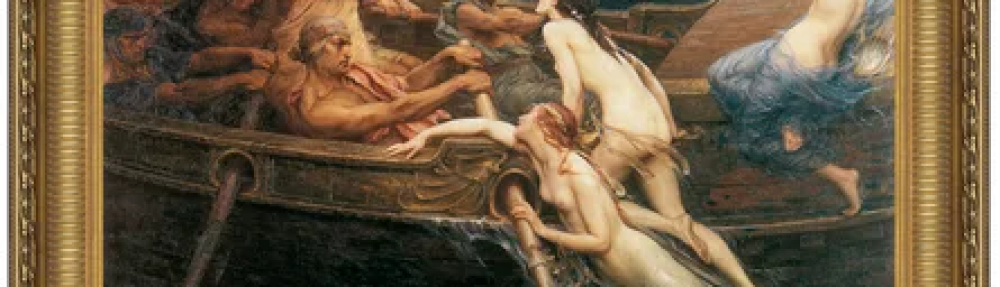
At first glance, it would be a lie to claim that one began read the story without thinking (at least subconsciously) about the Disney iteration. However what is truly surreal is the fact that the Hans Christian Anderson story of “The Little Mermaid” was truly nothing as expected in terms of tone and over all motives displayed throughout the tale. Apart from the huge disparities between the film adaptation and the tale by Anderson, there seems to be a reoccurring sense of longing for something that we as the readers, already know that it is only highlighting the positive aspects of being human without truly understanding the hardships and flaws humanity has to offer.
The claim that Anderson’s “The Little Mermaid” is a cautionary tale that showcases the attractive qualities of being a human is not only supported by moments where the characters glorify certain superficial and materialistic things, “The little mermaid swam close to the cabin window, and as often as the water lifted up, she peeped in through the transparent panes, and saw a number of well-dressed persons” (Penguins, 113). Now this is just an observation on the mermaids part and can entirely be done just out of sheer admiration for the clean and presentable appearance of the gentlemen, but it is also a telling piece of information which implies that this sort of fondness towards all things “classy” and “fancy” is natural and tailored only to humans (which is why the mermaid is so intrigued by the prince). Not only does this correlate with humans as a whole, but it also demonstrates the sacrifices women make in society as a result of marriage and motherhood which can be interpreted from the witch’s warnings, “if once you obtain a human form, you can never be a mermaid again!” (Penguins, 120). While not blatantly stated, this may very well be an allegory for dedicating ones entire life and leaving everything behind in order to seek for marriage and a relationship that is built on materialism and physical qualities. The ending (which is quite depressing) serves as an example of said sacred bonds that do not have a legitimate foundation comprised of love and understanding, rather one that is constructed by unrealistic expectations and hope which in the very end, leads the little mermaid to end up risking everything for someone that did not share the same passion.
Many good ideas here, but I’d be interested to see you focus on one of them to see it through. For example, you write, “While not blatantly stated, this may very well be an allegory for dedicating ones entire life and leaving everything behind in order to seek for marriage and a relationship that is built on materialism and physical qualities.” Is this a story about marriage or sacrifice, love or something else? I am not sure, but I would be eager to see what you really think is the primary point here.
Haha omg what a great title
Hello Omar,
I enjoyed how you talked about the difference between Andersen’s tale compared to the Disney version, more specifically when you mentioned how the tale exposes the illusion of human perfection. I also liked they way you compared the witch’s caution to the pressure that women often face today in giving up part of themselves for the true love they desire most.
Hello Omar,
I enjoyed how you talked about the difference between Andersen’s tale compared to the Disney version, more specifically when you mentioned how the tale exposes the illusion of human perfection. I also liked they way you compared the witch’s caution to the pressure that women often face today in giving up part of themselves for the true love they desire most.
Hi Omar,
Your take on this is quite interesting. I believe that it is very human to glorify and admire superficial and materialistic things, as you had said. In the case of the little mermaid, this could be her way of taking on human behavior, if she couldn’t be them at one point, why not act like them. I would like to dive deeper on what you said about its correlation with marriage and motherhood! Thank you for sharing!