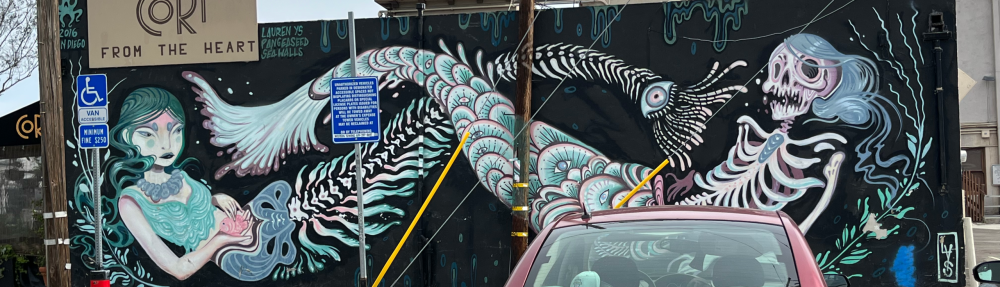
In this week’s reading of Friedrich de la Motte Fouque’s Undine, when the water spirit explains to Hulbrand the difference between her kind and mortals. “We have also no souls; the element moves us, and is often obedient to us while we live, though it scatters us to dust when we die; and we are merry, without having aught to grieve us.” This passage exemplifies the central tension throughout the story, the exchange between freedom and permanence. That of one between soulless joy and the suffering that comes with having a soul.
Undine’s speech reveals the paradox of her existence. On one hand, she is a water spirit which embodies beauty, playfulness, and power, however she is also transient and is subject to vanishing without a trace. Her father’s wish to have her gain a soul through marrying a mortal underscores the Christian framework wherein the soul is depicted as both salvation and a curse. To acquire a soul, one must enter into a world of suffering, grief, and moral struggle, however, they also gain eternal life and “meaningful” love.
One complication is Hulbrand’s role in this story as his marriage has unwittingly transformed Undine’s fate. Through gifting her a soul, it has also bound him to the responsibility of guiding her through a mortal existence. His doubts and nightmares are in direct contrast to Undine’s calm demeanor and acceptance of suffering, suggesting that the “inhuman” side of her may embody a deeper spiritual truth than that of the knight.
Ultimately, this reading invites us to reflect on what truly makes life meaningful. Fleeting joy without consequence, or a painful existence but with the enduring prospect of having a soul. Fouque seems to suggest that true love, one that is based in faith, requires the acceptance of both joy and suffering. And it is with this union that Undine truly becomes “human”.
I like how you’re pushing the story towards larger “so what” points, to question what’s actually a stake in reading this narrative. I think you are right: “Ultimately, this reading invites us to reflect on what truly makes life meaningful.” I also wonder how it connects to your earlier part of the blog, about the natural element, and man’s relationship to nature.
Hi Adrian! I was also drawn to this quote and Undines connection to nature depite being soulless. I like the way you explained it: “This passage exemplifies the central tension throughout the story, the exchange between freedom and permanence.” This story reflects what a woman sacrifices by marrying, I think the seperation from her world and her father being severed by marriage is a very realistic comment on marriage. Her freedom is entirely dependent on who she belongs to, and the fact that she accepts both fates passively is what concerned me the most.