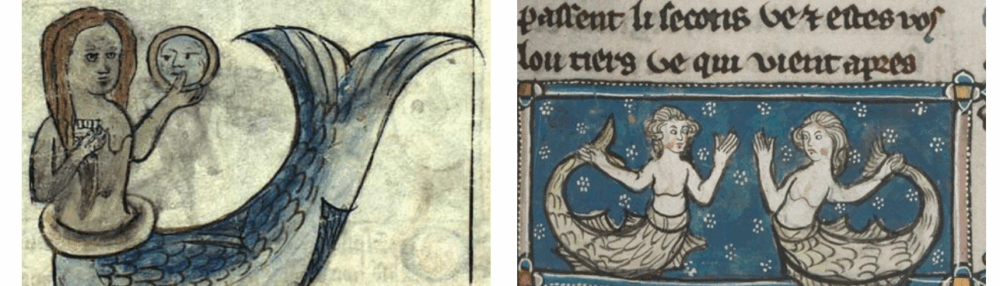
In the story of Undine there is an undercurrent of belief that humans have superiority over natural elements, based on the assertion that only humans have a soul, unlike nature. This belief reflects the on and off again thought that nature is a force outside of humans to be controlled for human prosperity, without concern for the impact this has on nature’s designs. This subjection of nature and the creatures within it makes it easier for humans to take what they need from it, without letting their souls feel the guilt of taking from another entity. When humans argue for their superiority over nature and other humans, their first tactic is to dehumanize. Instead of looking to the similarities nature and humans have with each other they create the image of “other” and infantilize it so their position seems more experienced and all-knowing.
Undine explains to her new husband about her and other elementals with this dehumanizing language, even though she states prior to this that the elementals do identify as human beings. She says, “hence we have no soul; the element moves us, and is often obedient to us while we live, though it scatters us to dust when we die; and we are merry…merry as the nightingales and little gold-fishes and other pretty children of nature. But all beings aspire to be higher than they are” (Penguin,105). Characterizing the power in nature as being like children makes it a less consequential part of the human world, one that needs help and guidance. Only participating in the human world and obtaining a soul made the elemental more than they are on their own, making the human world the superior entity.
Conveniently in the human world there are those designated to award souls and personhood. In the case of this story it does this through marriage by a religious figure who one must be humble towards. This release of power for human theology and methodology is portrayed as a reasonable trade while power is still wielded in the human world over each other, but only by the few. Relinquishing power is the price of admission to be part of the human world because the human world only thrives on its assertion of its own control, not its inherent ability to do so.
Framing the elementals as being powerful in this Earth-bound world but reduced to nothing because there is not something to grieve them, also removes responsibility from humans for caring about anything outside of themselves and their interests. Asserting that there is a temporary power of nature but humans (having anointed themselves with the idea of a continuing spirit) in their existence will be forever. It prioritizes the human experience over the natural world, not considering how the two are intertwined in the same existence.
You got it! A thesis, and a strong claim about the story as, itself, an argument: ‘In the story of Undine there is an undercurrent of belief that humans have superiority over natural elements, based on the assertion that only humans have a soul, unlike nature.” This blog post could easily be a midterm as you have a thesis and just need more close reading. Great work!