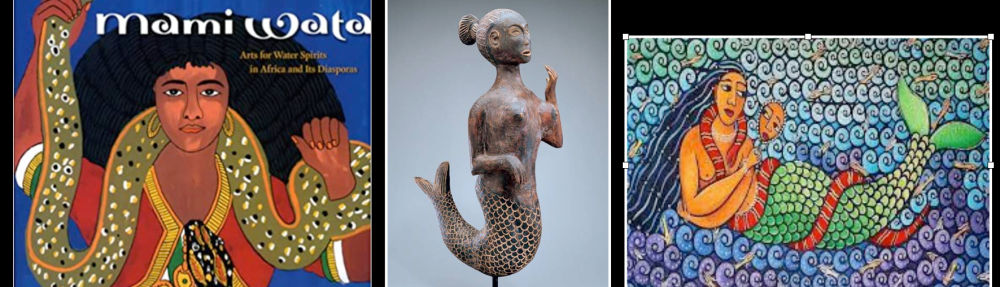
This weekend’s readings from “The Penguin Book of Mermaids”—“Legend of Melusina” (LoM)—and Andre Libey’s “Romance of the Faery Melusine” return us to the ideas of hybridity of form as well as sapient beings in the periphery/at the ends of the known world.
In LoM, Melusina is the hybrid descendent of the widowed King Elinas of Albania and the Fay Pressina. Elinas was drawn to his Queen-to-be’s voice—likely a reference to siren songs—and became betrothed to her and assured her company so long as he honored a single condition: he cannot see her on Saturdays. The king of course breaks his agreement thoughtlessly, causing Pressina to retreat to the “Lost Island”—in the periphery/at the edge of the known—with their daughters: Palatina, Melusina, and Melior.
Punishment – Like Father, Like Mother, Like Daughter
Much in the same way that Elinas’s breach of contract is made known by his daughters—who seemed far more capable than any newborns should be—his daughters, as a result of Melusina’s plans, inflict unsanctioned vengeance on their father and are punished by Pressina. For her part, Melusina is punished the most heavily and bears a curse: wielding a half serpent body, and needing to marry a man who can/will respect her Saturday away from him. Like her mother before her, she marries, bears children, and her secret is soon discovered. The “deformity” of her children earns them scorn from their father, which in turns bestows Melusina with grief and her own journey of separation and pain.
Yes, you are right that this is a major part of the story. Now, can you develop an interpretation about WHY this matters? Why focus where you do, on the deformity as curse? It is a great insight and place to explore, so go deeper!